Juneteenth Flag Raised Over Melrose
By Nancy Clover
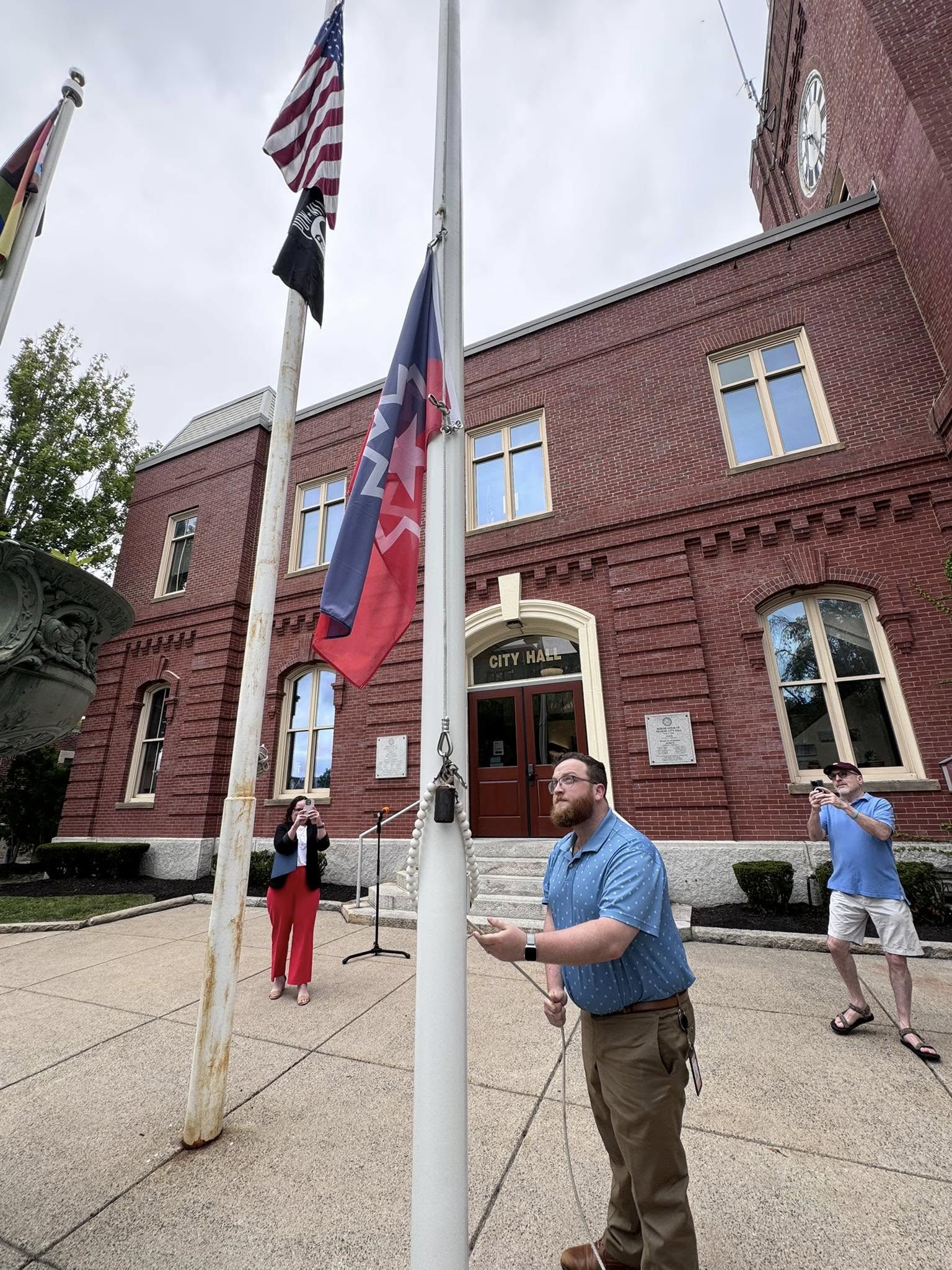
Photo Credit: Nancy Clover
On Wednesday evening, the day before Juneteenth, elected officials and residents gathered to raise the Juneteenth flag over Melrose.
Juneteenth Freedom Day became a federal holiday in 2021, and commemorates June 19, 1865, when Union troops arrived in Galveston, Texas, and announced that all enslaved people were free. This came more than two years after President Abraham Lincoln issued the Emancipation Proclamation. Juneteenth marks a turning point in American history: the beginning of true freedom for all enslaved African Americans and a continuing call for justice and equality.
Before the flag was raised, Mayor Jen Grigoraitis read a proclamation that stated, “On this occasion, people of all races, nationalities, and religions join hands to acknowledge the painful history and lasting systemic impact of slavery and racial injustice in the United States and our collective national commitment to the goal of creating a more equal and just society.”
Melrose, like much of New England, has a complex history with slavery and the long fight for freedom. While often overshadowed by the Southern plantation system, slavery was legal and practiced in Massachusetts until 1783. In early Melrose—then part of Malden—enslaved people were forced to work as household servants, laborers, and farmhands.
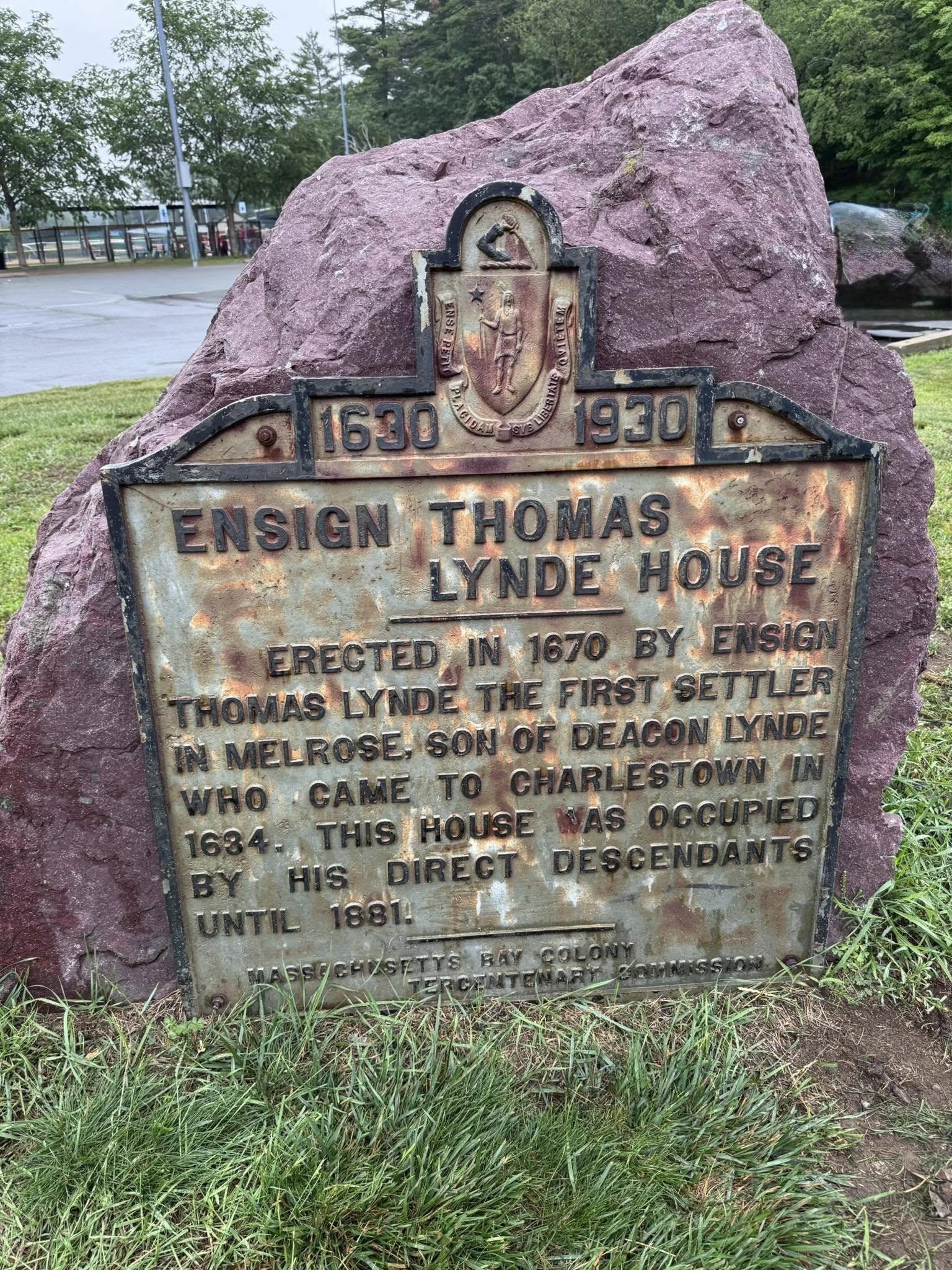
Photo Credit: Nancy Clover
The Lynde family (first settlers of Melrose) was among the most prolific enslavers in the area. Markers throughout the city commemorate Deacon Thomas Lynde (in the park at the corner of Lebanon and Lynde St)) and Ensign Thomas Lynde, veteran of King Philip’s War (1675-1678), whose home once stood at 86 Main St., where Hunt’s Photo parking lot is today. Deacon Thomas Lynde’s will (1671) left a bequest to dearly beloved wife Rebeckah Lynde: land he bought of Goodman Stowers in Charlestown, a house that Morgan now dwells in and all land belonging to it; his negro Peter and negro girl Nan, two cows commons, a haylot, new frame where the cellar is dug near Morgan’s house, use of the malthouse for the year; half of all his household. Joseph Lynde’s home still stands at 409 Lebanon Street (built in 1702).
Another figure, Phineas Sprague III, remembered for his Revolutionary War service, was also a manipulative slaveholder. As historian William D. Pierson notes, Sprague appropriated West African spiritual traditions—such as numerology—to exert psychological control over those he enslaved.
But Melrose was also a place of abolitionist activism. Renowned reformer Mary Livermore made her home here and helped shape the city’s moral conscience.
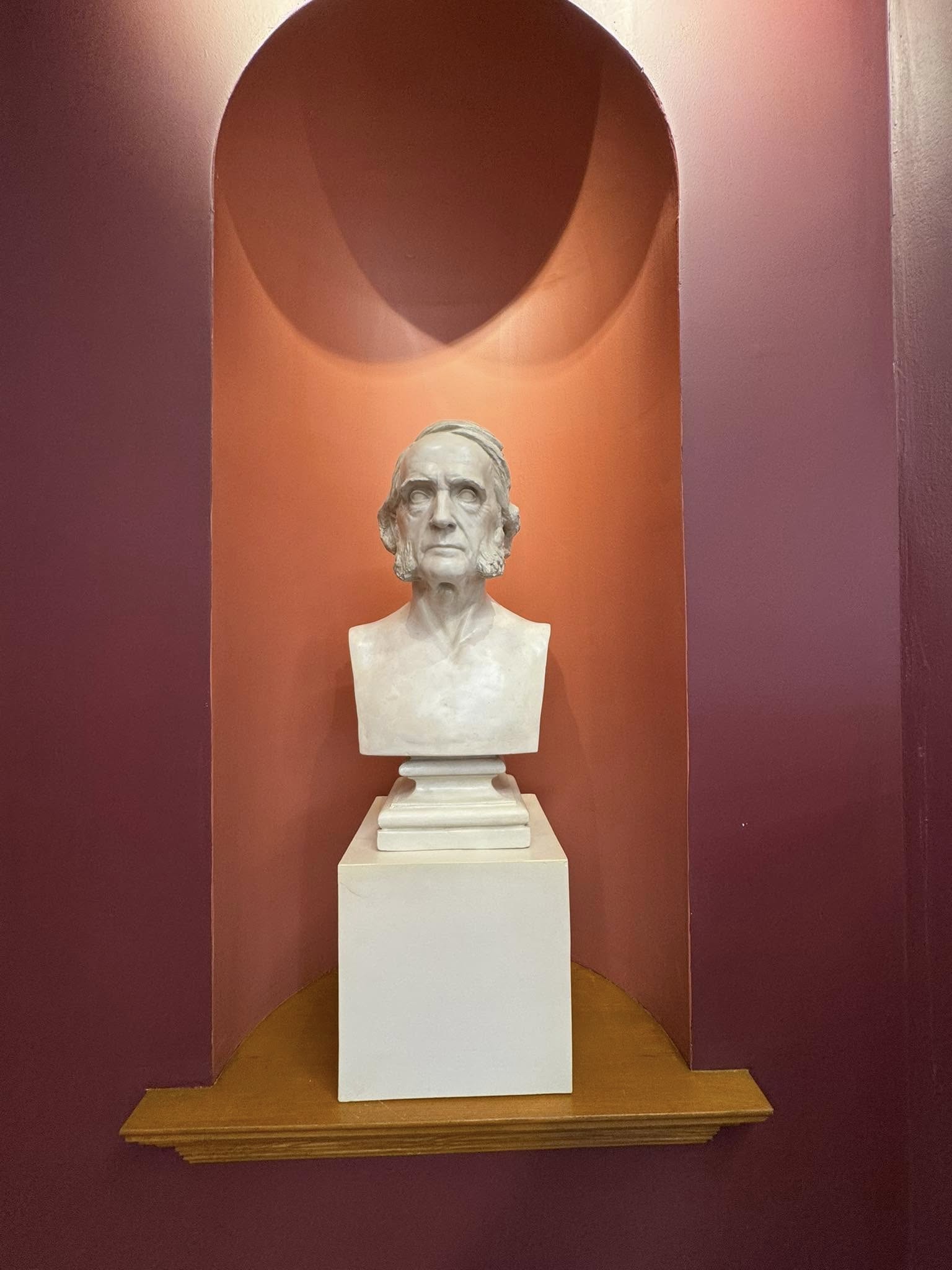
Photo Credit: Nancy Clover
Samuel E. Sewall, a lawyer, abolitionist, and early suffragist, moved to Melrose in 1846. A radical ally of Boston’s free Black community, he dedicated his life to defending fugitive slaves—often facing threats and violence for his work.
Livermore later donated a marble bust of Sewall to the Melrose Public Library, where it remains in the Trustees’ Room. But perhaps the most significant tribute to his legacy is Memorial Hall, rebuilt in 1909 from the Quincy granite of the Boston courthouse where Sewall once defended freedom seekers in landmark fugitive slave trials.
Sewall died in 1888 at age 89. Remarkably, his pallbearers included women—among them Mrs. Livermore—an uncommon act that reflected his progressive beliefs.
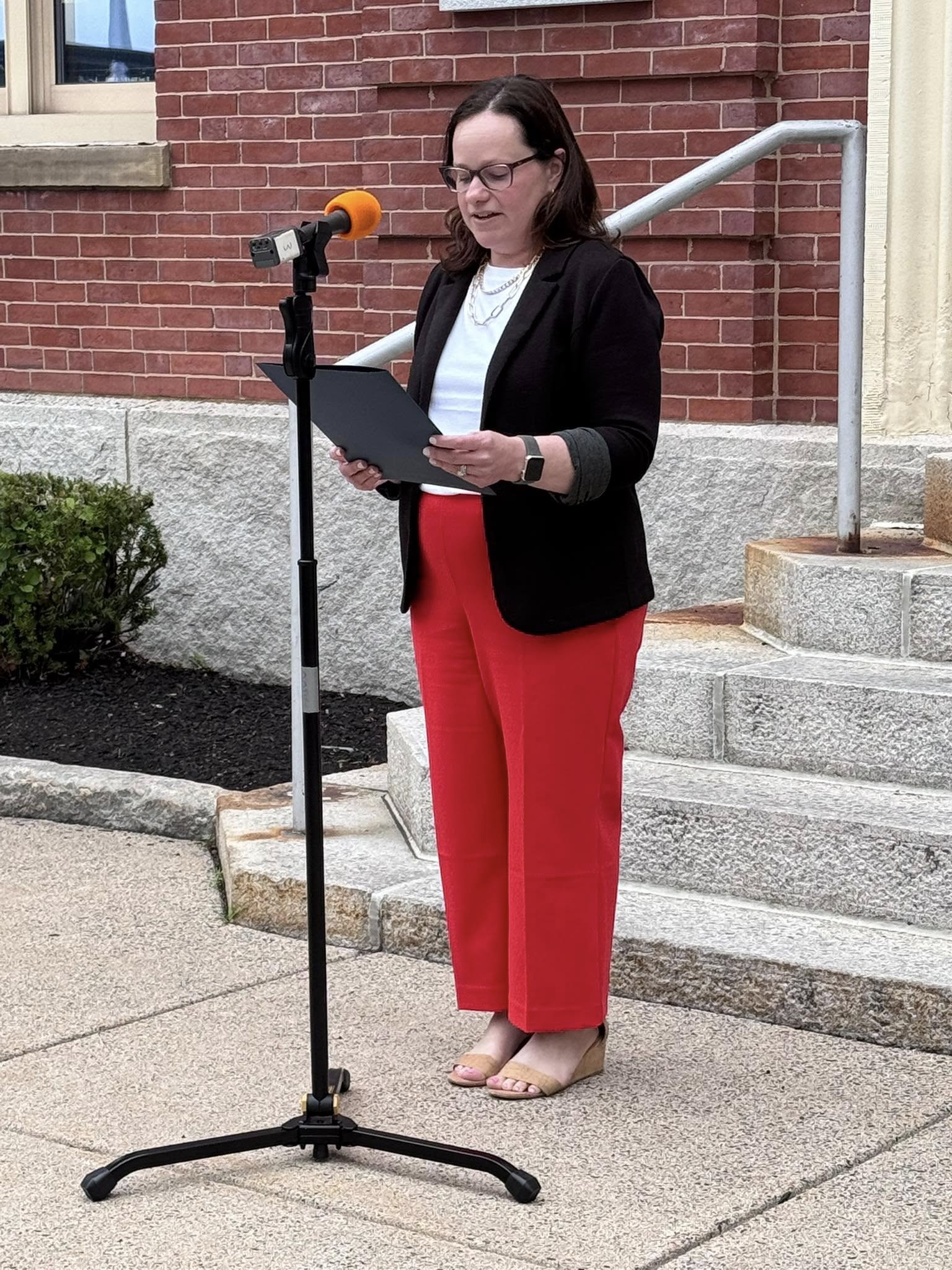
Photo Credit: Nancy Clover
There are also powerful stories of Black military service connected to Melrose.
Archibald Bogle, a white Melrose resident, served as a Union officer with the 35th United States Colored Troops, leading formerly enslaved men into battle. Captured and sent to the infamous Andersonville Prison in Georgia, Bogle suffered greatly because of his leadership of Black troops—a stark reminder of the cost of challenging racial injustice.
Perhaps the most extraordinary story is that of Wesley Furlong, born enslaved in West Virginia. After escaping north, Furlong enlisted in the famed 54th Massachusetts Regiment, the first Black regiment raised in the North. He fought bravely at Fort Wagner, rose to the rank of sergeant, and became a key figure in Boston’s Black veterans’ community. In 1891, he moved to Melrose, where he organized Emancipation Day parades and helped lead the 54th’s veterans association.
As we reflect this Juneteenth, we honor both national heroes like Frederick Douglass—who is believed to have spoken at the newly built Melrose Town Hall in 1875—and the lives forever shaped by slavery and resistance here in our own community.
From the darkness of bondage to the courage of abolitionists and the heroism of Black soldiers, Melrose’s history is a vital thread in the larger story of American freedom. On this day, we remember, we honor, and we continue the work.
Thank you to the Melrose Historical Commission.