Melrose Commission on Disability Celebrates Disability Pride Month
By Patrick DeVivo
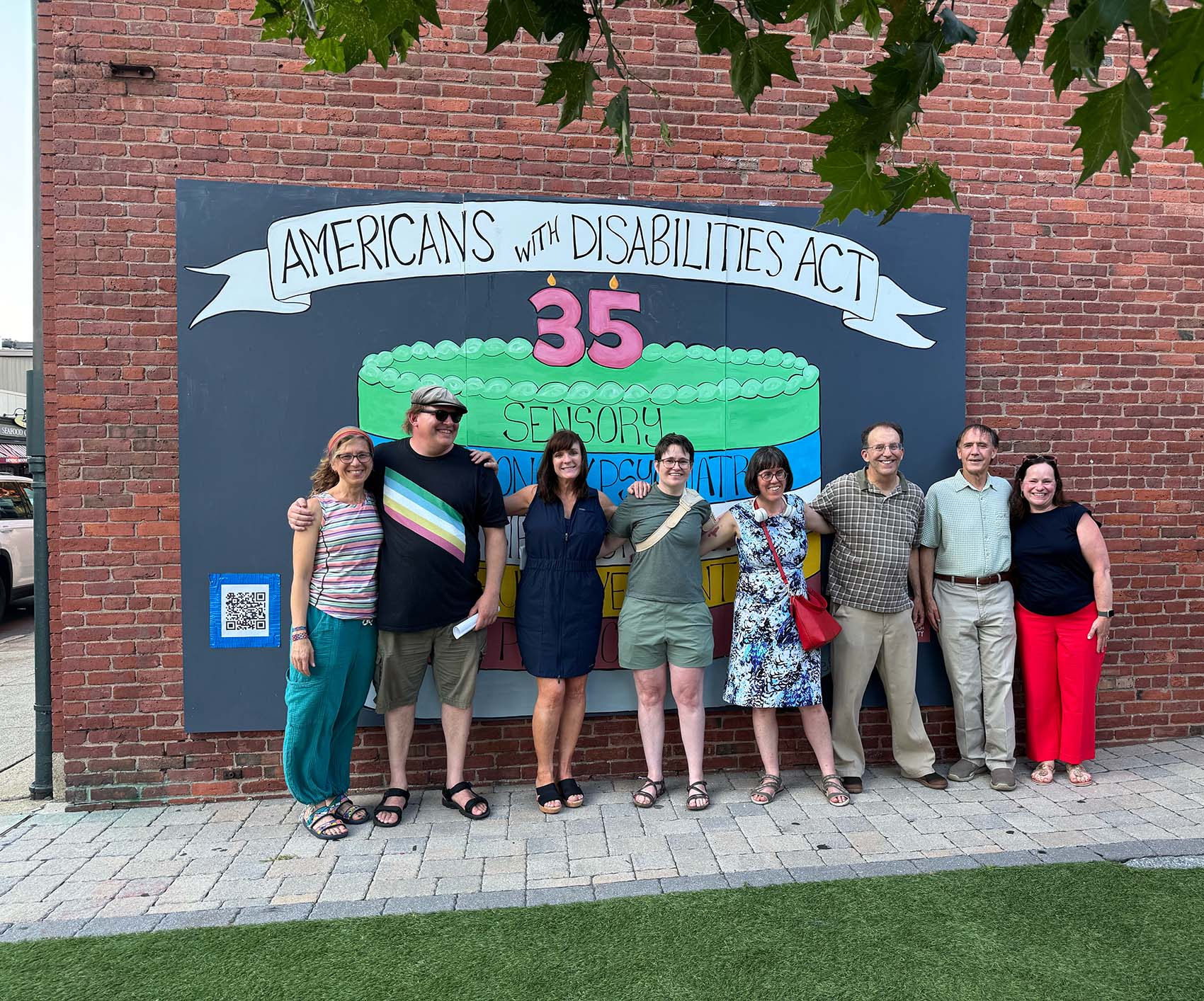
Members of the Commision on Disability with Kris Rodolico, left, and Mayor Griograitis, right, at this week's mural celebration
This month, the Melrose Commission on Disability is hosting a number of events to celebrate Disability Pride Month. This July is particularly notable as the 35th anniversary of the Americans with Disabilities Act (ADA), the federal law that bans discrimination based on disability and has improved the lives of countless disabled Americans since it was signed into law by President George H.W. Bush in 1990.
Kris Rodolico and Chiara Pieri of Follow Your Art Community Studios painted a mural for Disability Pride Month outside the YMCA on Main Street. The mural depicts a five-layered cake in the colors of the Disability Pride flag, and each label is layered with the type of disability its color represents: sensory, emotional/psychiatric, non-visible/undiagnosed, neurodivergent, and physical. Garin Boyd, who is a member of the Commission on Disability and a visually impaired visual artist, created a visual description for the mural that links to his website, visualdescription.org.
The Commission on Disability hosted a mural celebration this week, where members of the Commission spoke. Commission Chair Gary Hale called this year's anniversary of the ADA “poignant” given the current backlash against diversity, equity and inclusion initiatives, some of which support disabled Americans.
Rodolico spoke about the close relationship between Melrosians with disabilities and Follow Your Art. “You all know we love painting on this wall,” she quipped, “but this is especially important to us because inclusion is so important to everything we do at Follow Your Art. This mural was a wonderful opportunity to collaborate with the Commission on Disability in a meaningful way.”
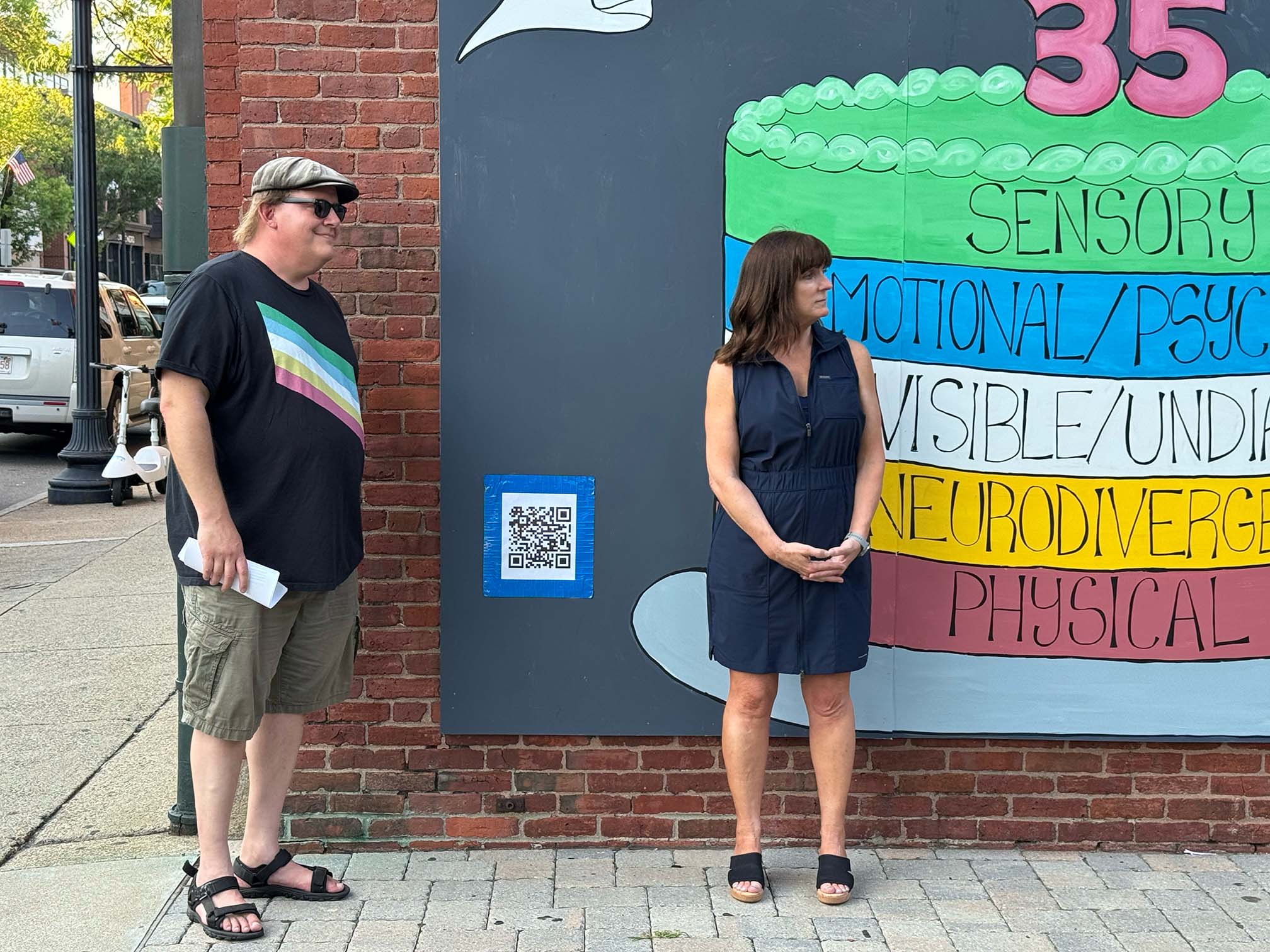
Boyd, left, and Commission member Alaine Breen with the mural. The QR code links to visualdescription.org.
Next week, the Melrose Public Library will host a storytime for kids about disability on Tuesday morning and a panel discussion on Wednesday evening. Then, the following Sunday, Boyd and fellow Commissioner Erin Ryan Heyneman will host a storytelling event at the Cambridge Foundry focused on disability and fashion.
Additional initiatives the Commission is planning include: a disability-themed art show, an accessible workout class at the Melrose YMCA, the publication of a Community Resource Guide that will assist community organizations in how best to include disabled individuals in their activities and events, and outreach to local businesses to host internships for Melrose High School students with disabilities. Additional panel discussions are also being considered.
The Melrose Commission on Disability was formed in 2020 by a group of Melrose residents who petitioned the city and, with support from Mayor Paul Brodeur and approval from the City Council, established the Commission under Massachusetts law.
The Commission consists of seven Melrose residents who volunteer to “ensure that Melrose is fully inclusive of people with disabilities.” This means not just complying with the letter of the ADA law, but also fostering an environment that is inclusive, supportive, and consistent with the spirit of the law. The group meets on the second Wednesday of each month at 7:00 pm. The meetings are usually remote and are open to any Melrose resident who wishes to comment on a disability-related matter or to request disability accommodation. Meeting agendas and minutes are available on the city’s meeting portal.
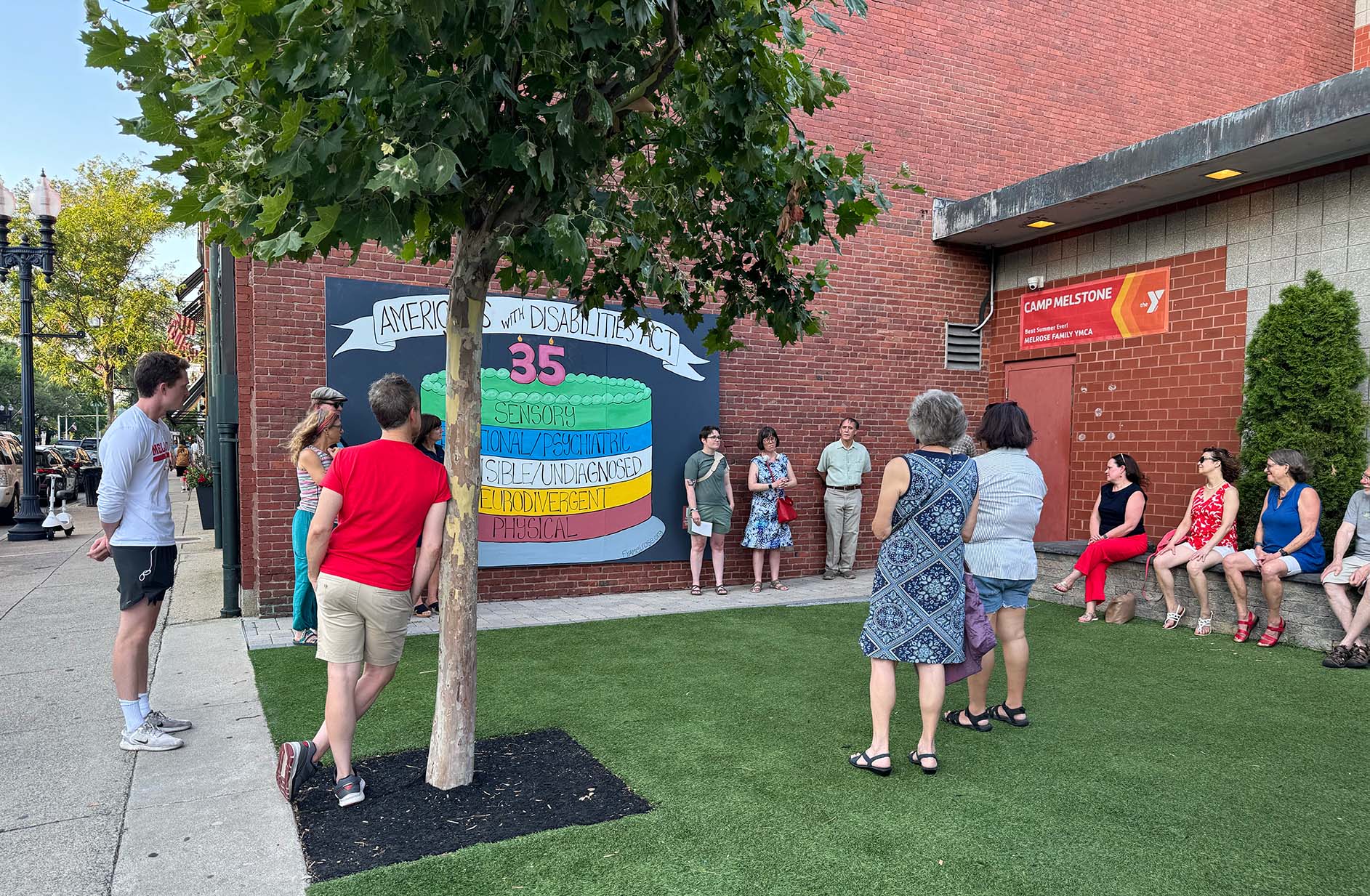
Members of the public at this week's mural celebration
It has taken the Commission some time to determine how it can best serve the community, in part due to the fact that it was formed early in the COVID-19 pandemic. Boyd, who is currently the Commission’s secretary, states that the Commission was formed with a broad goal to “address all things disability related.” He acknowledges that, early on, the group assumed there would be clear priorities and a well-defined constituency for the Commission’s efforts.
However, identifying these constituents and establishing priorities for the Commission has been more of a challenge than expected. Either due to a lack of information or a reluctance to ask for help, many disabled individuals remain unaware of the resources and support available to them.
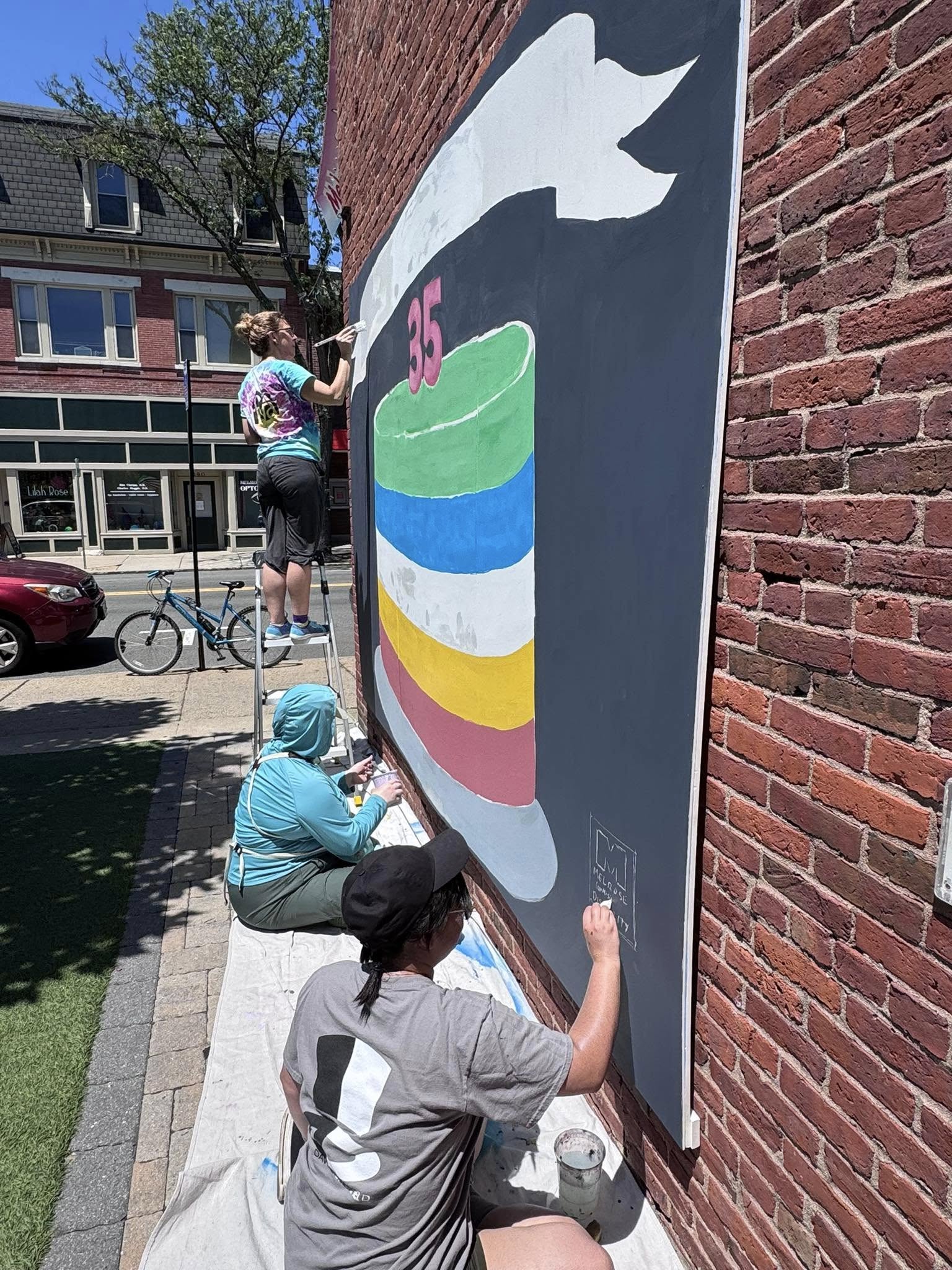
Rodolico and Pieri painting the mural
Photo Credit: Nancy Clover
The Commission is committed to promoting these resources. Its recent activities include working with the Massachusetts Office of Disabilities to address specific accessibility issues in several of the city’s public buildings, updating the city’s ADA policies, offering story sessions in which disabled individuals can recount their personal experiences living with their disability, and panel discussions to increase dialogue about disability issues in the Melrose community. The Commission also conducted a public showing of the Netflix documentary, “Crip Camp: A Disability Revolution,” a moving and important statement about disability rights.
The ADA is unique among civil rights laws in that it not only bars discrimination against disabled individuals but also requires affirmative, proactive steps to accommodate individuals with disabilities. The ADA’s achievements can be seen in more widespread physical access for people with disabilities such as ramps, automatic door openers, Braille signage, and captioning for the Deaf and hard-of-hearing. While people with disabilities are more widely included in more aspects of society, including schools and employment, as a result of the ADA, disability rights advocates agree there is still work to be done in addressing discrimination, gaps in accessible infrastructure, and continued economic disparities.
Here in Melrose the work of the Commission has been bolstered by a needs assessment conducted in 2023 by the Institute for Human Centered Design that reviewed the city's programs and services for disabled residents. According to Hale, “there’s a lot to do,” but the assessment has provided more focus for the Commission. In addition to addressing specific physical access obstacles around the city, the Commission plans to increase and promote programs that raise the awareness of disabled Melrose residents to available resources and to educate the community on the best response when they believe an individual or group may require accommodations.
While compliance with the ADA is critical, for Boyd, Hale, and their colleagues on the Melrose Disability Commission, the work of the Commission is not simply about compliance but about cultivating and maintaining an inclusive and caring environment for all individuals within the Melrose community and beyond.
Ellen Putnam contributed reporting to this article.