Melrose Bike Buses Get Students Rolling To School
By Ellen Putnam
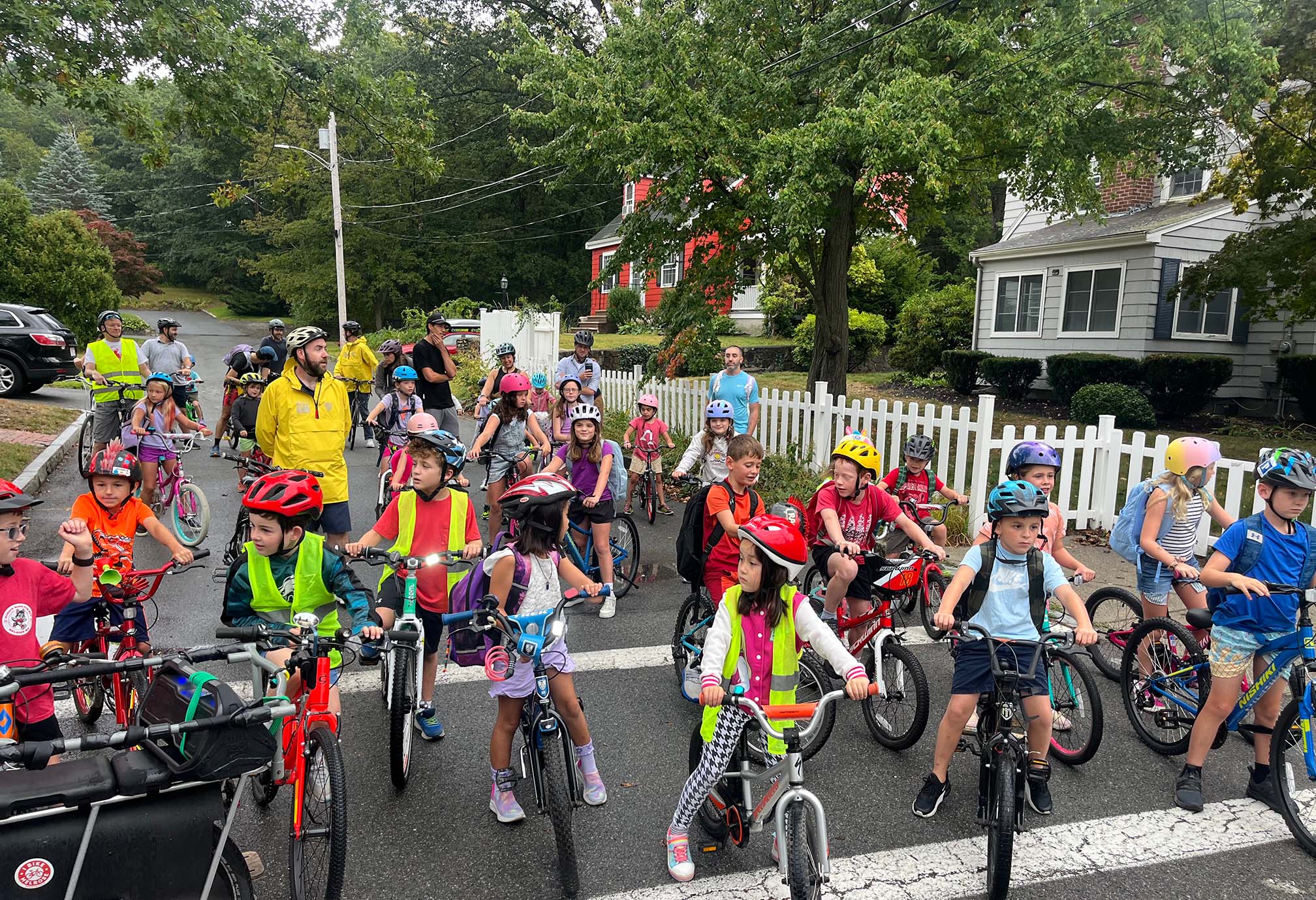
The Horace Mann Bike Bus
Photo From Colleen Conway
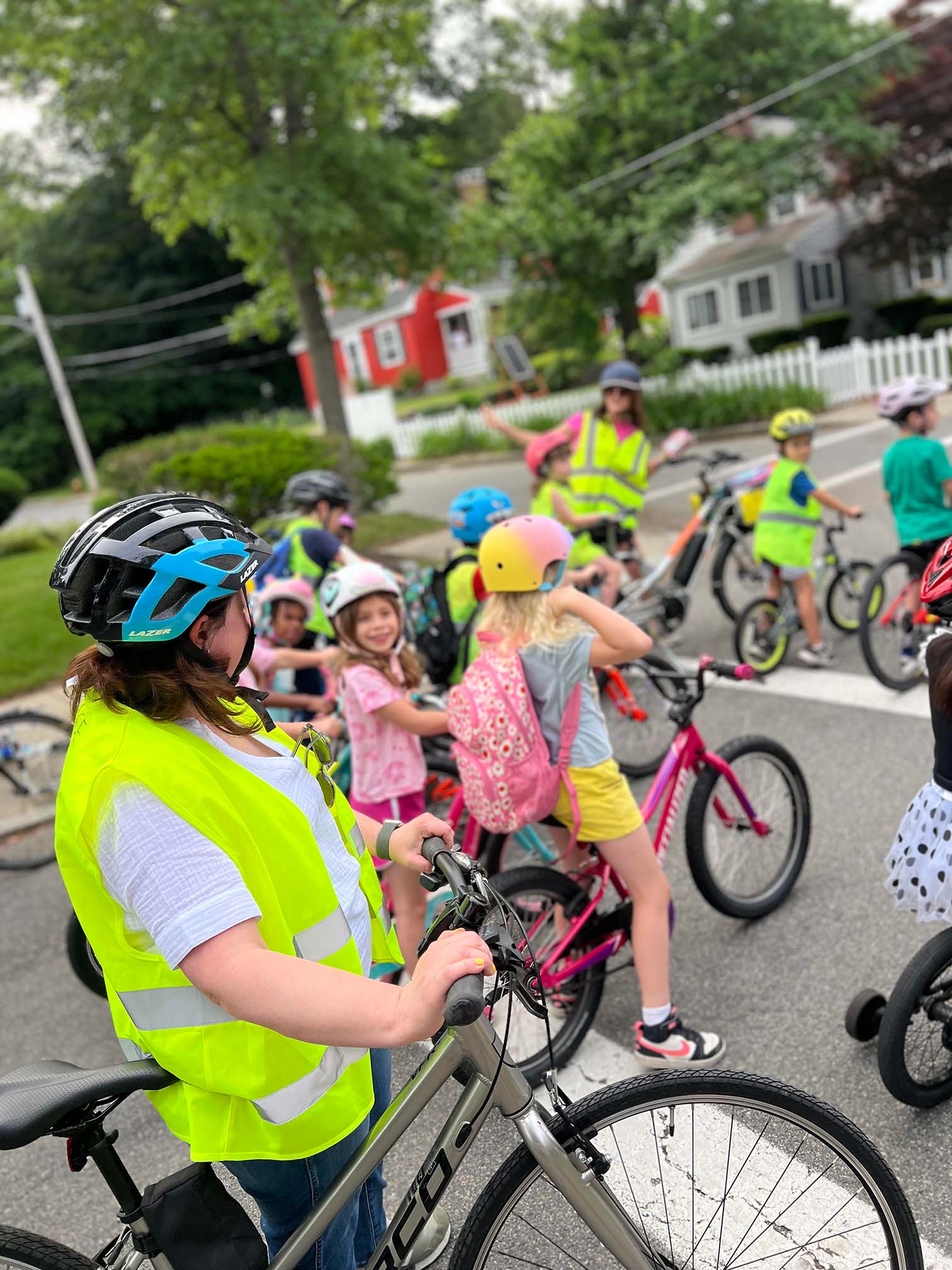
Last week, the Melrose Bike Buses - the popular Horace Mann Bike Bus, along with two new bike buses at the Winthrop and Lincoln Elementary Schools - enjoyed their first bike rides of the year, bringing dozens of kids across Melrose to school by bike.
The bike bus is an international movement that started in Barcelona and now has hundreds of participants worldwide. The idea has recently gained traction in our area, with bike buses starting up in Boston, Cambridge, Somerville, and several other nearby towns.
The idea behind a bike bus is that riding to school is safer when kids ride together, and riding in a bike bus led by adult volunteers gives children the opportunity to be more independent while they are still safe under the supervision of adults.
“The idea is that bike riders are safer in a larger group because you’re more visible, and drivers are less likely to try to overtake you,” explained Colleen Conway, who started Melrose’s first bike bus at the Horace Mann Elementary School in the spring of 2024 without knowing how many kids would participate, or whether it would catch on.
“I couldn’t sleep before the first ride,” Conway recalled. “I didn’t know if it was just going to be my family and the three neighbors I knew were coming, or a lot more.”
It ended up being a lot more.
The Horace Mann Bike Bus has grown in the eighteen months since it launched to two routes: northern (Conway’s original route) and southern (which is led by Lani Nelson, who is also the chair of the Melrose Pedestrian and Bicyclist Committee, and her husband, Garrett). Dozens of kids and parent volunteers participate every other Friday when the rides take place.
And this fall, Kara Oberg, who runs The Ride Cafe, started a bike bus route to the Lincoln Elementary School, and Ben Butterworth started one at the Winthrop Elementary School.
“The joy is just incredible,” said Nelson. “Even when everything feels horrible, you can’t not smile during a bike bus. The music is playing, and everybody is just so happy.”
“Sometimes the morning routine can be a slog,” added Oberg, “but if you say, ‘we’re going to the bike bus today,’ the kids get so excited.”
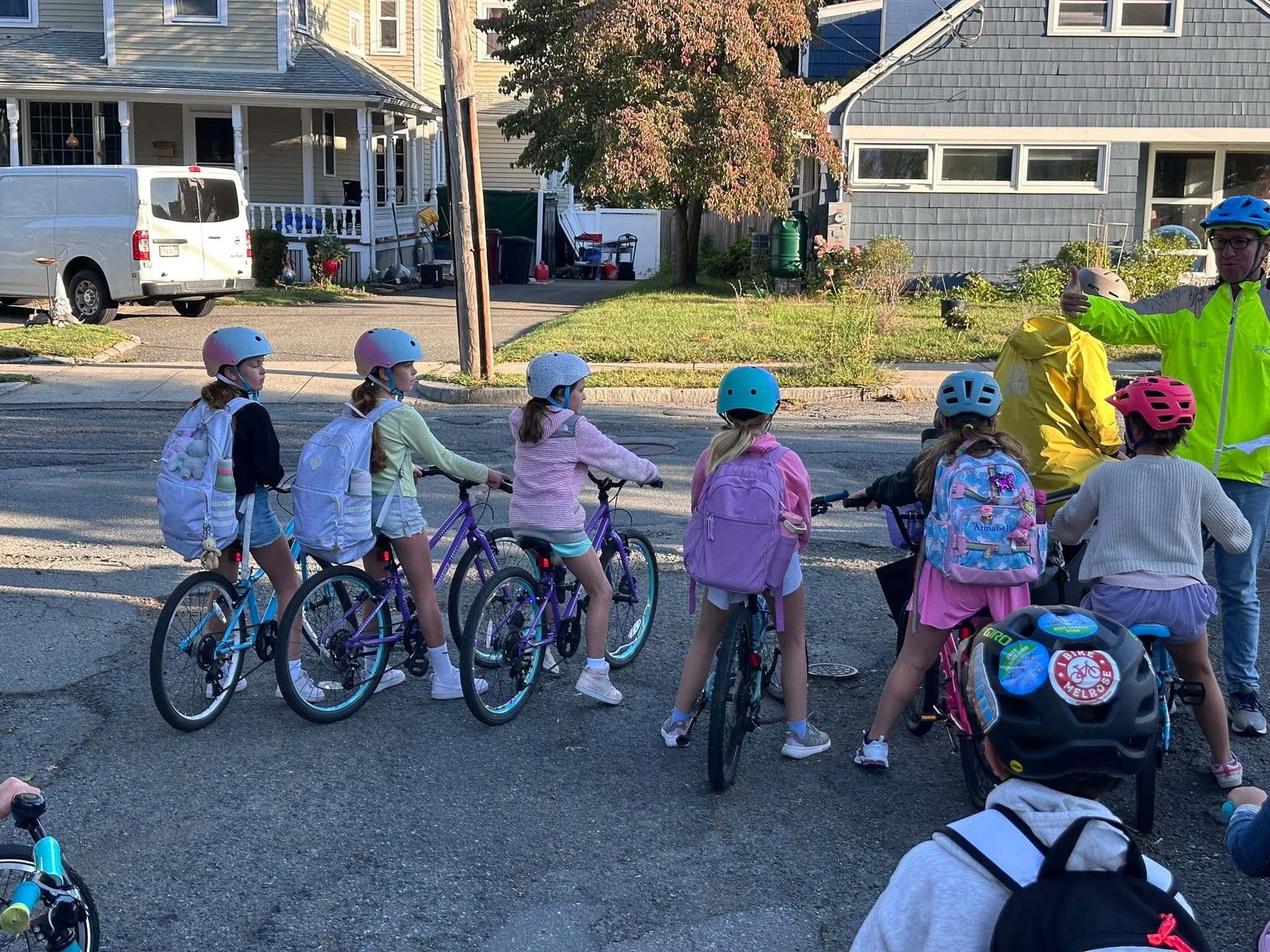
The Winthrop Bike Bus
Photo From Colleen Conway
“It’s such a beautiful community builder,” she went on, “And the independence piece is awesome. The bike bus is circled by parent volunteers who are making sure that everything’s safe, but the kids aren’t really paying attention to that - what they’re focused on is that they can safely ride their bike to school.”
The bike bus also helps kids grow more comfortable riding their bike to school.
“I think of it as exercising a muscle,” reflected Oberg. “The bike bus is helping people do something totally new. If they haven’t biked to school before, it’s a supportive environment, and they don’t feel so weird or scared about doing it - that part is huge.”
“I’m seeing a lot more parents at Horace Mann biking now too,” added Conway. “People join the bike bus, and then they say, ‘I can do this!’ It just takes showing people that you can do it - it’s normal, and it’s safe.”
“The goal of the bike bus is ultimately not to need the bike bus anymore,” Oberg went on, because children feel comfortable biking to school and drivers are used to watching out for children who are biking to school. “It’s like rewinding to the 1960s, when kids were all biking to school as soon as it was age-appropriate. But the downside is, you don’t get the camaraderie and community-building if you lose the organized bike ride to school.”
“Post-pandemic, people are very hungry for community-building,” Conway pointed out. “It’s hard to tell where things will go in five or ten years. But people need it right now. The ultimate goal is to not need the bike bus for kids to walk and bike to school independently - but that might be a long time coming.”
Jonathan Haidt stirred up discussion last year with the release of his book "The Anxious Generation, which argues, in part, that replacing risky play and independent exploration with early exposure to phones and social media is damaging to children’s mental health.
While some scholars may debate Haidt’s conclusions, it does seem clear that children do better when they are given autonomy and the opportunity to take risks.
“The way society is built, all of the guardrails are up for as long as possible,” reflected Nelson. “So kids have a safe physical environment, but it can sometimes be so much that it’s a detriment to their wellbeing and their ability to learn independence. I think of the bike bus as a safe way to give them more autonomy.”
Oberg noted that the Harris Poll surveyed kids aged 8-12 earlier this year to find out more about our kids and cell phone use. Almost three quarters of the kids surveyed said they would rather spend their time doing things together in person, without screens. The bike bus, she points out, provides this opportunity. “Some of these kids may have only biked in their driveway and on the local basketball court before they joined the bike bus. They might never have ridden in the street before - but the street is for them, too!”
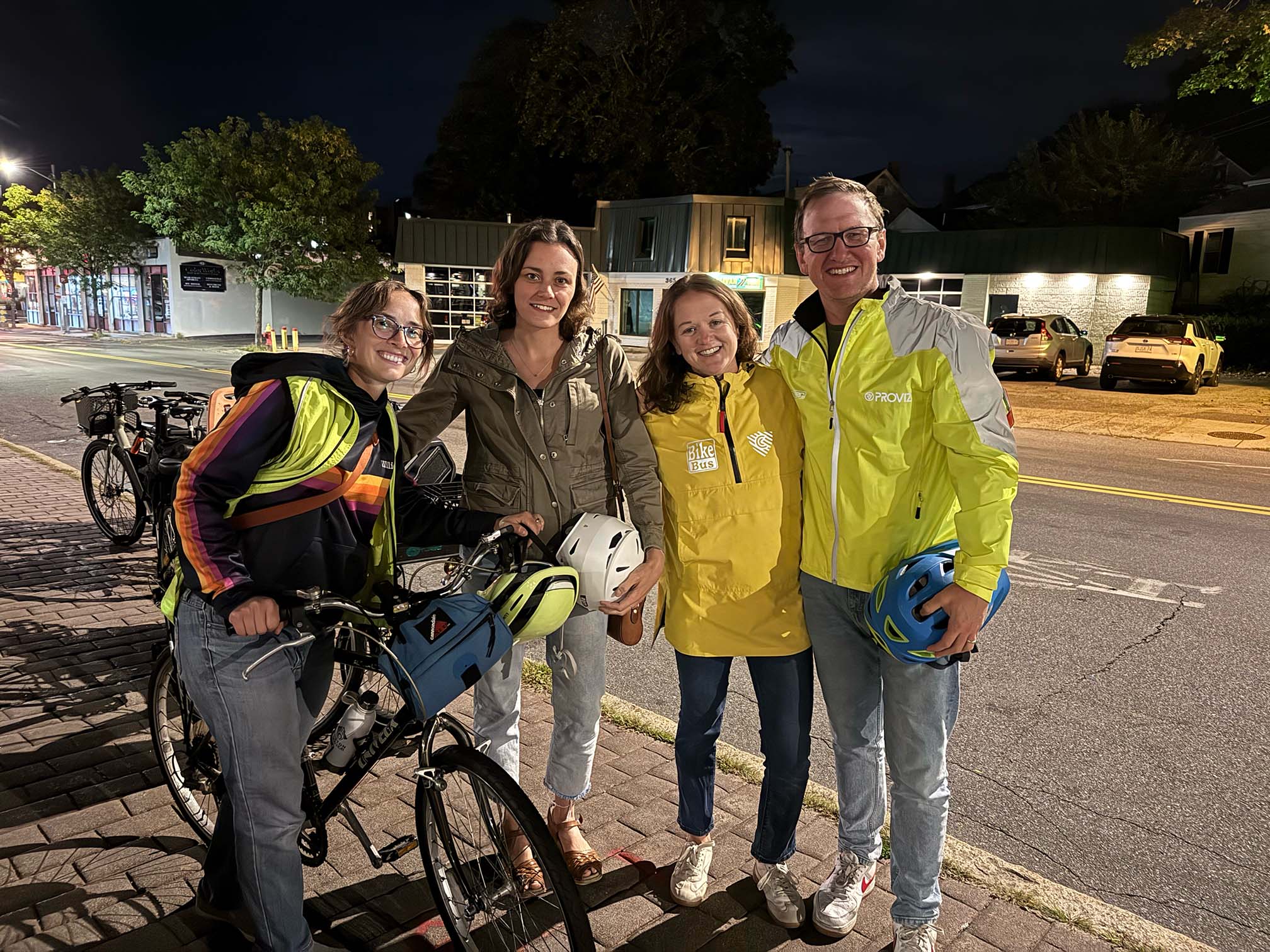
From left: Lani Nelson, Kara Oberg, Colleen Conway, and Ben Butterworth
“I’ve been teaching these Kids Learn to Ride classes at The Ride Cafe,” she went on, “and I have Horace Mann kids in the class who want to learn to ride because they want to be able to do the bike bus. It’s a real-world application for them.”
“The bike bus is all about teaching independence and riding skills in a safe environment,” Conway pointed out. “The kids don’t necessarily realize that it’s a controlled environment, because that’s the beauty of childhood.”
Conway reflected that the teaching aspect influenced how she set the route for the Horace Mann Bike Bus. “Originally, we were going straight down Damon Avenue, and that was great for the first few bike buses but it wasn’t very exciting - the kids didn’t have to make turns, or stop, or really learn to ride as a group. So we decided to change it up. Now we weave through the neighborhood, and kids get to experience biking together. We end by riding through the park, and it’s amazing - the kids just let loose.”
“If kids feel comfortable biking,” Nelson added, “then maybe it’s the beginning of them being able to go to school more on their own. It’s about showing them how to move their own bodies to school without their parents holding their hands.”
While the bike bus organizers request that children in second grade and below have a parent escort, parents of older children may have different comfort levels starting out. “Early on, we had some parents who were subtly following along with us, walking their dog,” reflected Conway, “and that’s fine! Others might stay in the background, and check in with their kid once they get to school.”
Horace Mann Principal Milissa Churchill, Mayor Jen Grigoraitis, and members of the Melrose Police Department have all joined the Horace Mann Bike Bus for a morning ride.
“Ms. Churchill has been amazing,” reflected Nelson, “and it’s great to see everyone at the school get excited. The administrators and teachers are all very excited, and they fully support us.”
Administrators at all three elementary schools have been supportive of the bike buses - not just because of the community aspect, but also because having more kids bike or walk to school decreases traffic in the dreaded school drop-off line.
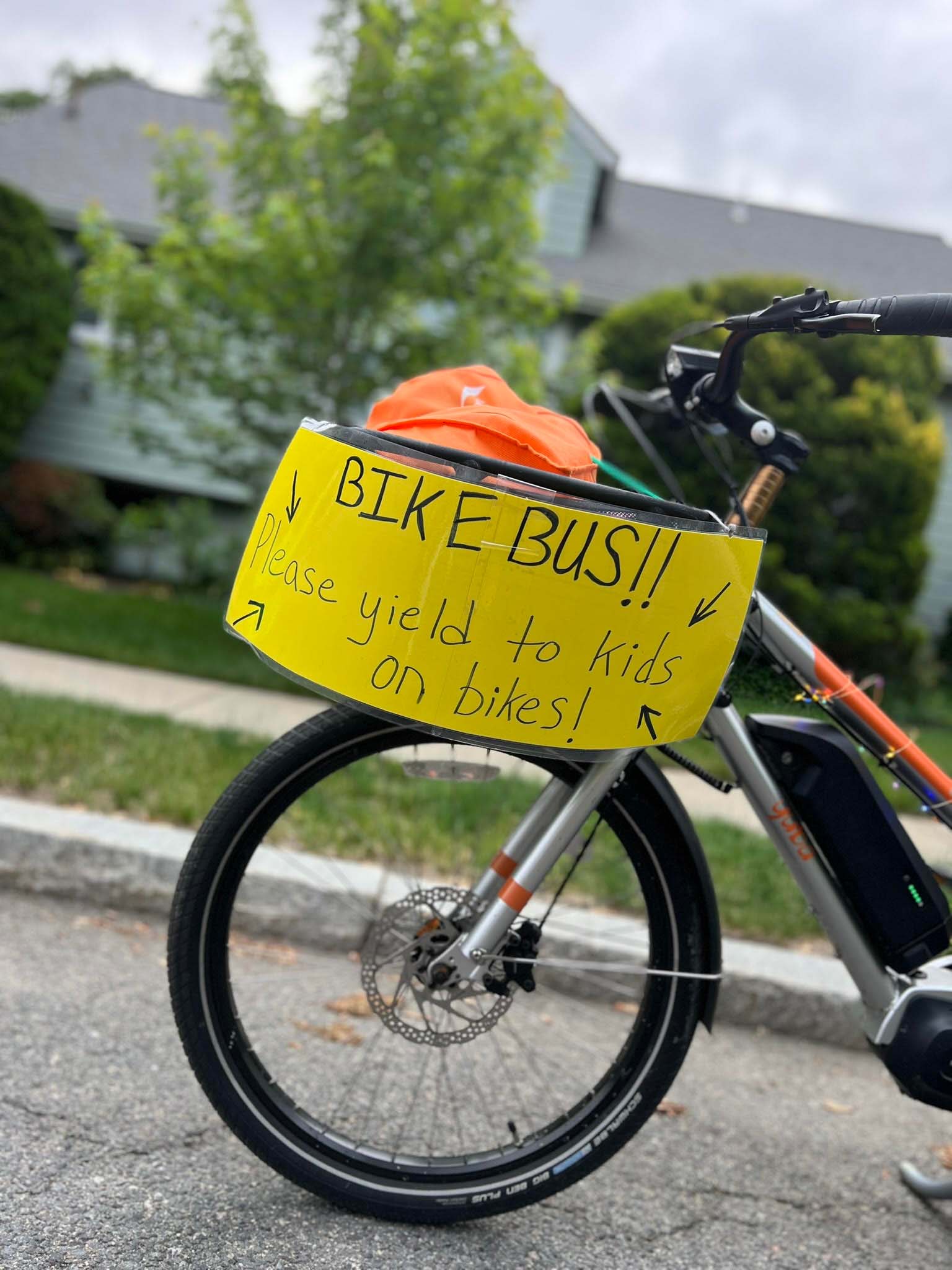
Photo From Colleen Conway
However, there are currently several structural issues that might prevent more children from walking or biking to school on a regular basis, outside of bike bus days.
For one thing, the Melrose Public Schools currently have a shortage of crossing guards, in part because the salaries are low and the hours don’t always fit well with other jobs.
“Crossing guards benefit people who are biking, walking, or rolling,” said Oberg, “and we need to pay them more. They are arguably doing the most important job in the city at that time - preventing serious injuries and fatalities. We need infrastructure changes so cars aren’t going at speeds that will kill people, but we also need crossing guards.”
The importance of crossing guards is not just hypothetical for Melrose residents: anyone who visits the Mary M. Foley Park across from the St Mary’s School can read the story of Foley, who had worked for the city as a crossing guard for 25 years in 1985 when she was struck and fatally injured by a car as she courageously pushed several children out of the way, saving their lives.
“Crossing guards shouldn’t have to put their lives on the line to protect kids,” said Conway. “We’ve seen drivers get progressively more aggressive and more entitled - sometimes they don’t seem to think that they even have to stop for kids who are biking across the crosswalk before school.”
“I think we can all agree we want our kids to be able to walk and bike themselves to school safely,” added Oberg. “Not all kids can do that, but we can support those who can.”
“I’d like to see more of a public awareness campaign,” Conway went on, “If you are leaving to get to work or get your kid to school at drop-off and dismissal times, you just need to leave more time and be patient. You are going to be stopped by a crossing guard, and it’s not the kid’s fault.”
“But,” she added, “the bike bus brings me hope that we can change things.”
Another challenge is the streets themselves, many of which were not designed to optimize pedestrian and cyclist safety.
Many of Melrose’s elementary schools have a busy road that cuts part of the neighborhood off from the school. So far, bike bus organizers have generally tried to avoid the busiest streets, which means that not all children who live within walking or biking distance of their school can safely get there with a bike bus.
Both of the Horace Mann Bike Bus routes begin on the north side of the Lynn Fells Parkway; the new Winthrop Bike Bus route begins on Grove Street, so riders don’t need to cross Upham Street; and the Lincoln Bike Bus crosses West Wyoming Avenue at Bob’s Market, which Oberg believes is the best and safest location for that crossing.
“I chose our route because it’s close to where we live,” Oberg said. “The route works for us. We can’t expect to bring in everybody - but we may inspire other people to build a feeder route.”
Mayor Jen Grigoraitis rode with the Horace Mann Bike Bus last year
Photo From Colleen Conway
Yesterday evening, the city’s Traffic Commission voted unanimously to make Hesseltine Avenue - the last street on the northern route of the Horace Mann Bike Bus - a traffic safety zone, which will trigger a 20 miles-per-hour speed limit on the street.
“It’s low visibility,” explained Conway. “There’s a tough curve in the road, and people use it as a cutthrough. Half of the school walks in through that entrance, across the park. I will only go down Hesseltine with kids during the bike bus if someone is physically corking it with their bike - the rest of the roads we take over. There are so many school kids walking and biking on that street every day.”
“The Traffic Commission looked at Hesseltine because of the bike bus,” added Nelson, “because of the volume of kids going down there. People who wouldn’t have cared to write a letter before are now helping us push for it.”
At the Traffic Commission meeting, neighbors of all ages expressed their concerns about speeding and unsafe driving on Hesseltine. Traffic Commission member (and former mayor) Gail Infurna called making Hesseltine a traffic safety zone “a no-brainer. I don’t know why it’s never been picked up before,” she reflected.
“This is another great thing about the bike bus,” added Conway, “it exposes issues to people who weren’t aware of them before. It really shines a light on things.”
“And it increases people’s motivation to take action and do something,” Nelson went on. “People get stuck thinking that’s just how it is, and they have to change their personal behaviors to accommodate a horrible situation. So I hope this can be an example: look what you can do, you can start to rethink your own street. Even if it’s incremental - just a few improvements right now - over time, it builds to being better and better.”
“It’s the most local and personal thing,” added Oberg. “It’s my school, my neighborhood. My kid should be able to get to school safely - ultimately, all of our kids should - so parents think, maybe I should ask for this.”
Winter weather is another challenge for getting more children to walk or bike to school. The bike buses pause in the dead of winter to avoid having children falling on icy roads.
But with so much momentum and excitement building around the bike buses, the organizers are considering whether a walking train could continue to encourage children to walk to school even in the winter, and continue to encourage community-building and independence.
“My family walks to school because we like being outside,” commented Nelson, “it’s just our routine. So when we’re in the car on days when the weather is so bad and we’re stuck in traffic, sometimes my kids now ask, ‘Why aren’t we walking?’”
The Horace Mann Bike Bus has already inspired other bike buses in the area, including ones as distant as Newburyport and Waltham.
“Colleen started this amazing thing,” said Nelson, “and now all of these other people are starting bike buses, too!”
“It just speaks to how important doing things at the local and community levels is,” Conway responded. “We’re doing things here, and those are more tangible than things that are happening on the other side of the country.”
Nelson added, “We can have a real positive impact on people’s lives by doing something that’s simple and fun!”