Candidate for Ward 4 City Council: Ward Hamilton
By Ellen Putnam
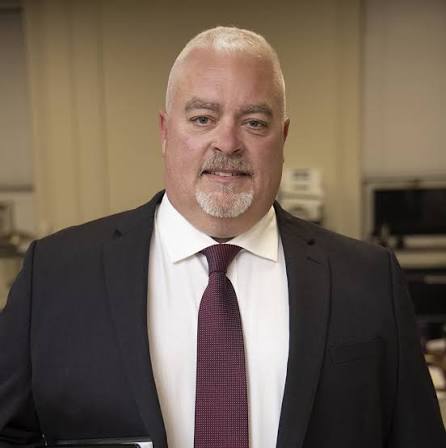
Photo From Ward Hamilton
Ward Hamilton is running to represent Ward 4 on the City Council because, he said, “I am firmly committed to maintaining a strict, fiscally conservative approach to city finances.”
Hamilton ran for City Council At Large two years ago, he said, after the School Committee and the City Council, in the spring of 2023, approved a budget that contained a deficit that would have to be filled with a future allocation from the city’s Free Cash. “I was very concerned about that practice,” he said, “and for the City Council to approve a budget that relied on a future Council to approve a free cash request was very problematic - and that’s when I decided to become involved.”
After serving on the City Council as an at-large member for the last two years, Hamilton shifted to the Ward 4 race late this summer when current Ward 4 councilor Mark Garipay announced that he would not be running for reelection.
“There were two things that I wanted to accomplish in my first term on the City Council,” Hamilton said, “making sure that we didn’t approve another budget that relied on free cash, and building the police station at the Beebe School site, not at the Ripley.” But with both of those goals completed or underway, he noted, “work still remains to be done.”
In addition to serving on the City Council, Hamilton also represents Melrose on the Northeast Metro Tech School Committee and serves on the board of the Congregational Retirement Homes. He also owns a historic preservation business, Olde Mohawk Historic Preservation (named for the Mohawk River in upstate New York, where Hamilton began his career as a bricklayer) and he has worked on restoration and consulting for many historic buildings in the area, including several in Melrose.
Hamilton believes that Melrose’s greatest strength “is our sense of community and our most important assets are the people in the community,” especially the volunteers who serve on the city’s boards and commissions and run the city’s youth sports leagues, arts organizations, and other civic groups. “People have a strong affinity for this community,” he said, “and it shines through in their actions and their volunteering and their support for our local businesses.”
And our biggest challenge, he said, “is the delivery of services while operating within the budget.”
“My philosophy toward local government is that we are here to deliver services to residents,” Hamilton said, “and my view of what that is may vary widely from other people’s. We have to deliver public education - our public schools are the cradle of American civil liberties. If we had to eliminate all other things from our budget and deliver only one thing, it would be public education. We could get by with crummy roads and infrastructure, I suppose we could all pitch in if there were a fire, and we could police ourselves if we had to. But if we don’t have public schools, we would revert back to a time when the only people who could get a good education were those who could afford it.”
“After education,” he went on, “public safety is essential. Then comes our public works and our infrastructure. Beyond that, it’s nice to have things like Memorial Hall and our Senior Center, but those aren’t as essential.”
This was the reason Hamilton proposed cutting Memorial Hall’s budget during the City Council’s budget process this spring, a proposal that became the most controversial discussion in the City Council during that process. “My goal was not to close Memorial Hall or sell it,” he said, “but to start a conversation. And I plan to revisit that conversation - not saying we need to close it, but just saying, ‘How can we do this differently?’ The people who support me want me to have the strength to say those things, even when it’s unpopular, and I’m not going to let them down.”
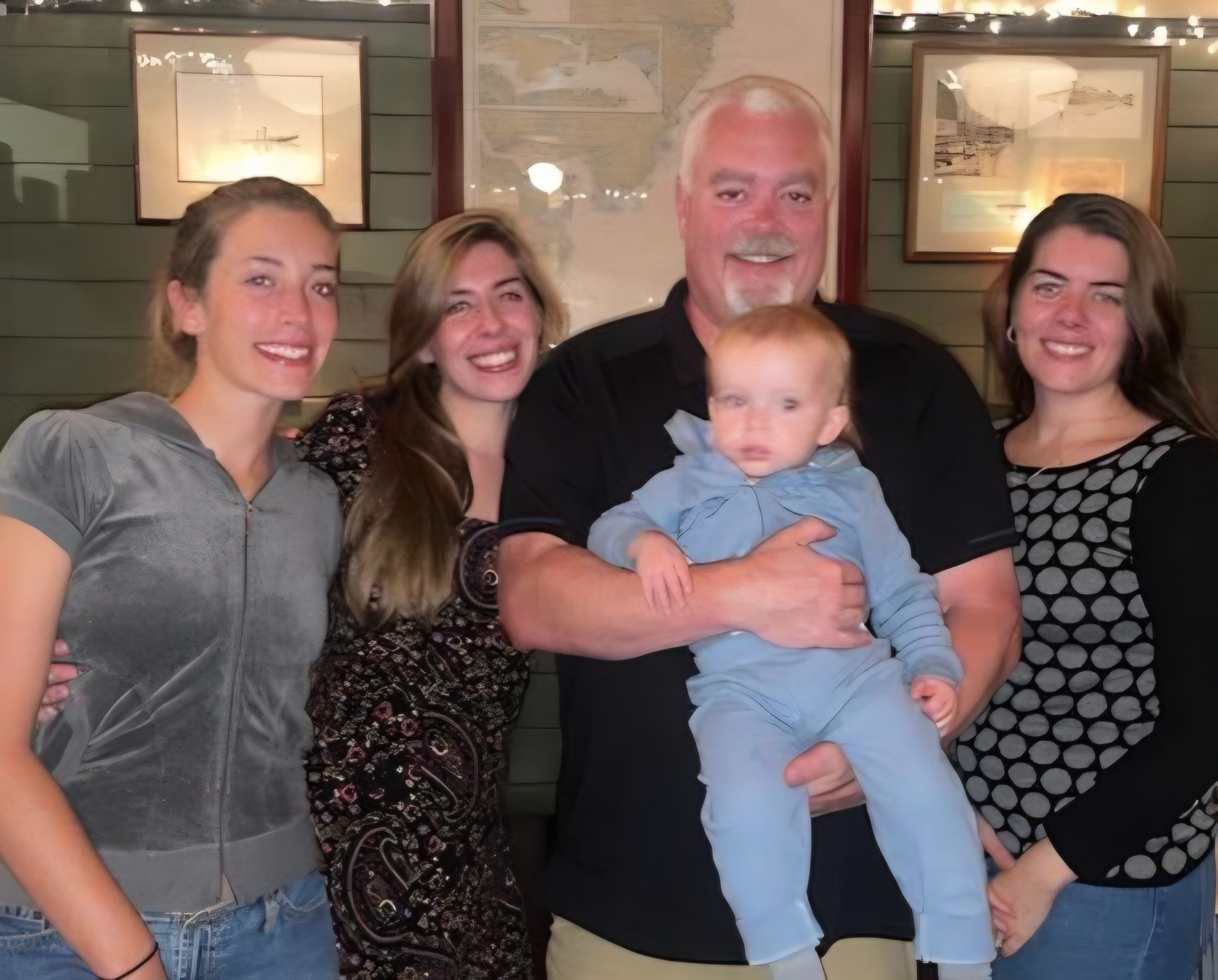
Photo From Ward Hamilton
Hamilton talked about the city’s financial position in the context of the current override discussion. “Prop 2½ prohibits us from raising the tax levy by more than 2.5% per year, but when you consider that inflation and other factors cause an escalation of costs from 4% to 6% each year, it's obvious that expenditures will outpace revenue at some point. So we can either make cuts or we can increase the tax levy.”
Increasing the tax levy can be done through new development, he noted, but “because Melrose's four square miles are already largely developed, our need for new development to grow the tax levy is juxtaposed against concerns about increased density as a strain on city services. It's unrealistic to expect that new development will allow us to keep pace with escalation of costs.”
Hamilton went on: “An override would relieve some of the pressure, but nobody wants to unnecessarily pay more taxes. As we have these difficult conversations, I have been focused on essential and non-essential services, asking how we can do things better, more efficiently and at a lesser cost. Are we doing everything possible, before we ask our voters for more money? That is the question I constantly struggle with.”
“I believe that we need an override,” Hamilton said. “Since the 1980s, Melrose has had a long history of cutting things. I’ve seen this in my own experience: there are things that I had growing up that our children didn’t have. You can see firsthand where the city has reduced services and the things that we are able to provide.”
“Philosophically,” he went on, “I think that people should have the right to vote on the override. The people should have a voice and the ability to decide what they want to do.” As to the tiered, three-question override structure, Hamilton said, “I realize the three-tiered strategy has caused angst and confusion, but I see the wisdom in empowering the electorate with the ability to choose the level of additional funding they wish to provide - or none at all.”
“But at the same time,” he went on, “I believe strongly that we shouldn’t talk out of both sides of our mouths. If we need an override, then I feel a huge responsibility to do everything we can to cut costs before we ask taxpayers for more money. It’s the City Council’s job to exercise fiscal oversight.”
Outside of the city’s financial challenges, Hamilton noted that the top issue constituents contact him about is dangerous driving. “We’re highly strapped for resources” in terms of law enforcement, he reflected, but he observed that some of the traffic calming measures that he sees when driving to jobs in Somerville - one-way streets, speed humps, and narrower streets - seem to slow traffic enough to keep everyone safe without making traffic jams significantly worse. Hamilton considered that a task force including members of the City Council and the Traffic Commission might be able to address some of Melrose’s street safety challenges.
Hamilton is interested in expanding that kind of collaborative approach to development, too. “If we’re going to continue to increase population density in Melrose - which we are, and we should,” he said, “then we need to simultaneously be cognizant of things like increased traffic, because that affects everyone’s quality of life. A lot of the development in Melrose is downtown and in the rail corridor - and that’s where it should be, because then we can still have neighborhoods where kids can ride their bikes down the middle of the street. The challenge is, how do you balance the challenges that come with higher density against people's right to do what they want with their own property?”
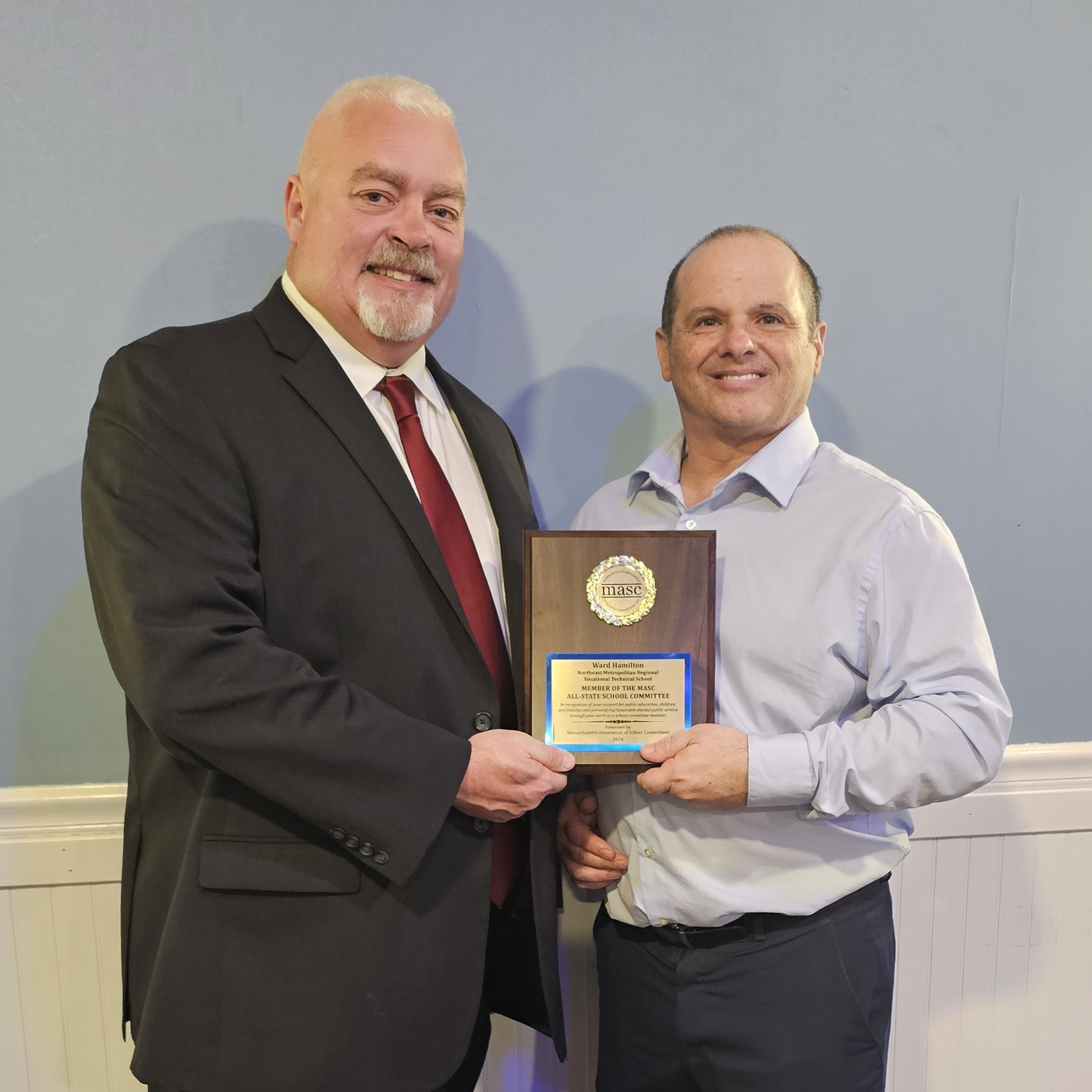
Photo From Ward Hamilton
In this past session, Hamilton said, his approach to legislating “has been to oppose new ordinances that lack a plan for enforcement and to call for the enforcement of existing ordinances first. My approach has been to learn about issues by meeting with all stakeholders and learning as much as possible. More often than not, I have found that surprisingly little separates folks on either side of an issue. But ego gets in the way and it quickly becomes about proving one's position is right, as opposed to identifying what right is. At the end of the day, you must vote your conscience and stand up for what's right.”
Hamilton disagreed with the two resolutions that the City Council took up during this session on national and international issues: one condemning violence in Gaza and another condemning ICE. “Of course, I believe that everyone has the right to their opinion and to make their opinion heard,” he said, “but I strenuously disagree with the decision to use one's official position on the Melrose City Council as a platform to do so. These stances are divisive in nature and do nothing to foster consensus on the council.”
Hamilton is a fourth-generation Melrose resident and was born and raised here, and raised his five children here as well. He is also the treasurer of Friends of Melrose Football. Hamilton reads extensively, especially about Eastern philosophy and Stoicism, psychology, and U.S. history.
In response to some criticism he has received, Hamilton said: “Perhaps to my detriment in this race, I'm not a politician. I don't make decisions based on what's popular and easy, but rather by choosing what's right. The right thing is seldom the easy thing, and it has exposed me to criticism that could have been avoided had I simply chosen to ‘go with the flow’ instead. When I am faced with taking a position on an issue or casting a vote, I don't ask myself, ‘What's going to get me reelected?’ I ask, ‘What's best for Melrose?’ and I am confident that voters will do the same before voting on November 4th.”