A Closer Look: New Northeast Metro Tech High School Building to Open This Fall
Written By Patrick DeVivo
Photographed By Nancy Clover
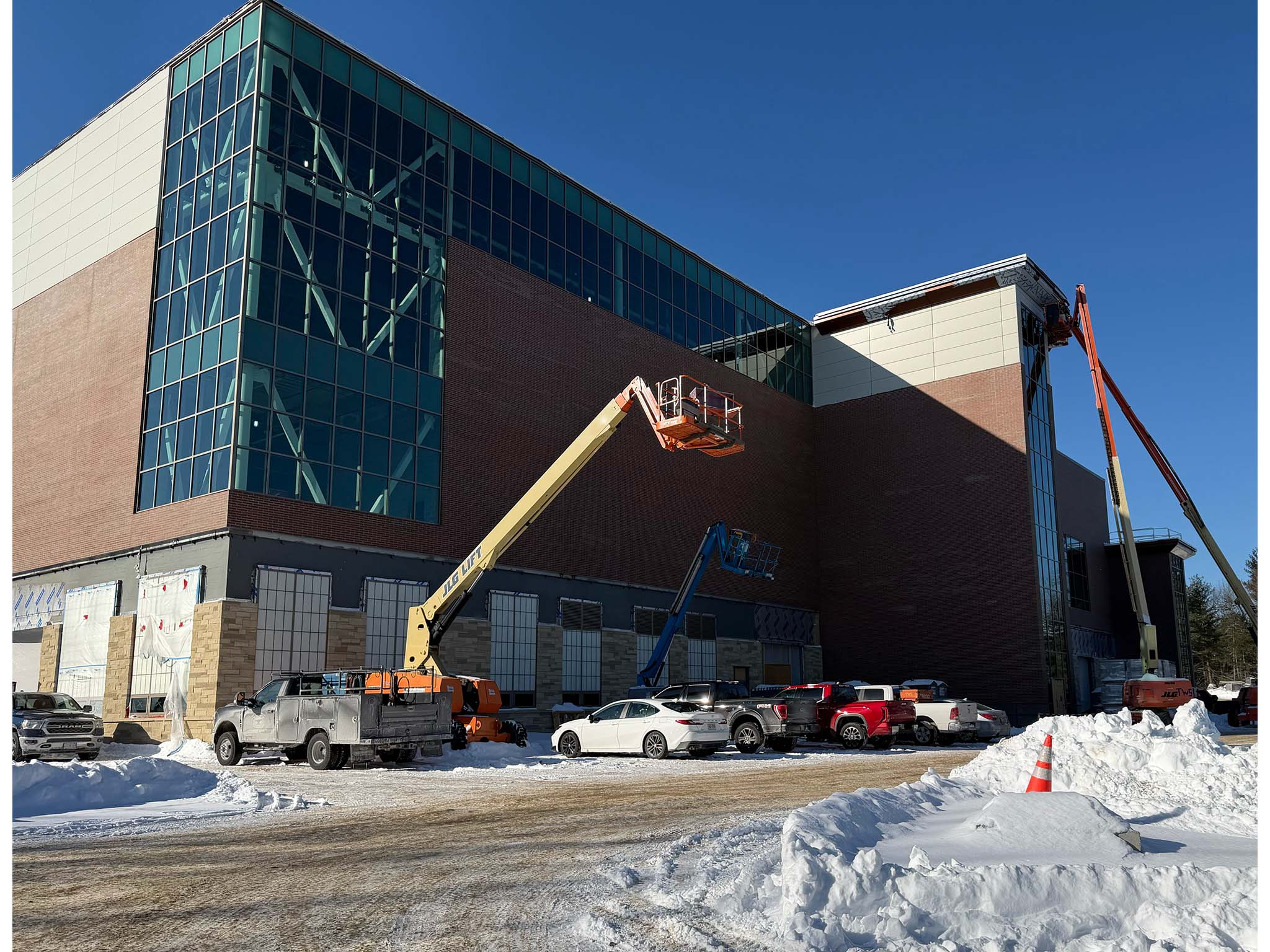
This September, the new Northeast Metropolitan Regional Vocational High School building in Wakefield will open to students, bringing with it new learning opportunities and a new facility to replace the current aging building.
Following nearly a decade of planning, debate, environmental studies, and, finally, construction, the new facility is expected to be available for a limited number of summer classes this year, according to Superintendent David DiBarri, and will fully open its doors for the start of the 2026-2027 school year in the fall.
Also known as “Northeast Metro Tech” (NEMT), the public vocational technical school was established in 1964. It serves students from twelve communities, including Melrose, in a region that extends from the Mystic Valley to the North Shore. The attendance district also includes Chelsea, Malden, Reading, North Reading, Revere, Saugus, Stoneham, Wakefield, Winchester, Winthrop, and Woburn.
The NEMT building has been located in Wakefield, adjacent to the Wakefield High School campus, since 1968. Over the years, the building has seen routine maintenance, but no major upgrades or additions.
Serious planning for a new facility that would meet the vocational training needs of a twenty-first-century workforce began in 2017. In August 2021, the Massachusetts School Building Authority (MSBA) approved the school’s plan for a 386,000-square-foot building located on a hill adjacent to the present school site, and approved a state grant of approximately $140 million to support the project.
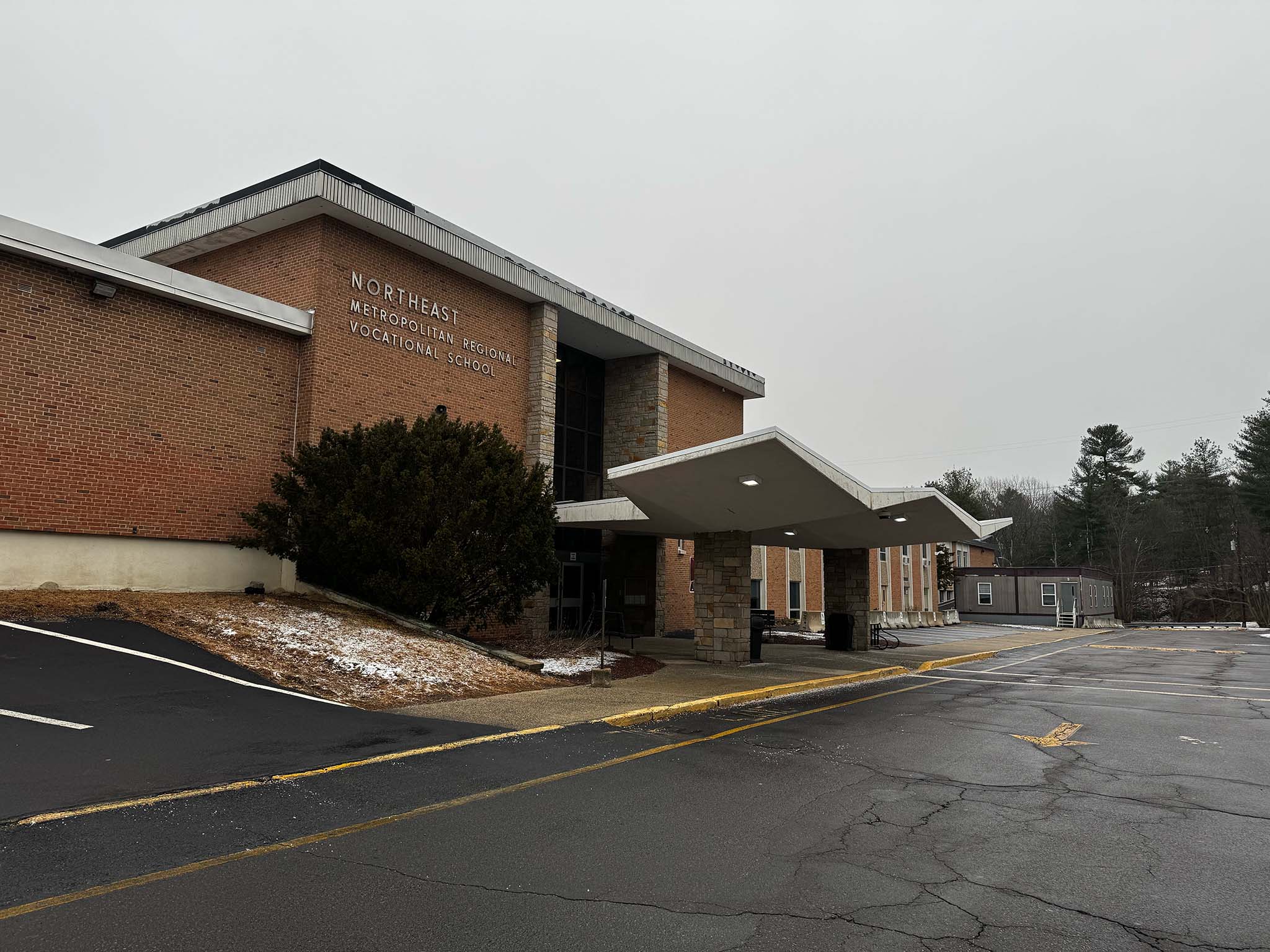
The current Northeast Metro Tech building
Photo Credit: Ellen Putnam
A January 2022 referendum of voters in the 12 participating communities approved the $317 million project. 88% of Melrose voters supported the project - the highest percentage of all of the sending districts - although only 5.3% of registered voters in Melrose turned out for the special election. The groundbreaking for the project took place in October 2022.
Funding for the project that is not covered by state grants comes from the fees paid by each sending community, relative to the number of students from that community who attend the school. This school year, Melrose paid $1.95 million for the students it sends to NEMT, including $371,618 to cover the city’s share of debt service for the project.
(Malden, which is among the communities that sends the largest number of students to Northeast, recently declined to place a debt exclusion question before voters that would have covered the $36 million share of the project that Malden will be responsible for.)
As the planning process progressed, local residents and environmental advocates raised concerns over the proposed location of the building and a new access road, asserting that the construction would damage environmentally sensitive wetlands on the site. This group argued that the new NEMT building should be constructed on a site that would cause less damage to the surrounding environment. After nearly 15 months of hearings, environmental studies, and sometimes contentious debate, the Massachusetts Department of Environmental Protection issued a final ruling in favor of NEMT, allowing the construction of the school and the access road to move forward.
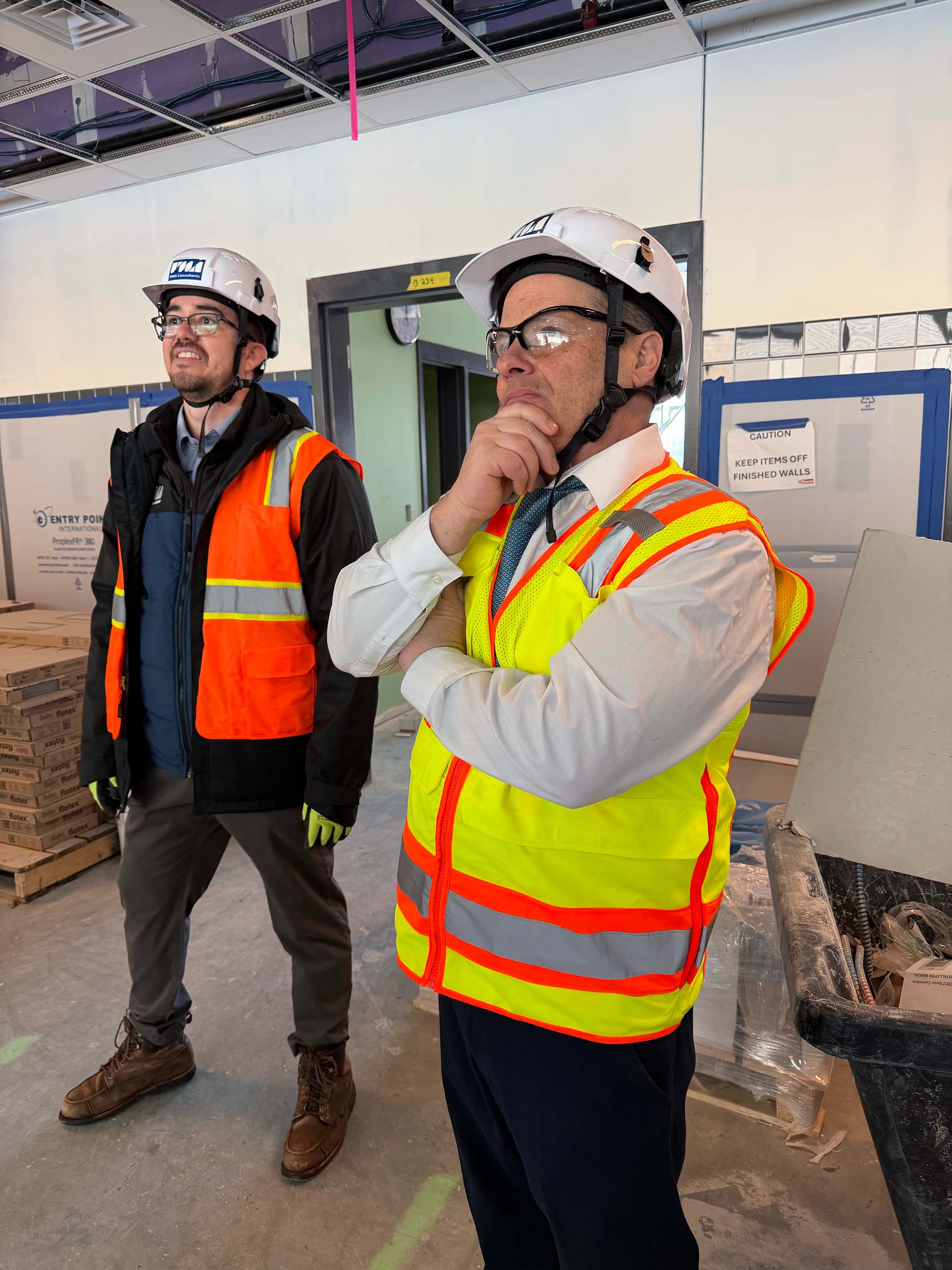
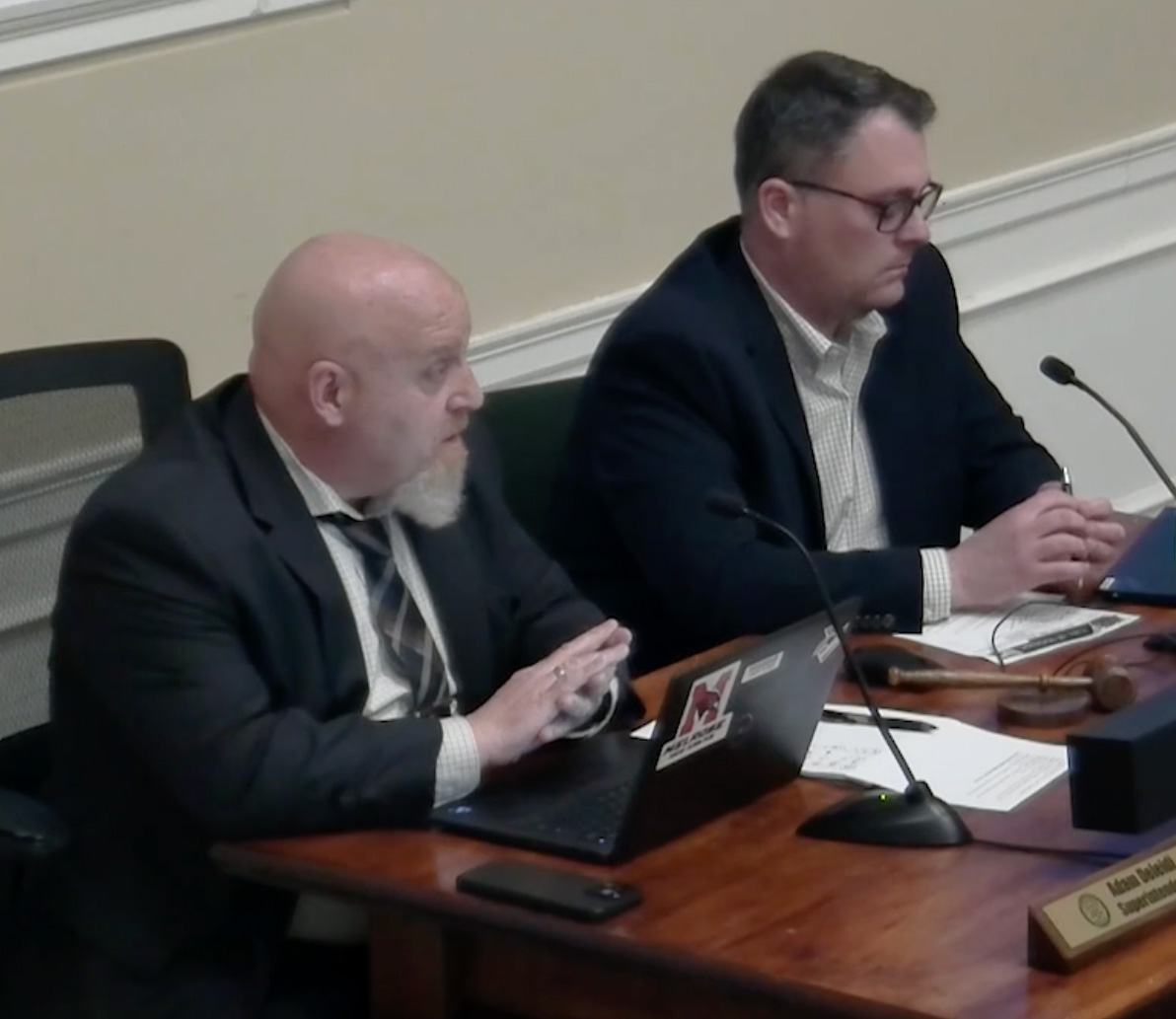
Superintendent DiBarri, right
The new facility will address current overcrowding problems at NEMT and allow the school to expand its student population from 1,380 to approximately 1,600 students. This increase in capacity will help the school meet a significant increase in demand for vocational training in our region. DiBarri shared that for the current school year, 325 new students were selected from an applicant pool of over 2,000. “Ten years ago, we couldn’t even fill all of our open slots,” he said.
Each of the twelve member communities is allocated a specific number of seats at NEMT, based on the total number of high school students in each district. For the 2025-2026 school year, 22 Melrose applicants were admitted.
Up through this year, admission to NEMT has been based on a student’s academic, attendance, and disciplinary records. However, a vote last year by the state Board of Elementary and Secondary Education will require vocational and technical schools to move to a lottery form of admission for next year. NEMT will use a weighted lottery, where students’ attendance and disciplinary record, but not grades, are factored into admission. While supporters of the change argue that it will make vocational and technical education accessible to a wider range of students, others worry that it will only reshuffle who gets in, without actually making admissions more equitable.
At present, over 60% of students who attend Northeast are identified as high-needs, with almost 50% of students identified as low-income; 18% as speaking a first language that is not English; and 20% receiving special education services.
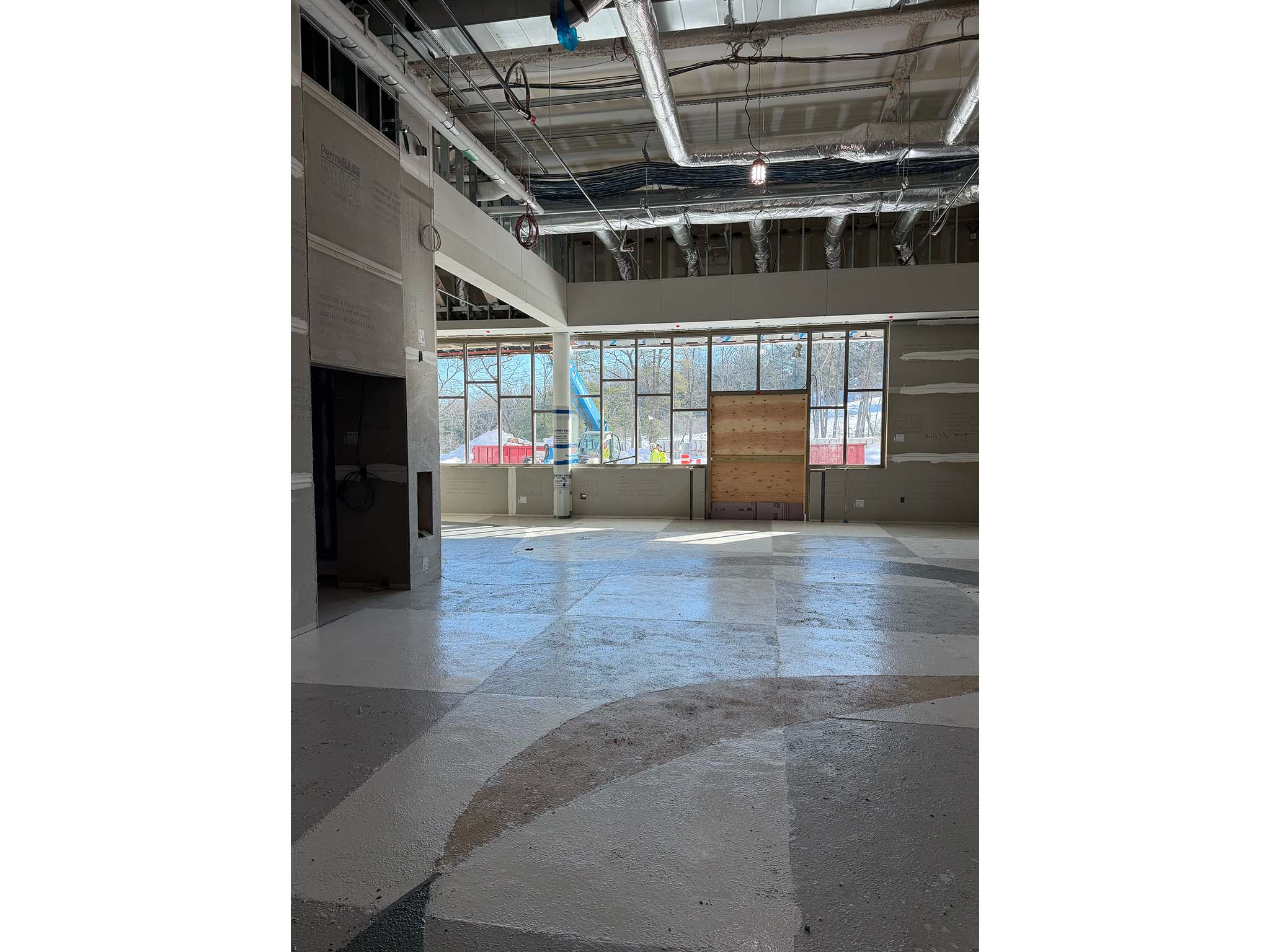
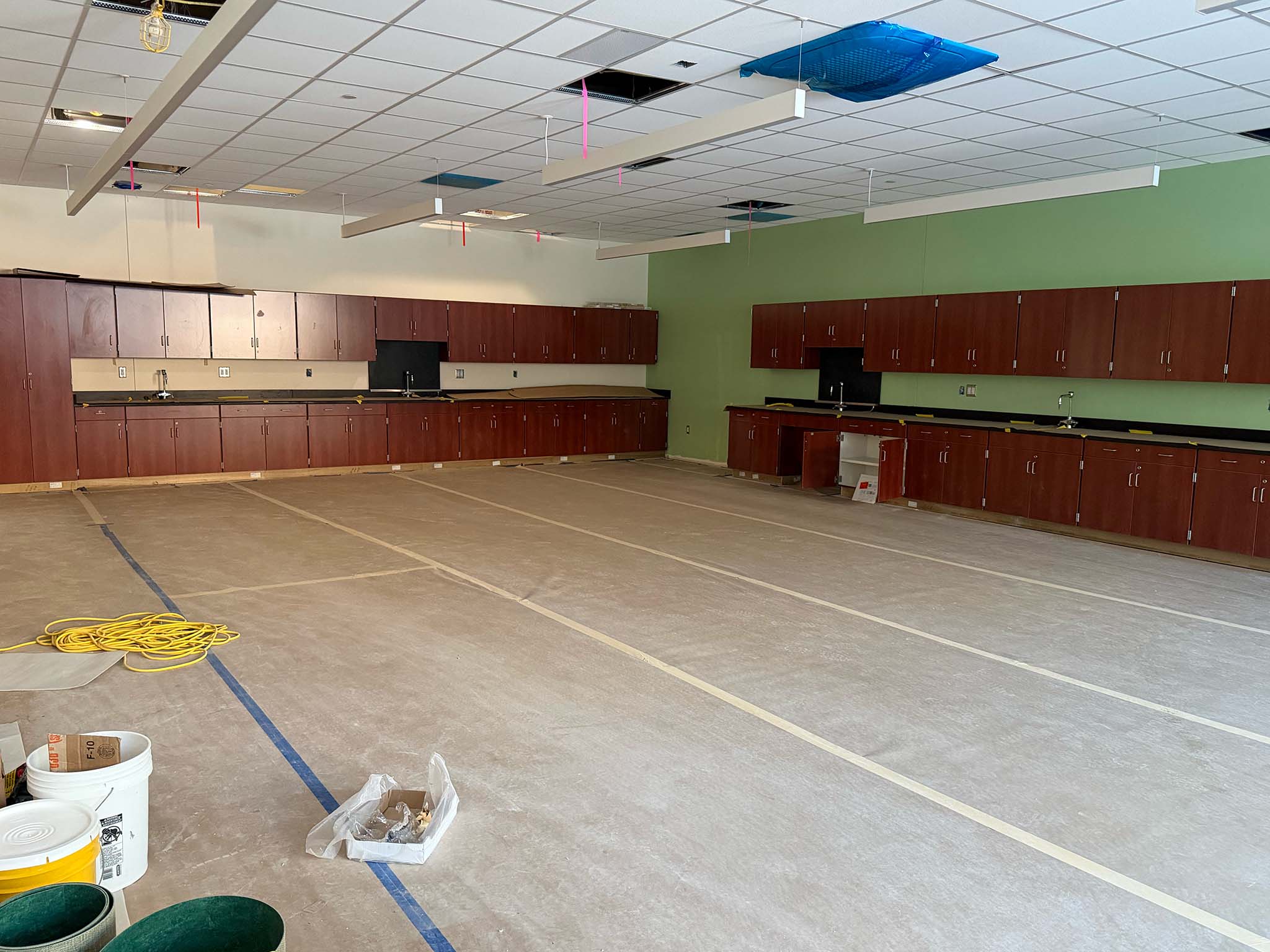
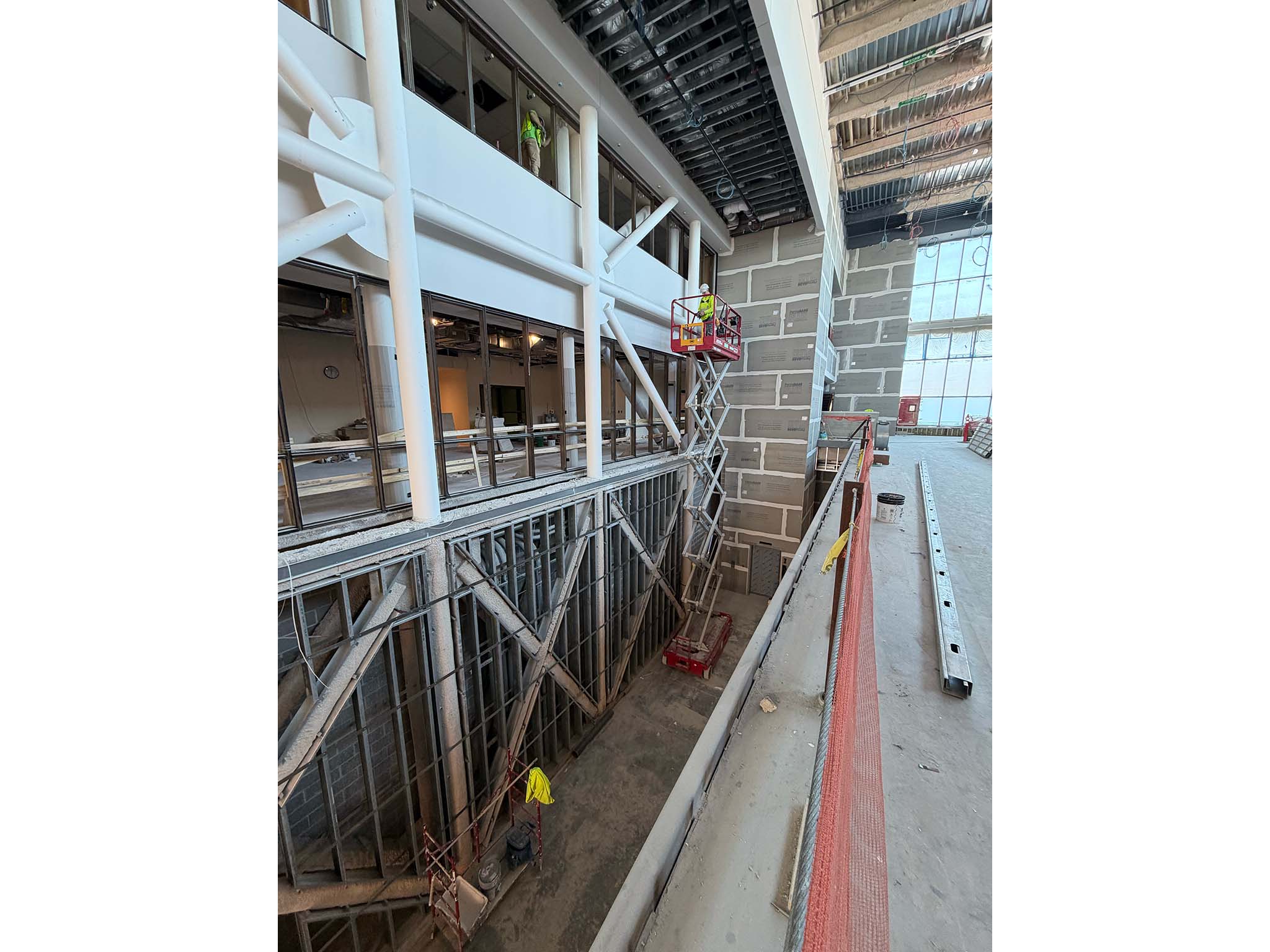
In addition to accommodating more students, the new facility will provide a state-of-the-art learning environment, with open spaces and portable equipment to allow for greater student collaboration, and lots of natural light and views of the neighboring Breakheart Reservation. It will also have spaces specially designed for the school’s vocational and technical programs, from spacious workshops for carpentry and automotive work to a restaurant and salon that will be open to the public, to support the school’s Culinary Arts and Cosmetology programs.
The current school building poses numerous accessibility challenges for students, staff, and visitors (including a challenging staircase at the main entrance that offers no ramp), and aging heating and electrical systems have been failing in recent years. The new building, in contrast, will be fully accessible to individuals with disabilities. It is also all-electric, and will be powered by a new solar farm that the Town of Wakefield is installing downhill from the new school.
While the new school building is expected to be complete in the fall, the project will not be finished at that point: once the current school building is no longer occupied, it will be demolished and new athletic fields and facilities will be constructed in its place.
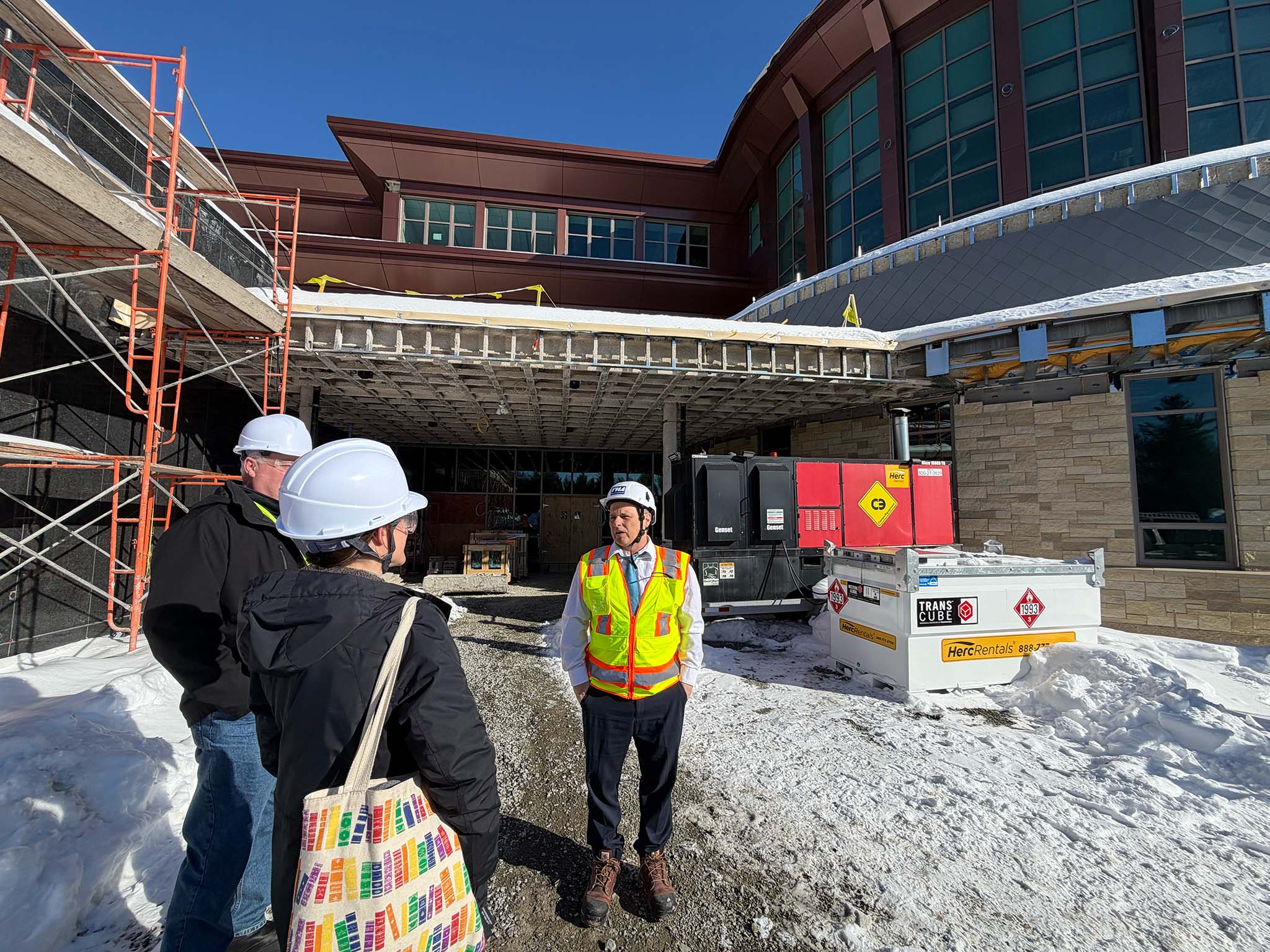
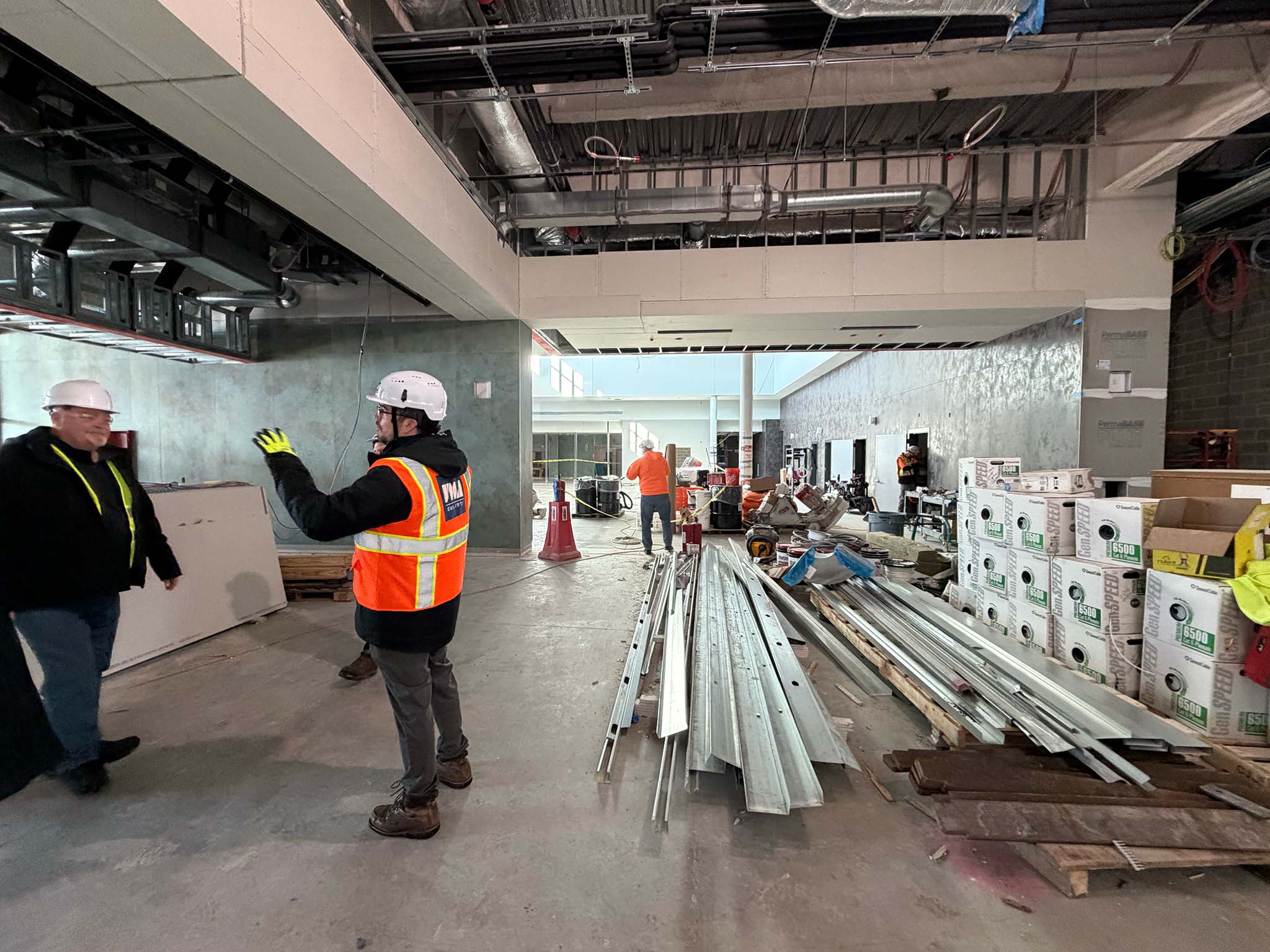
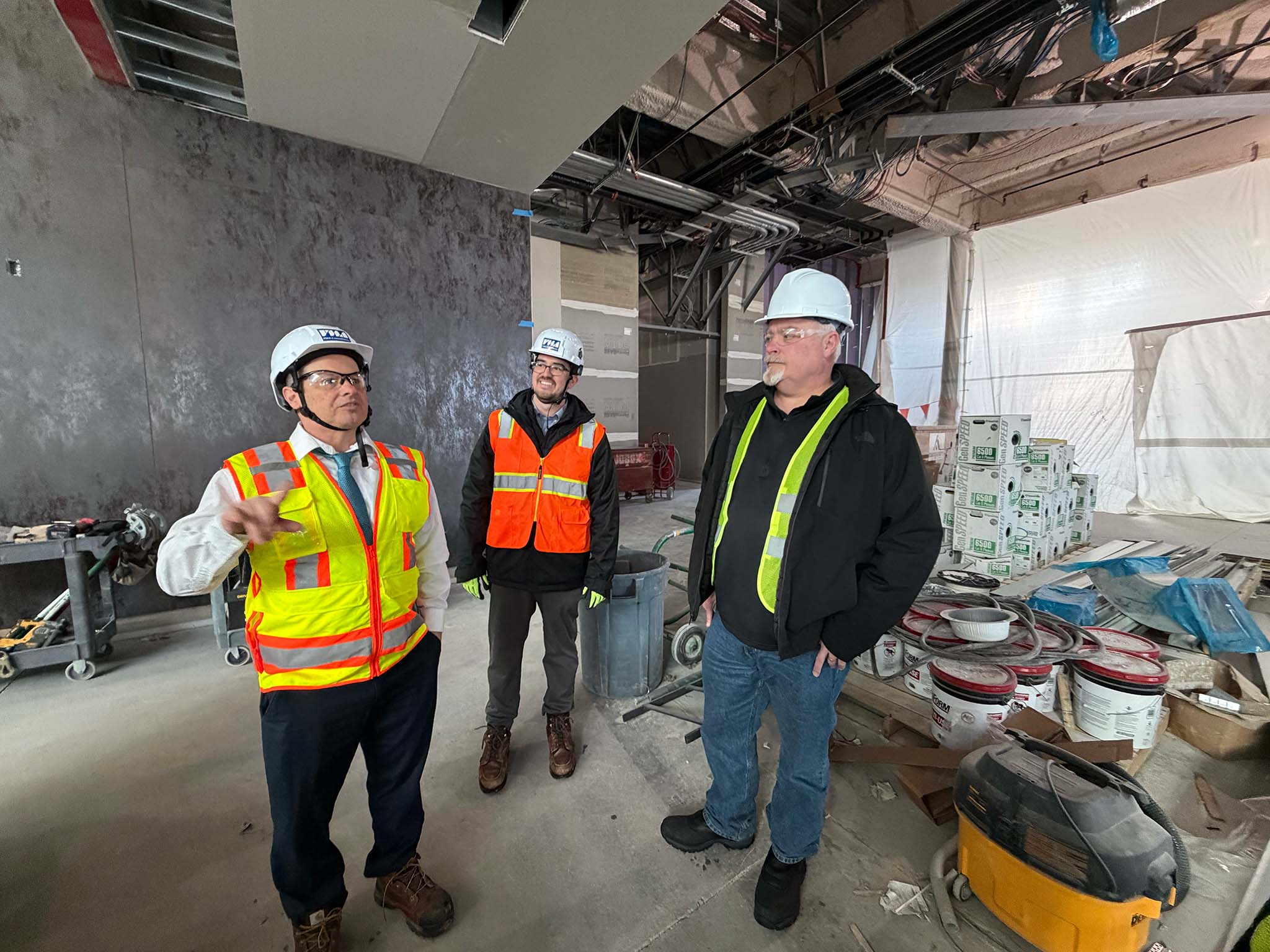
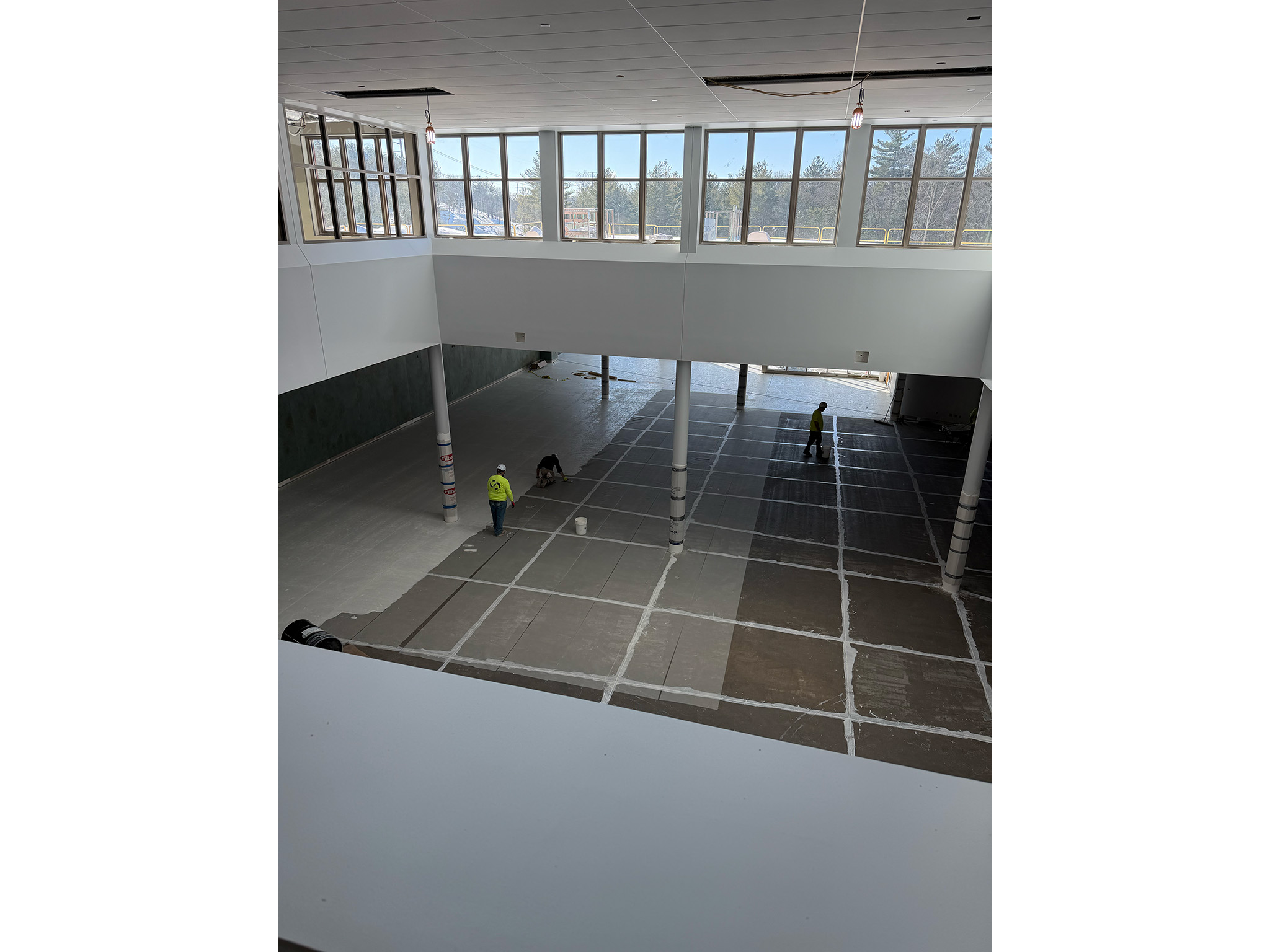
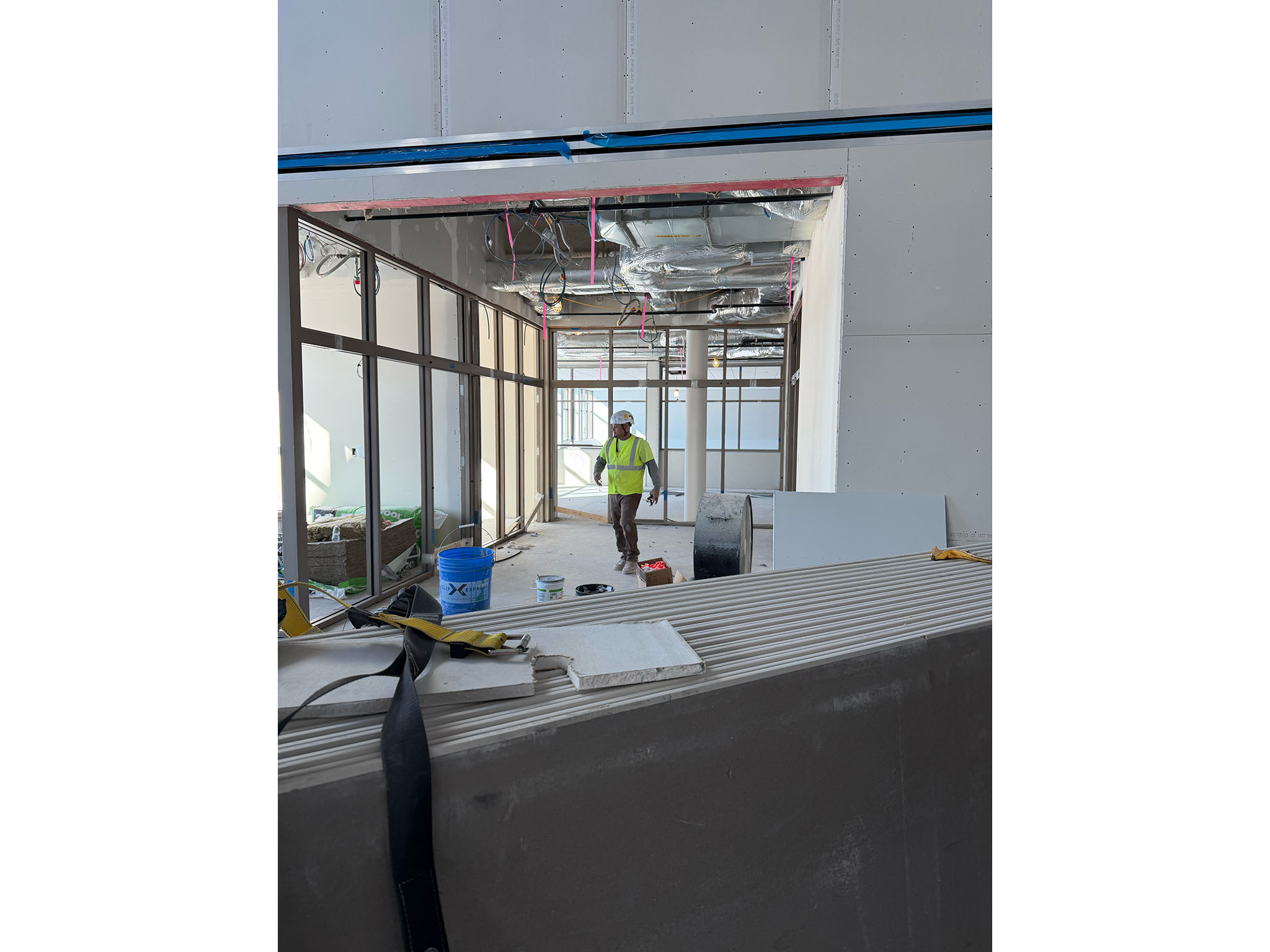
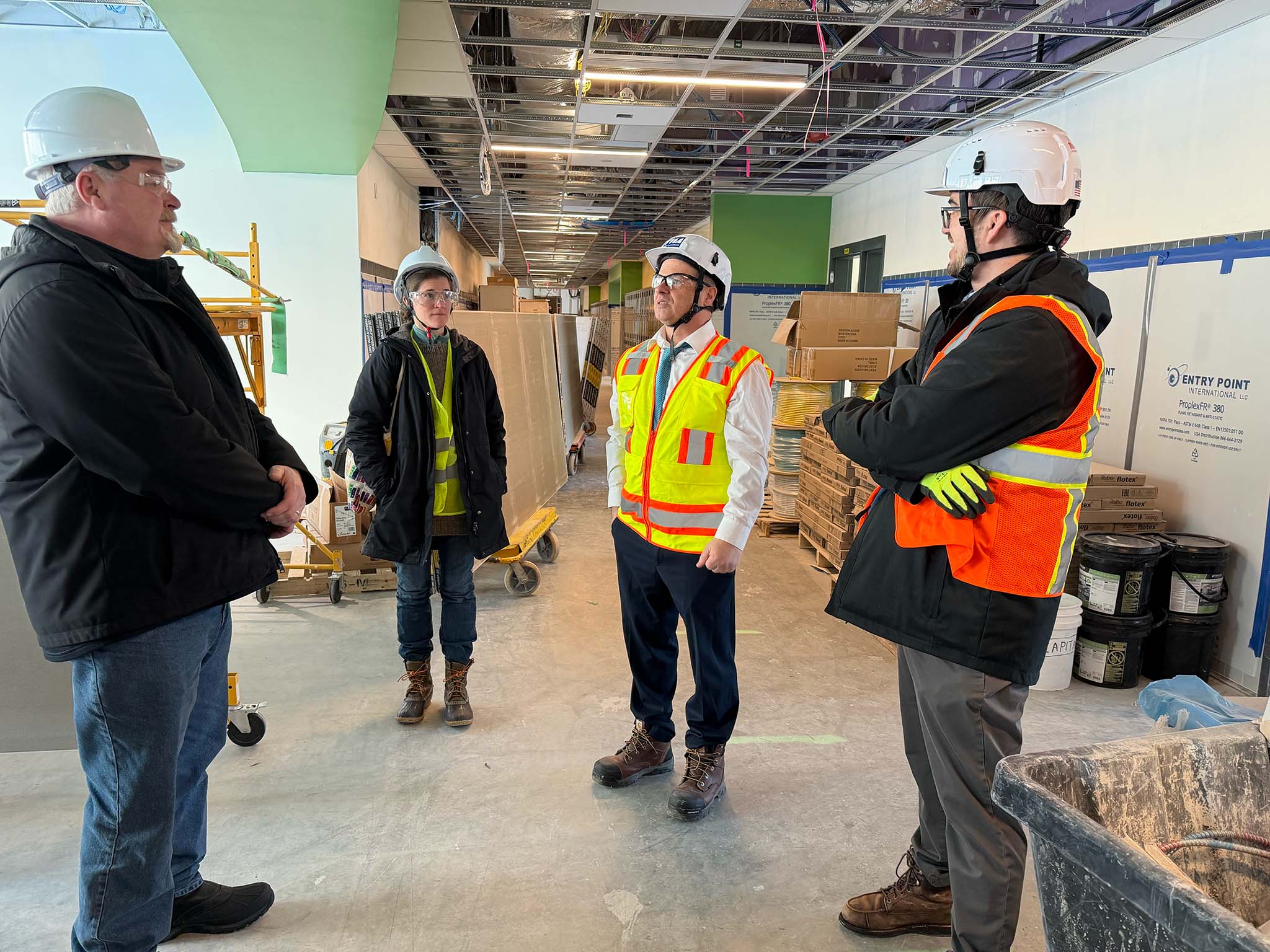
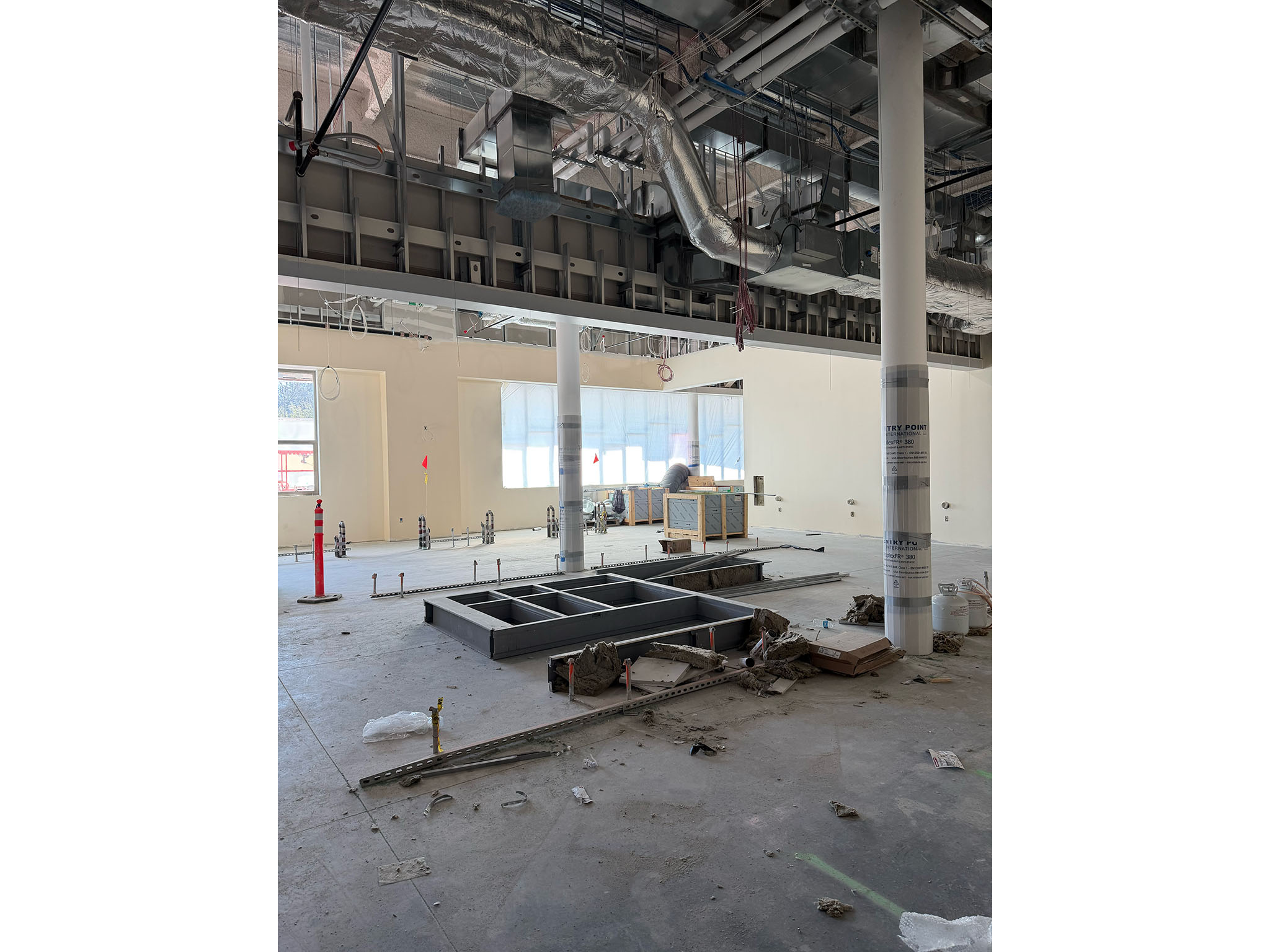
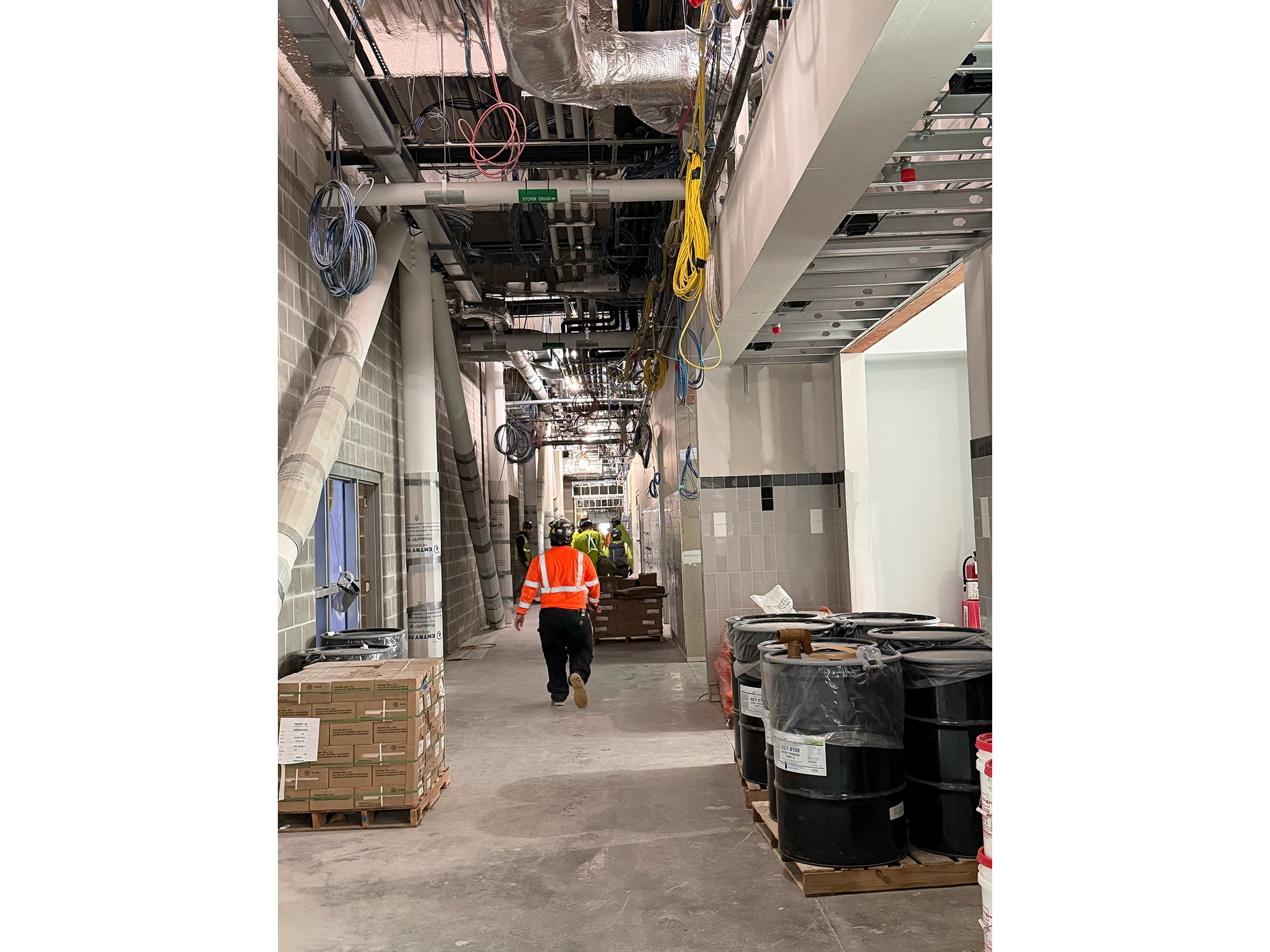
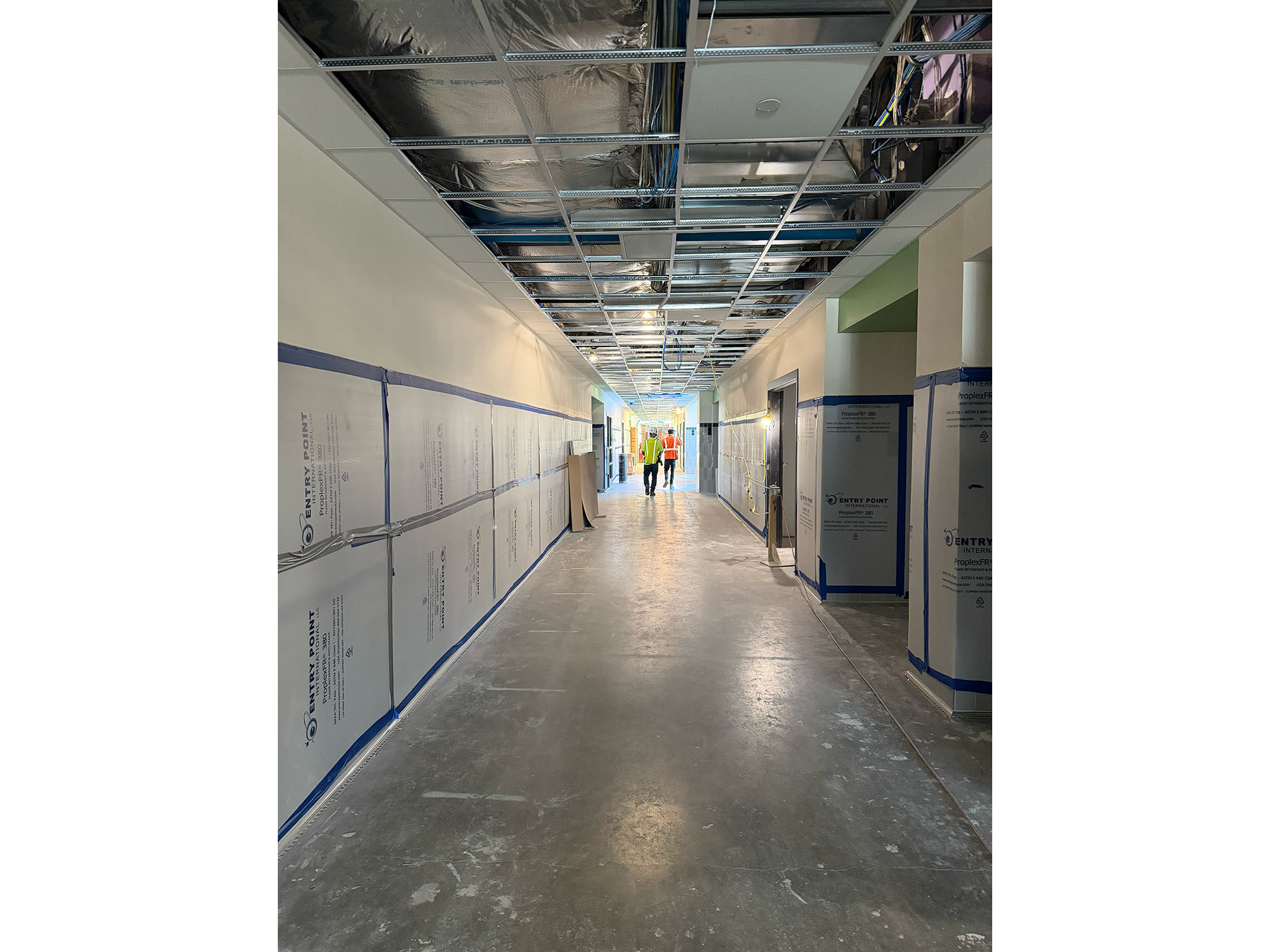
The Melrose Messenger toured the new school building last week. See how construction is going in the photos below:
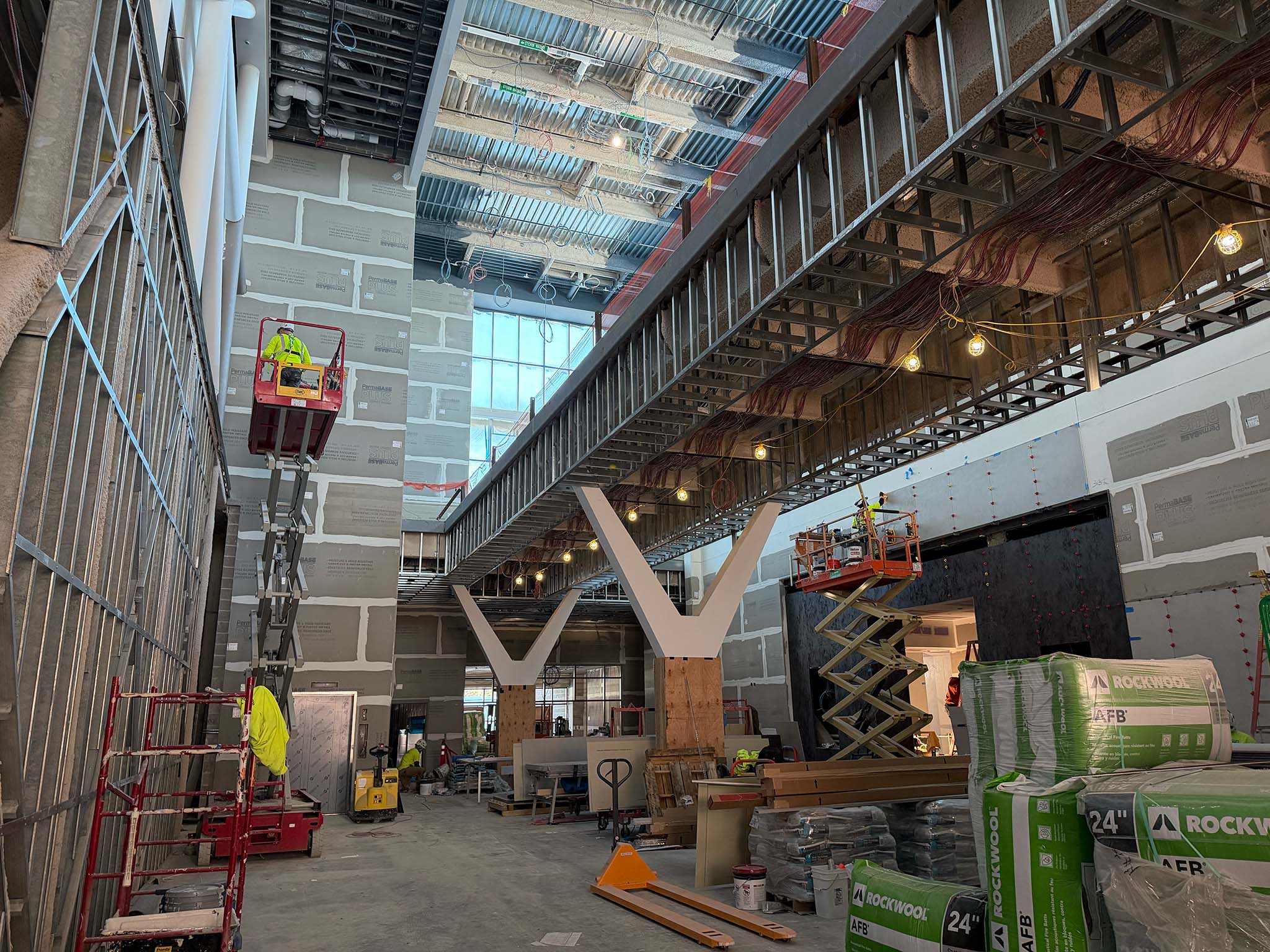
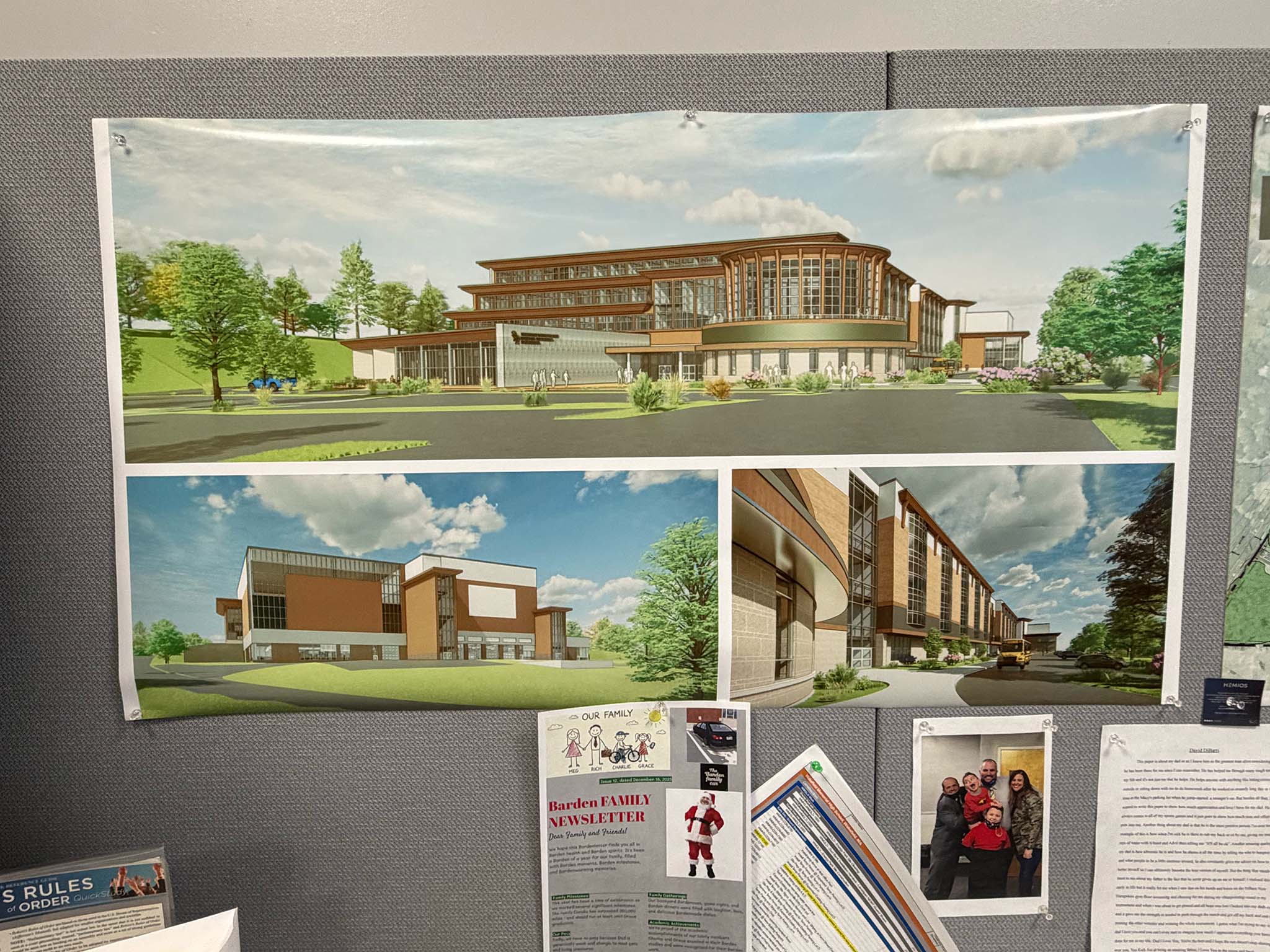
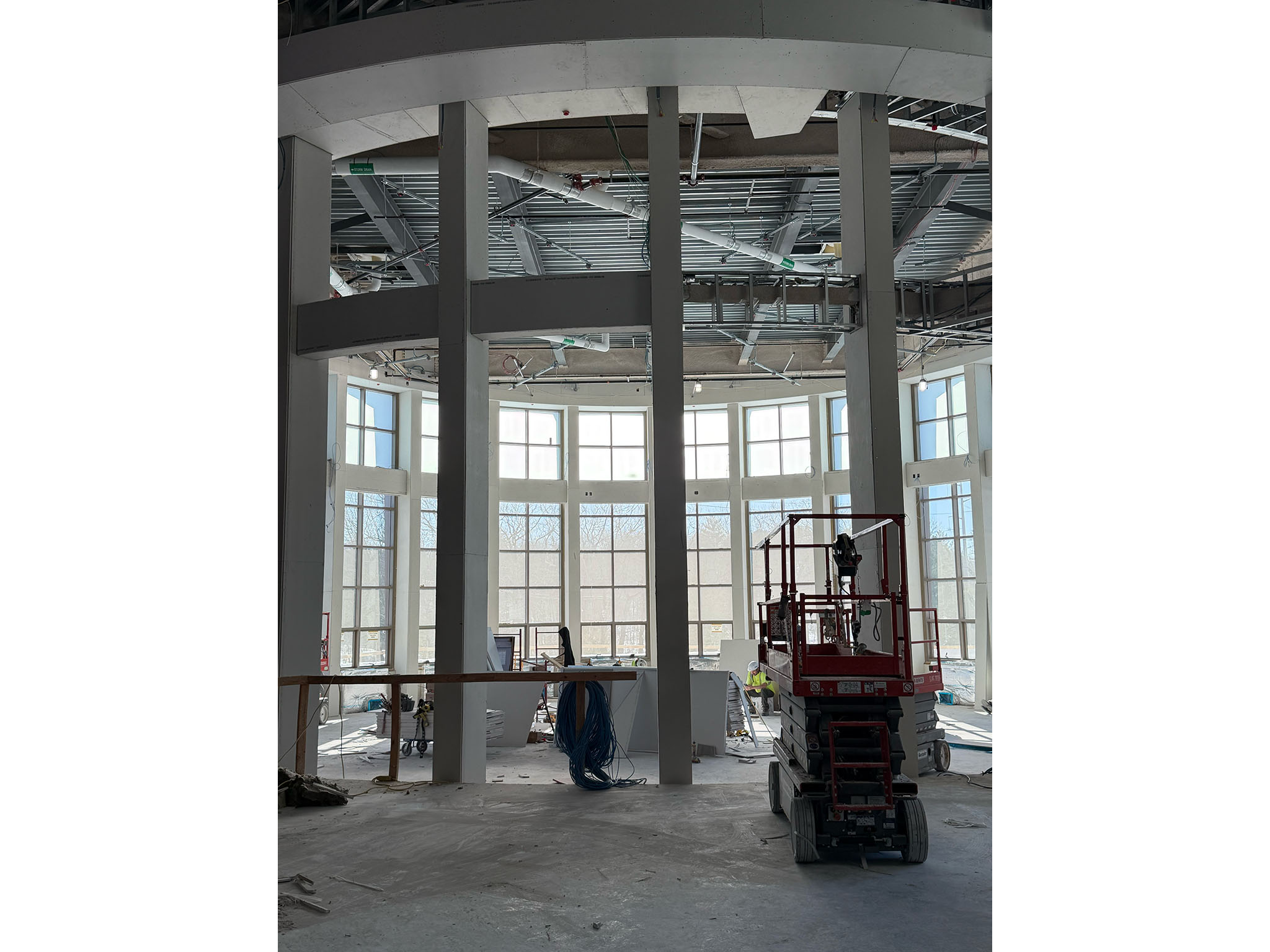
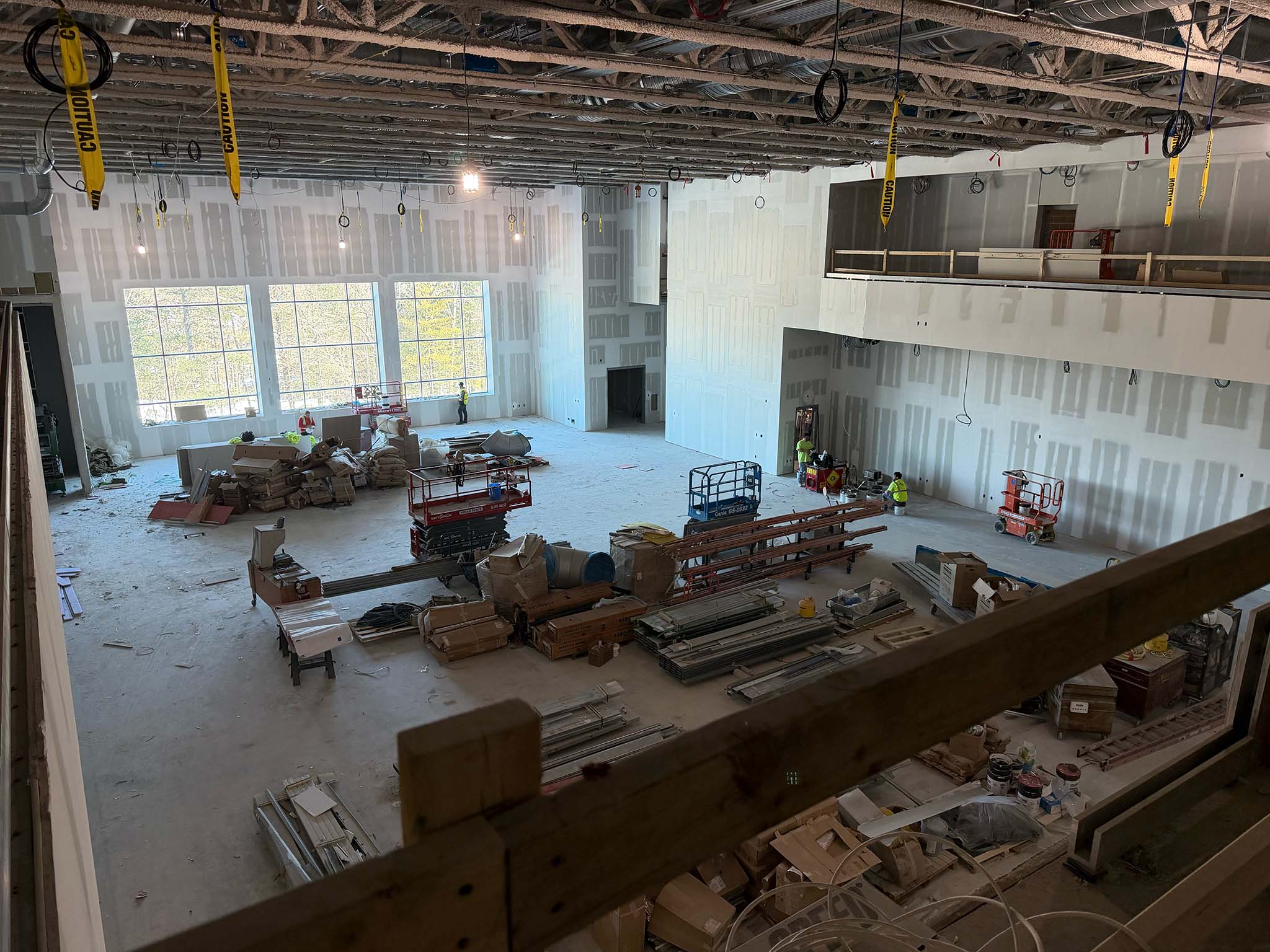
For DiBarri and the rest of the NEMT administration, a modern facility couldn’t come at a more critical time in the school’s history. According to a study by The Pioneer Institute, enrollment at Massachusetts vocational schools has increased by 24% since the 2011-2012 school year, even as the overall population of high school students has remained constant.
At the same time, new technologies and innovations have created the need for new vocational programs and have required fundamental changes in the skills taught even in traditional vocational programs, such as plumbing, electrical, and HVAC. NEMT currently offers 16 programs, which range from more traditional “trades” to Robotics and Automatics, Design and Visual Communication, and Business Technology. The new facility will accommodate three additional programs: Biotechnology, Medical Assisting, and Marketing.
And while some students go directly from NEMT into the workforce or into job training or apprenticeship programs, others go on to attend two- or four-year colleges to continue their education in their chosen field. (In 2024, 53% of NEMT graduates planned to attend two- or four-year college, compared to the statewide average of 72% - and 36% planned to go directly into the workforce, compared to the statewide average of 13%.)
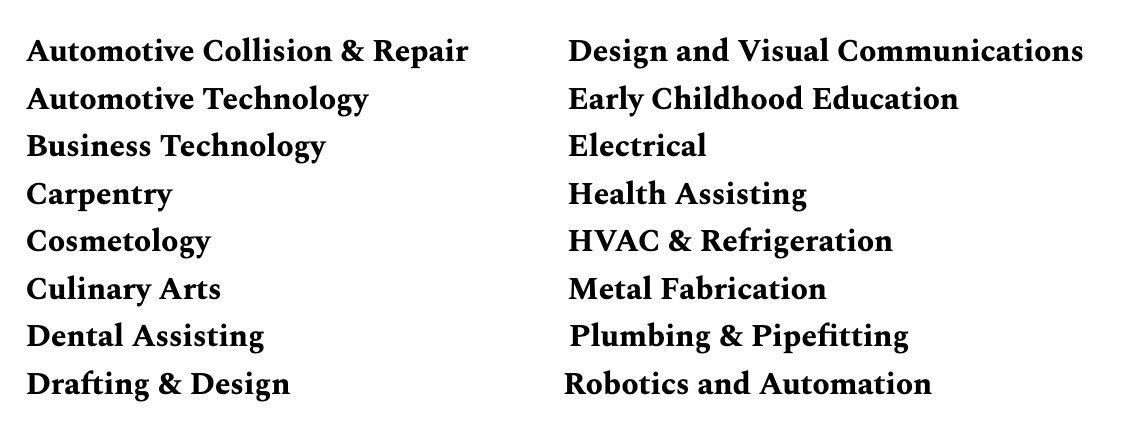
Current list of programs students can choose at NEMT
Vocational schools like NEMT are governed by state regulations, which require the school to ensure that its programs are consistent with the labor needs of the region. This is called “positive placement,” and it is also a key factor in obtaining grant money for the school.
To monitor the labor market, DiBarri and his staff regularly review data from the Bureau of Labor Statistics (BLS) and the state’s Executive Office of Labor and Workforce Development, as well as anecdotal information, such as activity on job recruiting sites. They also reach out to past graduates to find out if the graduates are employed in the fields they were trained for, and they survey prospective 7th and 8th grade students and their families to better understand their needs and intentions.
When collected and analyzed, this information may necessitate reallocating resources to programs for high-demand jobs or discontinuing outdated programs. “We closed down the Graphic Arts program,” said DiBarri, “which was the program I graduated from. But the curriculum was made up of offset printing - printing presses - they don’t exist anymore. So, we were training kids to go out and come back and tell us there are no jobs available. Even if they liked the trade, it didn’t matter; there are no jobs. We can’t set our kids up to fail.”
An example of a new approach to program design is the Design and Visual Communications program. Brian Peluso oversees the program, bringing a creative approach based on his many years of experience in marketing design. His program takes a broad, holistic approach to traditional design work. “Basically, marketing advertising can be almost any visual communication you see: billboards, packaging, apparel design, environmental design,” said Peluso. “I tell my students that we see up to 10,000 impressions of designed elements a day, and as humans, we are usually not looking at them, but almost everything we see each day has been designed by a graphic designer.”
Peluso has developed two actual design studios on site for juniors and seniors, simulating what it takes to run an actual design studio. “We have morning meetings, and the students are doing live jobs as if it were an actual project, so they're not just sitting here drawing and learning about software. They’re practicing their skills with real clients,” says Peluso.
Cameron Lopilato is one of Peluso’s students. Lopilato is an NEMT junior who spent his freshman year considering a range of programs, from Robotics to Culinary Arts, and settled on Design and Visual Communication. “I didn’t know what I wanted to do, and something just clicked for me with Design,” says Lopilato. I’ve always been a fan of art and drawing since I was a little kid: movies, cartoons, all that kind of stuff. When I learned about how people visualize things, and what you can do to get them to buy something, I saw how my art could reach people in a way that I didn’t even think it could. That‘s been fantastic.” Lopilato plans on attending college after graduating from NEMT and feels the vocational training he has received has made him more focused and prepared to compete in a dynamic job market.
More information about the Northeast Regional Metropolitan Technical School can be found on the school’s website.