Local Historian Jim Bennett Takes A Look At Revolutionary Melrose
By Ellen Putnam
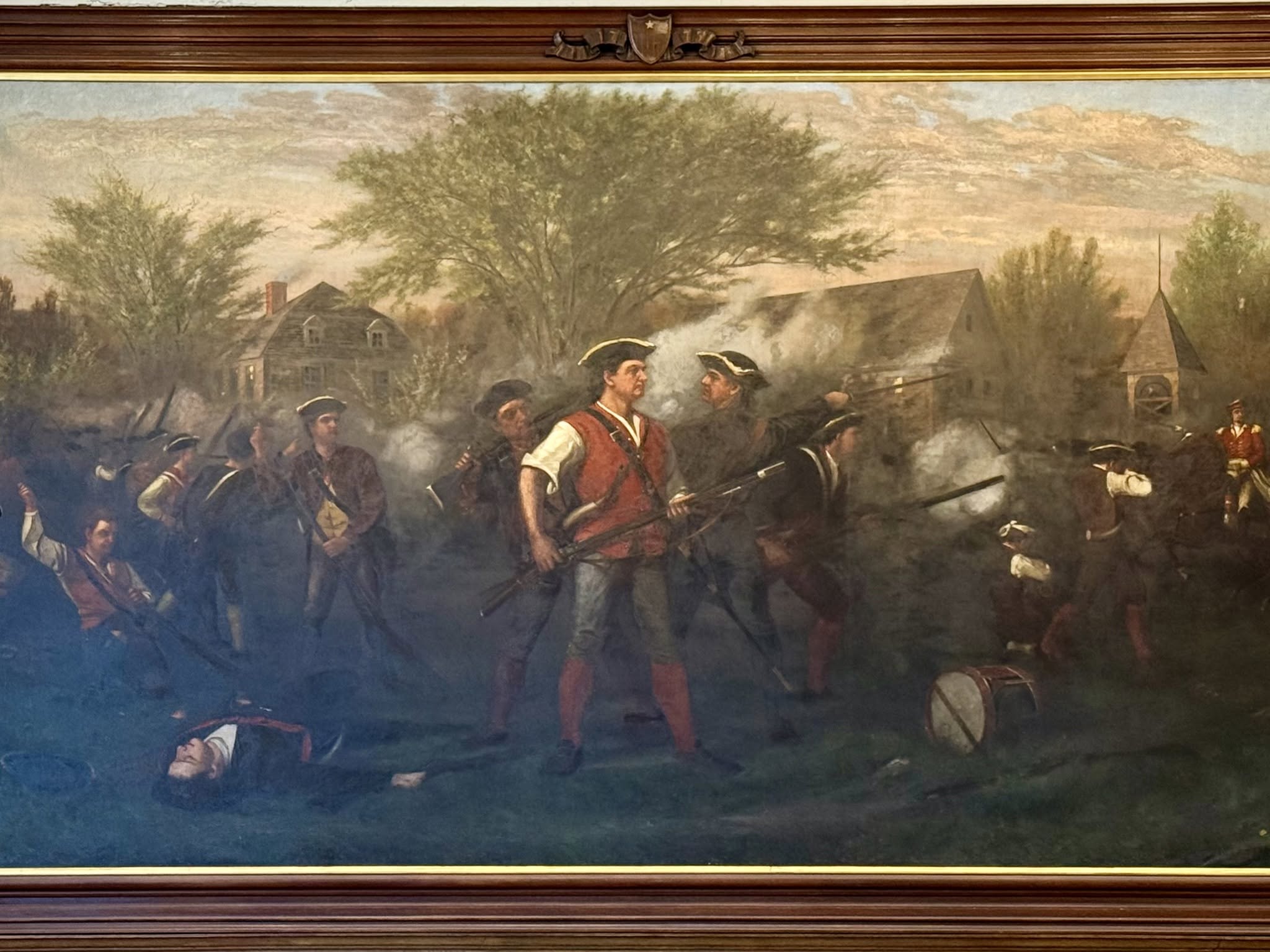
"Battle of Lexington" hangs in the Grand Army of the Republic (GAR) Room in Memorial Hall
From Melrose Historical Commission
The lower level meeting room at the Melrose Public Library was packed on Wednesday night as Melrosians came out to hear local historian Jim Bennett give a talk he called “Did Melrose Have An American Revolution?”
Bennett, who previously served as chair of the Historical Commission and is an educator on the Freedom Trail in Boston, explained that, last year, he had started thinking “Wouldn’t it be nice if somebody did a talk about Melrose in the American Revolution? Then I realized that somebody might have to be me.”
The talk was co-sponsored by the Melrose Public Library and the Melrose Cultural Council in recognition of the 250th anniversary of the signing of the Declaration of Independence this year.
Bennett’s talk focused not on the famous events of the time period - the Boston Tea Party, Lexington and Concord, or Bunker Hill - but on the ordinary people who lived in Malden during the Revolutionary period, looking at the question of whether there was a revolution in Malden society in terms of politics, religion, the economy, and race. (Melrose was part of Malden until 1850, and Bennett noted that, because records from the colonial period don't clearly match up to current boundaries, it would be nearly impossible to talk only about early Melrose residents.)
Bennett’s talk offered insight into the historian’s craft, as Bennett shared the documents he used to better understand Malden during this period - tax records, court documents, and wills - and demonstrated how he filled in some of the blanks in the historical record, even as some mysteries remain unanswered by documents.
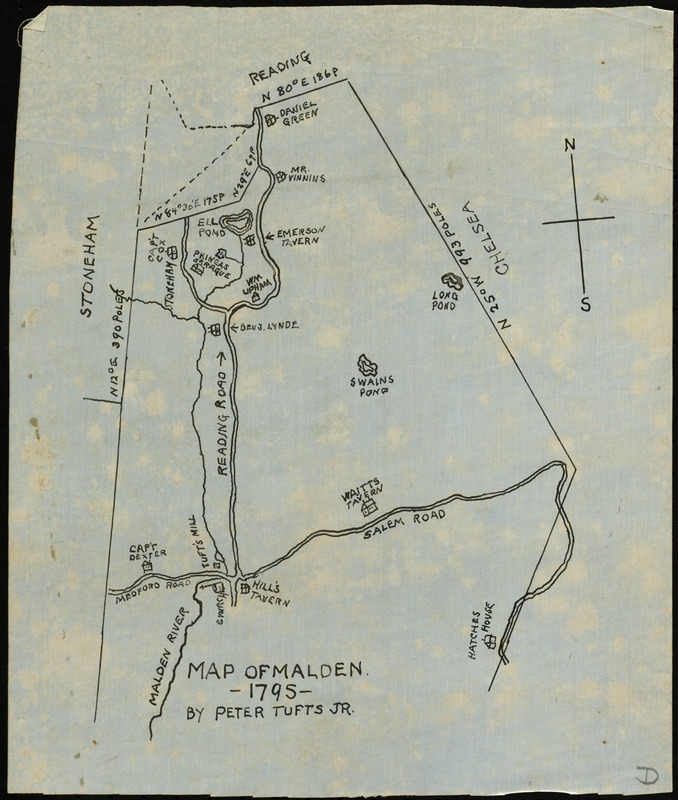
Map of Malden, 1795
From Malden Public Library
One of the surprises from Bennett’s talk was just how impoverished many people in colonial Malden were. A few wealthy families like the Lyndes and the Uphams owned the best farmland, but the rocky soil was generally very difficult to cultivate. Families might own a few animals and till a small garden plot, but they had to import most of their food (including wheat, which did not grow successfully in New England) from other parts of the country.
“Malden had a stagnating economy and population because the soil was so terrible that everyone wanted to move out,” Bennett explained.
Bennett talked about the political structure of the town meeting, which he described as “a bit tyrannical,” although it provided some employment and financial support for the town’s poorest residents and thereby offered a form wealth redistribution. (Bennett listed out some of the jobs that residents would be paid by the town to perform, including some that would sound strange to modern audiences, like “hogreeves,” who were in charge of wrangling runaway pigs and returning them to neighboring communities when necessary.)
But, Bennett noted, “the established families determined what the town meeting would talk about, and everyone else would just sit there and be quiet. Voter participation was quite low. People didn’t show up because there wasn’t much going on.”
Religion for the early residents of Malden was, said Bennett, “highly intellectual.” The town’s Revolutionary era pastor was a young man who attended Harvard and spoke Greek and Hebrew “and would lecture at them for four hours each Sunday,” Bennett explained. “People were plugged into deep ideas by going to church weekly.”
But while the church was open to men and women and even one free Black man, people in colonial Malden had no choice in their religious beliefs: they were either members of the Congregational church, or they attended no church at all.
Bennett also talked about the enslaved population of Malden. In 1765, there were 48 enslaved people in Malden, or 4.9% of the population - which Bennett noted was the highest percentage of Black people who lived in the area until the late 20th century.
“White supremacy is not a term you find in the 18th century,” Bennett explained, “because it was unquestioned that white people were supposed to be in charge.”
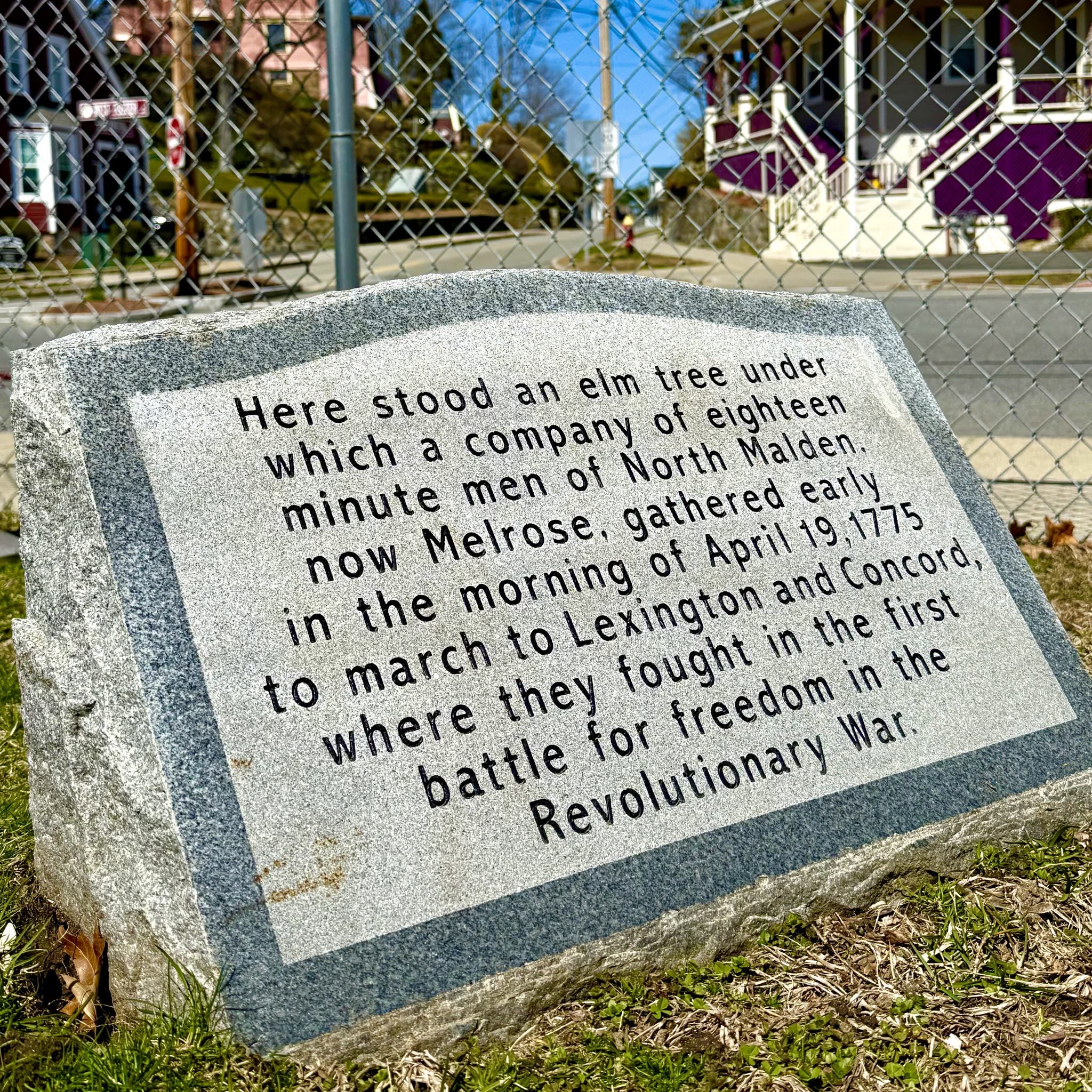
From the Melrose Historical Commission
He offered an anecdote about this mindset from early 18th century Malden. A woman was approached by a member of the Sprague family with the request to care for a child. (Where the child came from and why she was asked to care for it, Bennett noted, is not explained in the historical record.) The woman agreed, if the child turned out to be Black - and later, when it turned out the child was not, the woman sued the family for leaving the baby with her.
“If the baby was Black,” Bennett explained, “the woman would have free labor for the rest of the child’s life. If you were Black, then any white person could enslave you. This woman was looking down at this baby and all that mattered to her was what color it would turn out to be.”
Bennett also talked about how enslaved people were largely missing from documents of the time, except as it related to the value of their labor. For example, Jabez Lynde in his will talked at length about an enslaved person in his household. “One of Lynde’s great concerns as he lies dying is this incredibly valuable asset called Zachary,” said Bennett. “He has to determine which family member gets him and for what period of time, because he knows that otherwise his family will fight over him. But if Lynde hadn’t left a will, we would never know that Zachary existed.”
“This is one of the horrors of slavery,” he said. “It steals not only your labor, but your identity and your ability to be known.”
(More of Bennett's research into Melrose's enslaved population can be found on the Historical Commission's website.)
So did the American Revolution bring about change in Melrose, and make the town more equal and free in terms of politics, religion, economics, and race? We won’t spoil the conclusions for you, but you can watch Bennett’s talk on MMTV and see for yourself.
Want to learn more about local history? Check out the local history section of our site, visit the Melrose Historical Commission's page, and keep your ears out for information about the newly revived Melrose Historical Society - Historic Melrose!