A Conversation with Carey McDonald, Candidate for State Senate
By Ellen Putnam
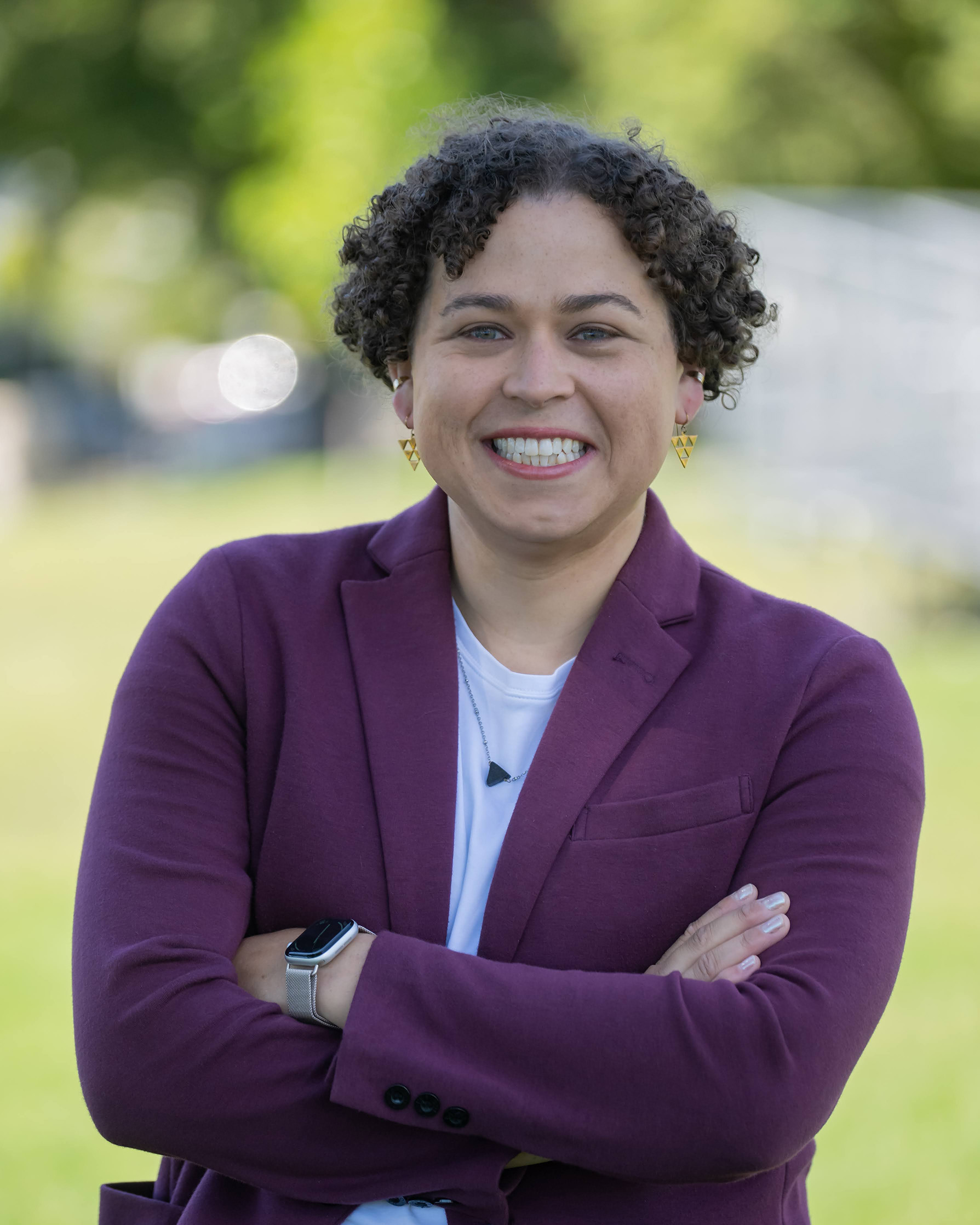
Photo From Carey McDonald
Carey McDonald is one of two current Malden city councilors running for the open state senate seat created by the retirement of current state senator Jason Lewis.
“This is a moment when a lot of things we love about our communities feel really at risk,” they said. “An open seat is a big deal, and we want to make sure that our next state senator is going to fight for the things that matter most to our communities, that they represent our values and understand the urgent challenges that we have, and that they are not afraid to tackle the big problems that are holding us back.”
“I am a working parent,” they went on, “with two kids in the Malden Public Schools. I am a nonprofit executive in my day job, and a three-term Malden city councilor. I have seen the challenges that we’ve had to face at the local level. Some of those challenges are different, community by community, but a lot are the same.”
What ultimately pushed McDonald into the state senate race was the failure of Malden’s override campaign this spring, by only 124 votes. “We worked really hard on that campaign,” they said, “and it showed how much our communities just really need more help from the state. There is a local budget crisis sweeping the Commonwealth - the Massachusetts Municipal Association calls it ‘the perfect financial storm’ - but I haven’t heard any urgency, and very little awareness of these challenges from Beacon Hill.”
“We didn’t have a lot of support from the legislature during our override,” they added, “but it’s clear how widespread this problem is: Melrose, Malden, Stoneham, and Winchester have all recently held override votes; Reading is talking about holding one; and Wakefield has a budget gap and may need one in the future. This is a problem affecting all of our communities. We do not have the tools to sustain basic city services and the schools, year over year.”
McDonald has experience in dealing with state funding for school districts, both on the state side and the municipal side. “In my experience as a city councilor, school funding has been front and center,” they said. “I’ve worked closely with Senator Lewis for years on potential changes to the funding formula and I have testified in support of changes to school funding. It’s important for people to understand that, even if they don’t have kids in the schools, school funding matters because it’s the biggest part of any municipal budget. You can’t fund parks, the library, or public safety if you can’t stabilize the schools.”
Earlier in their career, McDonald worked in the Ohio House of Representatives and then on school funding at the Ohio Department of Education. This experience gives them a basis of comparison for how things are done in Massachusetts. “I understand how hard it is to change school funding formulas at the state level,” they said, “but the current system is not working for our communities. The Student Opportunity Act did a lot of good things, and now it’s time to push for changes to keep up with the basic costs of inflation, so school districts aren’t facing layoffs every year. There are lots of ways we can approach it, but we can’t be afraid to tackle some of the harder problems.”
They talked, in particular, about making changes to both sides of the school funding formula (both expected costs and local contribution); expanding circuit breaker programs in order to have the state take on more direct educational costs; establishing more regional collaborative efforts to bring down special education and transportation costs; and increasing state support for capital needs.
“I have a deep professional background on this topic,” they said, “and I really feel that I can help push for improvements on school funding from Day 1. But the way you get things done on school funding is not that I come in and tell people how things should be - we need to put together a basket of changes that will meet different needs. Right now, we’re just pushing costs down to the local level in the form of property taxes, which are the most inequitable way to raise money.”
And in terms of addressing the limits of Proposition 2½, McDonald said, “We need more flexibility, because once communities get behind, they can’t catch up. It’s a really old law, and while I don’t think we should repeal it, we need to talk about changes to it so we’re not in the position of pitting residents against each other in order to avoid laying off firefighters.”
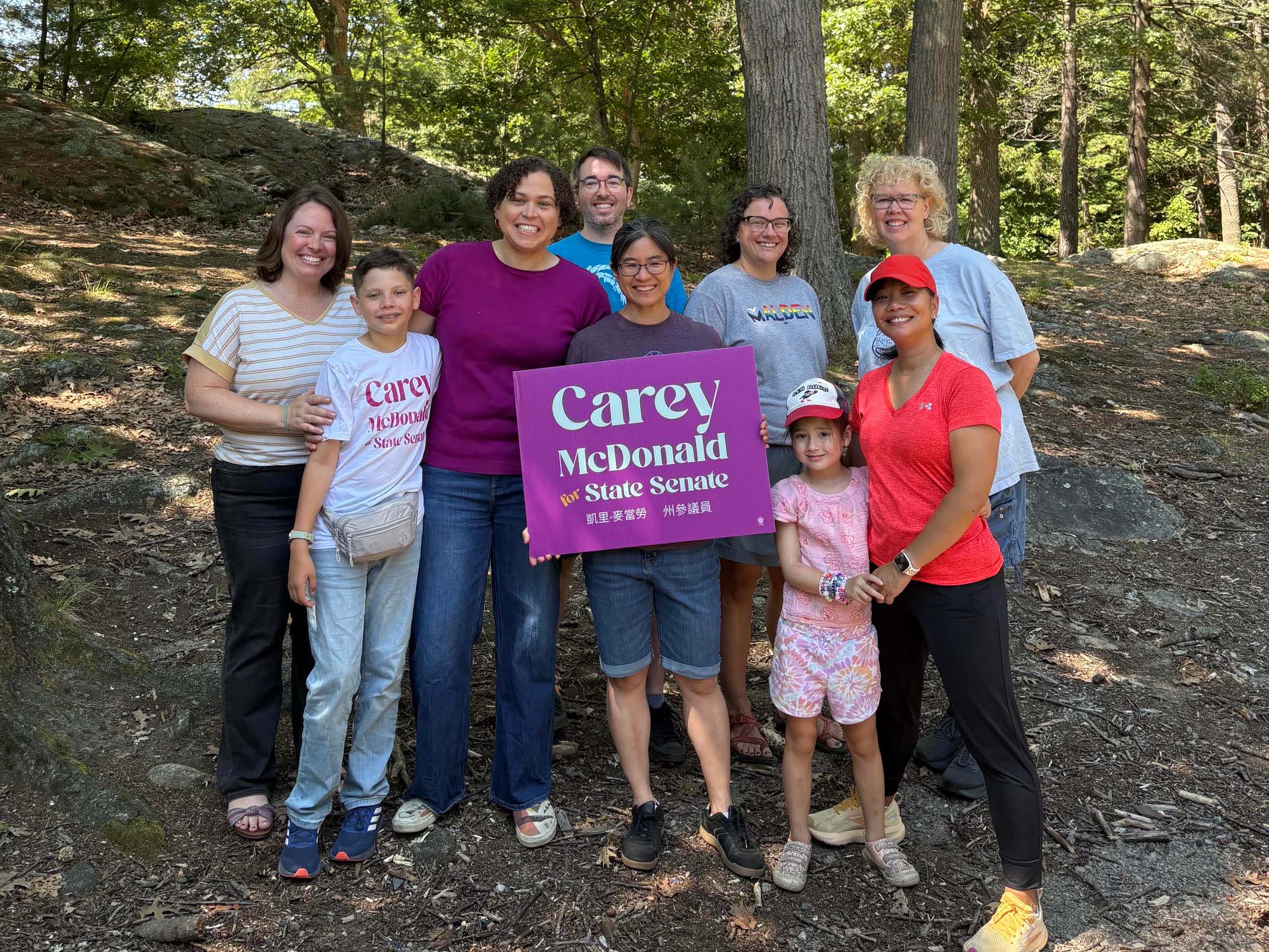
Photo From Carey McDonald
McDonald is currently the Executive Vice President for the Unitarian Universalist Association, where they have worked for the last 15 years. “In this work,” they said, “I’ve learned how to change systems, build support and understanding, and the courage and humility that takes. As part of my job, we were part of a lawsuit against the Trump administration to limit ICE enforcement in sensitive locations, including churches. That’s the kind of fight and creative approach I would bring as a state senator, that we absolutely need.”
“Our communities are under attack,” they went on, “our neighbors are being disappeared off the street, our economy is being targeted, our rights are being taken away. This is another place where I have heard some care from Beacon Hill, but not the urgency that people feel right now. Fighting back against the Trump administration is a top priority for me, and no one will fight stronger or harder for our rights.”
“Personal experience really matters,” McDonald added, “and representation matters. When you’ve got a personal connection to the challenges our communities are facing, you show up differently on those issues.” McDonald described growing up without much money, moving frequently, attending a big-city school system and attending college on scholarship, and working minimum wage.
“My family has made it to the middle class, and we are able to live in this community through routes that don’t exist anymore,” they said. “I care about making life more affordable, and I have a lot of personal connection to this issue. I hear a lot of despair from the next generation following us.”
“But I would not be running if I thought this was inevitable,” McDonald went on. “We can push back against Big Tech when they try to take our jobs. We can reduce healthcare and utility costs by pooling our bargaining power as cities and towns.”
They pointed to their work in establishing a community electricity program in Malden, saying, “It was a lot of work, but we secured stable rates, improved access to clean energy, and saved people money. If we can get better rates by organizing at the city level, what could we do if we all got together as a region, or a state, to push back against the utility companies when they try to jack up our rates every year?”
McDonald also supports making communities in the district more sustainable and improving their climate resiliency. “We need more localized clean energy,” they said, “and I will take issue with my competitor, who voted to cut MassSave. There’s no way to meet our goals at the state level if we can’t help existing buildings become more efficient, which reduces pressure on the grid. There has been a huge amount of work in our communities to help people get access to these programs, and it helps everybody. And we need to streamline solar permitting - that really helps, especially on peak days, with reducing pressure on the grid. We need to make sure we’re putting money in people’s pockets to make their homes more energy efficient.”
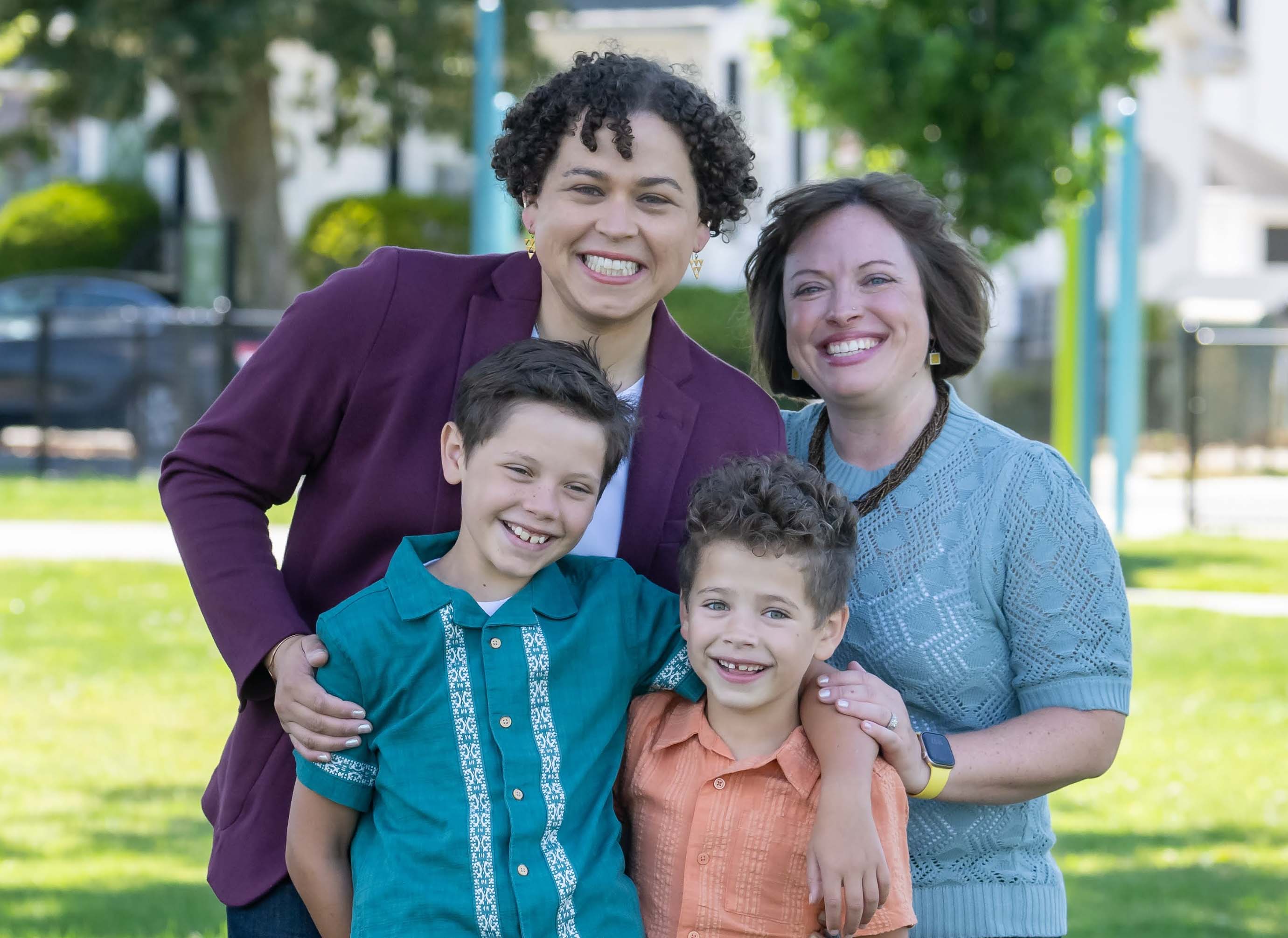
Photo From Carey McDonald
And McDonald wants to bring childcare costs down for families. “Massachusetts has the highest childcare costs in the country,” they said. “We need to help bring costs down in a way that doesn’t make daycare workers and providers poorer, since they are often immigrant- and women-owned businesses. It’s complicated, because daycares are private, and not part of the public school system, but we can provide more state support for childcare vouchers. We can also look at establishing regional organizations, which many other states have, to help daycares do shared purchasing, to help them bargain to bring their costs down.” McDonald also noted that making daycares, including home-based centers, tax exempt could help bring costs down.
“Even if daycares are still private businesses,” they said, “we can move toward daycare being something we provide as a society, not on the backs of the parents. Lower daycare costs help strengthen the workforce and improve gender equity.”
“Healthcare is also a huge concern,” they went on. “These 15% per year increases in healthcare costs that we’re seeing right now are breaking the bank for local businesses and governments. I’m married to a hospital case manager, and I hear about how broken health insurance is - and now AI is being used to deny claims. We have to pool our bargaining power to push back against these consolidated hospitals. I was down at the nurses’ strike, and they’re just trying to make a living wage. The problem with the cost of healthcare is not paying nurses too much, it’s the ability of hospital systems and insurance companies to enrich themselves at the cost of their patients.”
“I support a single-payer system at the state level,” McDonald added, “and Massachusetts can be a leader in this, like we were when we passed universal healthcare back in 2006. But I don’t think it’s going to happen tomorrow. Between now and then, we need to improve access to primary care.”
McDonald also noted that, as a multiracial and trans person (McDonald uses they/them pronouns), they understand some of the challenges our more vulnerable community members are facing. “I don’t leave home without my passport,” they said. “I don’t trust that I couldn’t be targeted on the street.”
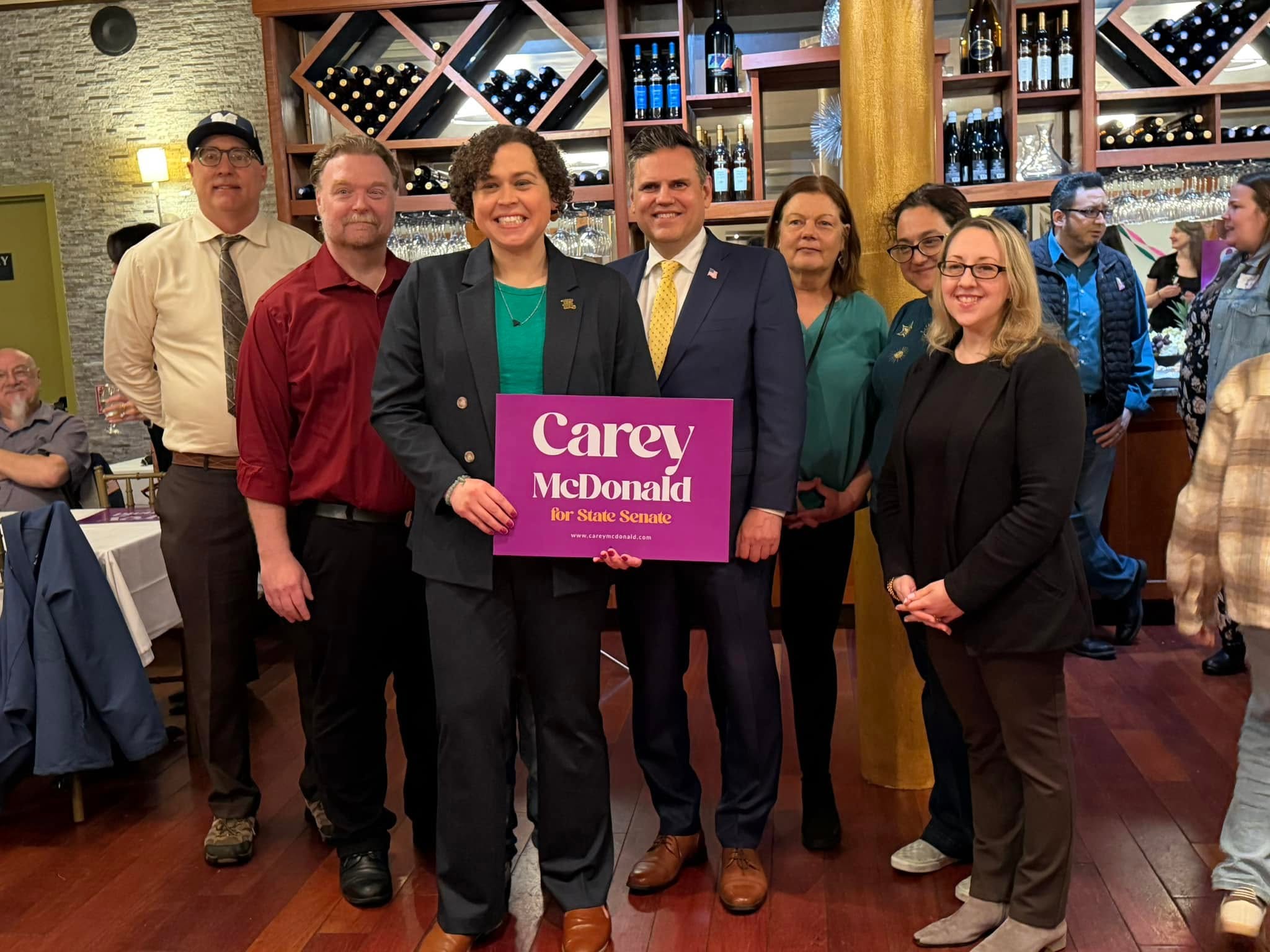
McDonald with Malden Mayor Gary Christenson and other supporters
Photo From Carey McDonald
“One thing that holds us back,” said McDonald, “is the lack of transparency in our legislature. The Ohio State Legislature, like nearly every other legislature in the country, is subject to public records requests and open meeting law, and their committee structure and the way they do business means that bills get passed. Massachusetts is an outlier. It’s bananas that the legislature is not subject to the same records laws that local government is.”
“It’s hard for people to organize to pass bills,” they went on, “because you don’t know what the legislature is doing unless they tell you. I’ve talked to advocates who say, ‘What happened to my bill? It had 50 cosponsors, but it’s been stuck in committee for 6 months.’ How do you push for change and hold people accountable if you can’t see what’s happening?”
“I support auditing the legislature,” McDonald continued. “An outside perspective is valuable. I’m the chair of the Malden City Council’s Finance Committee, and we asked the state to come in to do more auditing when we were working on the override. Our democracy is under attack, and we need to be building trust in our government leaders. The audit had such broad support because people feel frustrated, and it would go a long way to restoring that trust. I don’t know about the constitutional issues, since I’m not a lawyer, but the right thing to do is let the audit proceed and work with the state auditor to get things done.”
In terms of how they would approach the job, McDonald said: “As state senator, you have a lot of power. With only 40 members, you can really work closely with your colleagues. It takes courage to challenge the status quo where it’s not working, and it takes a collaborative spirit to know how to work with people. You can’t come in saying, ‘it’s my way or the highway’ - you have to build coalitions that lead to getting things done.”
“I will work for transparency at the system level,” they went on, “and I will be transparent about what I think, through newsletters and town hall meetings. I will be in close contact with local leaders as well as my colleagues at state level, to find where we have common ground and where we disagree respectfully. In my first year, I want to dig in on a couple of key areas, especially school funding and support for MassSave, and support the good work that is already happening - I want to be part of supporting the momentum other folks have spent years building.”
“I really appreciate that Senator Lewis worked on big picture issues,” McDonald reflected. “It took years of building relationships, not just in the Senate but in our communities and with local organizations. And that's how you get things done in a democracy. It’s easy for politicians to make it about us, and it’s not.”
While McDonald grew up outside Massachusetts, they have deep historic family connections to the district, including in Malden and Winchester. “This blend of ‘my people are from here’ and ‘my people are from elsewhere’ reflects a lot of what I see in our communities,” they said. “There are people who have lived here for a long time, and also people who are brand new here. Throughout the whole district, there are stories about generations who are trying to build a life here.”
McDonald and their family love camping and spending time outdoors in the Fells. Their parents were professional musicians, and music is a large part of their life - they play cello and sing, and love playing music with their children.