City Council Approves Supplemental Budget for Override Funds
By Ellen Putnam
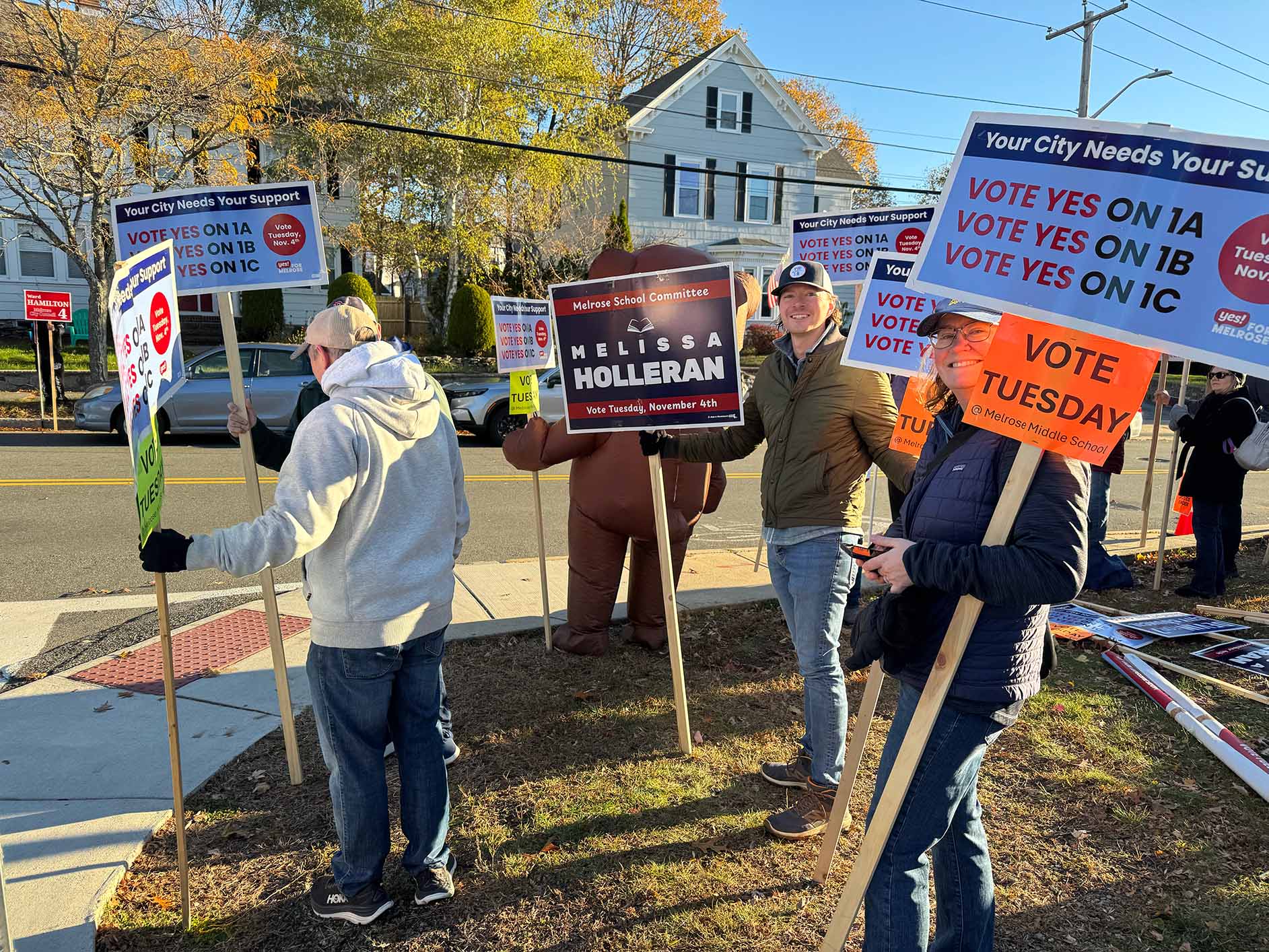
Override supporters on Election Day
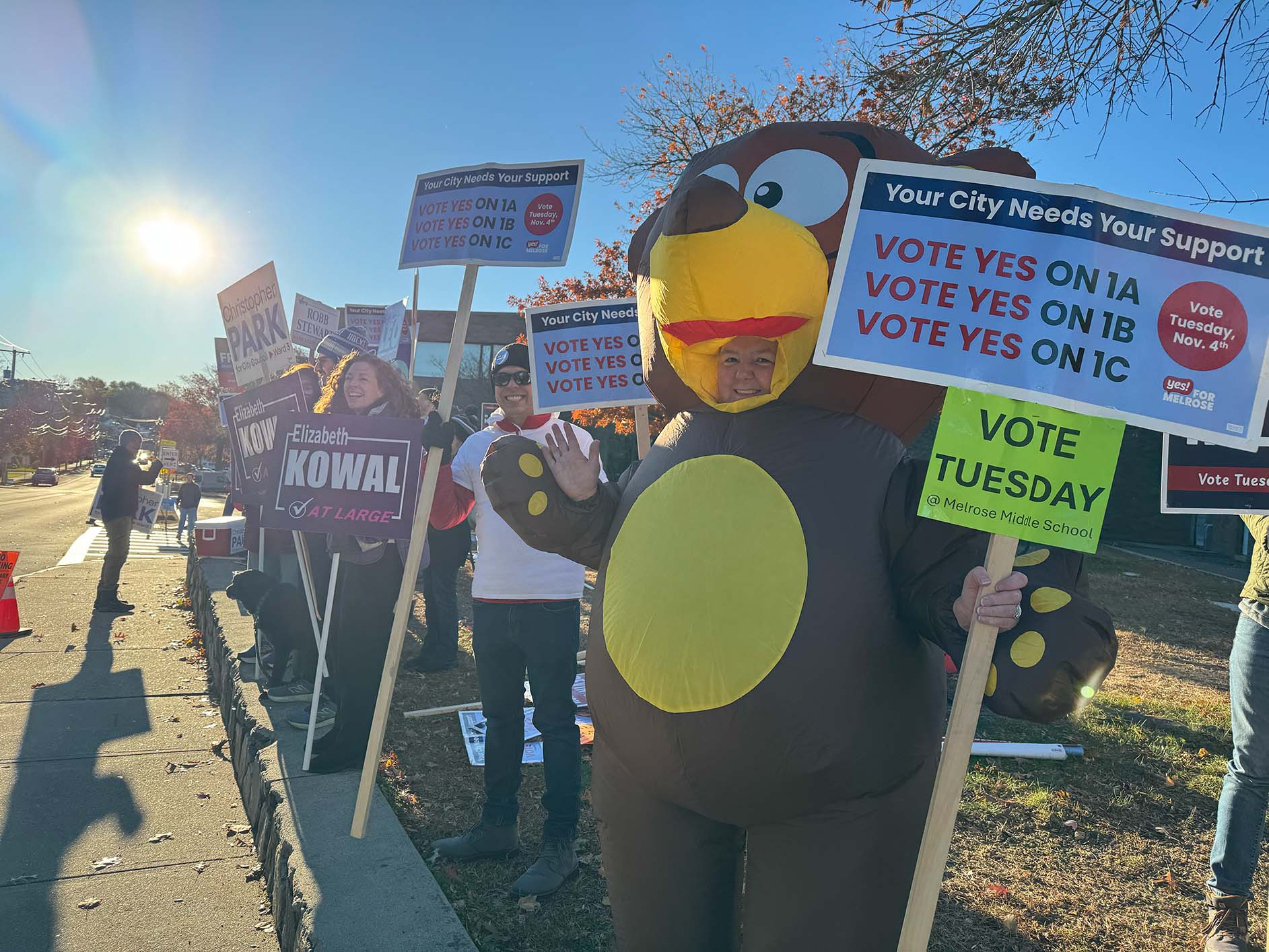
Earlier this month, Melrose voters approved a $13.5 million property tax override that is retroactive to the beginning of this fiscal year, on July 1st. And this week, the City Council approved a supplemental budget to include funds from the override in this year’s budget (FY26).
Before the deadline on December 1st, city officials will adjust the tax rate in order to increase funds available for this year - and residents will see a corresponding increase in their property tax bills for the rest of the year.
“We have been together on what has been a very challenging journey since the start of all of our terms two years ago,” Mayor Jen Grigoraitis told the City Council, “and it is really exciting to be at this moment to see our ability to make some investments in our shared community after what has been two very challenging budget cycles.”
The text of the override question itself largely drives the spending priorities that are laid out in the supplemental budget.
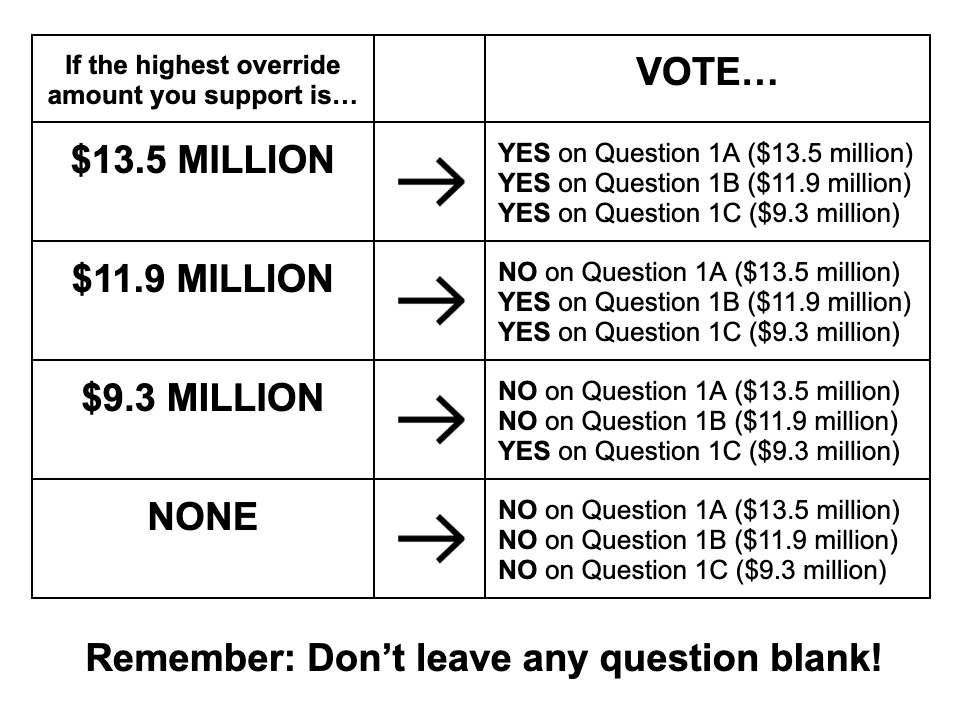
The override question that voters approved, for $13.5 million, read as follows:
- 1A. Shall the City of Melrose be allowed to assess an additional $13,500,000 in real estate and personal property taxes for the purposes of funding: 17 school, 5 public works, and 2 police officer positions (salaries and benefits); city and school employee union contracts and benefits; school technology and curriculum needs; public works, senior center, veterans services, and library programs; and repairs and maintenance to roads, sidewalks, buildings, and parks for which the monies from this assessment will be used for the fiscal year beginning July 1, 2025?
Much of the override conversation focused on the Melrose Public Schools, which saw the largest cuts going into this year. Accordingly, approximately $9 million of the $13.5 million override funds will benefit the schools, including employee benefits and investments in school infrastructure within the DPW and IT budgets.
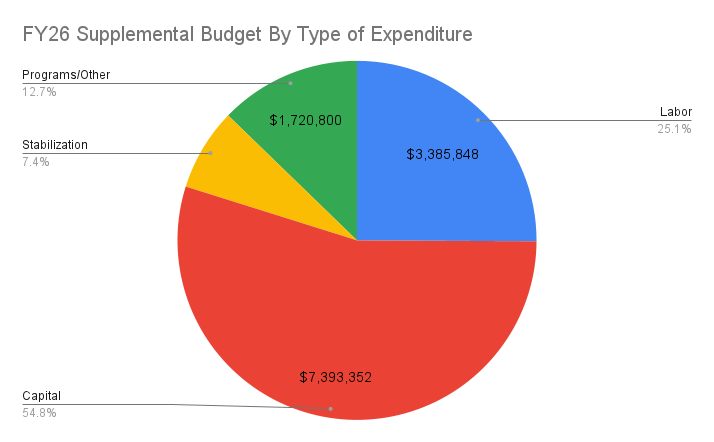
Over half of the supplemental budget will go to capital expenditures - a breakdown that may surprise some residents. In the last few years, capital expenditures have largely come out of the city’s free cash funds.
“For all of the city’s maintenance and hard costs and capital costs over the years,” reflected City Councilor Ryan Williams, “basically we just cross our fingers at the end of each year and free cash - whatever money we’re over on the budget - we take that money and everybody fights over it to see, can the schools get Chromebooks or does Fred Green need cameras or does the senior center need a van? We've never been able to really plan for this. And so what the override is doing, and we’re seeing it here, is that we are able to think about and plan for these items that are desperately needed outside of waiting and hoping that free cash becomes available. It just gives us more room to do the things we need to do without having to beg, borrow, and steal from each other.”
And while the city has sometimes been able to use state and federal grants to partially fund capital projects, many of the items in the supplemental budget are ineligible for grant funding.
One thing to bear in mind is that, although only a quarter of the override funds will be used this year on labor costs, that percentage is expected to increase significantly over the next few years.
Mayor Grigoraitis, when she presented the override questions to the City Council in the spring, stated that she would not restore any positions that could not be funded in full through the next contract cycle, which will end in 2029, with the goal of not needing to seek another override vote before then. All twelve of Melrose’s employee unions will be renegotiating their contracts - which each run on a three-year cycle - either next spring or the following year. The salary increases that are likely to come out of those negotiations mean that residents can expect that labor costs will take up an increasing chunk of the budget in each subsequent year.
$3.8 million of the override funds will go directly to the school budget. This includes funds to restore 17 positions (out of dozens that were cut over the last two years), $1.6 million for curriculum materials and instructional technology, and $529,000 to fund the pay raise the Melrose Educators Union negotiated with the School Committee in the spring when they agreed to a one-year contract extension.
At the December 9th School Committee meeting, Interim Superintendent Cari Berman and Interim Deputy Superintendent Ken Kelley will propose a supplemental budget for the additional funds the schools will be receiving from the override. The School Committee will then vote to approve or modify the proposed budget.
“We are really examining the positions that have been cut over the last two years,” said Berman, “And positions that directly affect student growth and achievement will be prioritized. We are very excited to bring back 17 positions, but we really need to be mindful as we make decisions on what we decide to bring back as the district.”
“We need to put educators in front of students,” she went on. “That is the most important thing to me. We lost a lot of people in our central office team, but that is not something that we're looking at this moment in time to restore. We are looking to put educators in front of children.”
“For the past two years we’ve been in sort of a reduction cycle,” added Kelley, “and this allows us to pause now and shift and look at strengthening our systems.”
“We need to look strategically about what is realistic and doable for the rest of this year,” he went on. “This train is on the tracks. We have a great leadership team at the middle and high school now and we wouldn’t want to interrupt that. And students have developed relationships with their peers and their teachers. We want to be really thoughtful and deliberate about how we implement these 17 new positions.”
Kelley noted that it might be difficult to find qualified applicants at this point in the school year. He pointed out that two reading specialist positions that were added last minute at the start of this year using additional state funds are still unfilled.
“It’s an extremely challenging market,” he said. “Will we look for opportunities? Yes. Will they be out there? That, I can’t say.”
Berman also talked about making investments in curriculum materials. “This has been something that’s actually been cut dramatically over the last few years,” she said, “and the override funds will certainly help us with our future investment in consistent, high-quality instructional materials.”
“We want to keep building stability,” concluded Kelley. “Stability and using the data that we have to make decisions that are going to lead to great outcomes for the kids.”
The schools will also benefit from $525,000 in the IT budget for technology updates. This will fund security cameras at Fred Green Field and the Lincoln School, projector upgrades at the high school, districtwide public address system upgrades, and elementary classroom Chromebook replacements.
Middle and high school students will continue to bring their own devices to school (aside from low-income students, who are supplied with devices) - a policy that was put in place for this school year.
For the elementary schools, said IT Director Smulligan, “what we’re hoping to do with this budget, but also moving forward, is to get into a constant refresh cycle. So, we’re not trying to replace multiple elementary schools every year or every handful of years, where we’re scrambling for a large sum of money. We’re not changing the number, we’re not adding or subtracting, it’s just that we're getting new devices, so that we have this continuing evolution of fresh things and everyone’s on a level playing field.”
The public address system upgrades, Smulligan explained, are a way to reduce future maintenance costs by installing modern, digital systems throughout the district - which will also allow for districtwide communication in case of emergency.
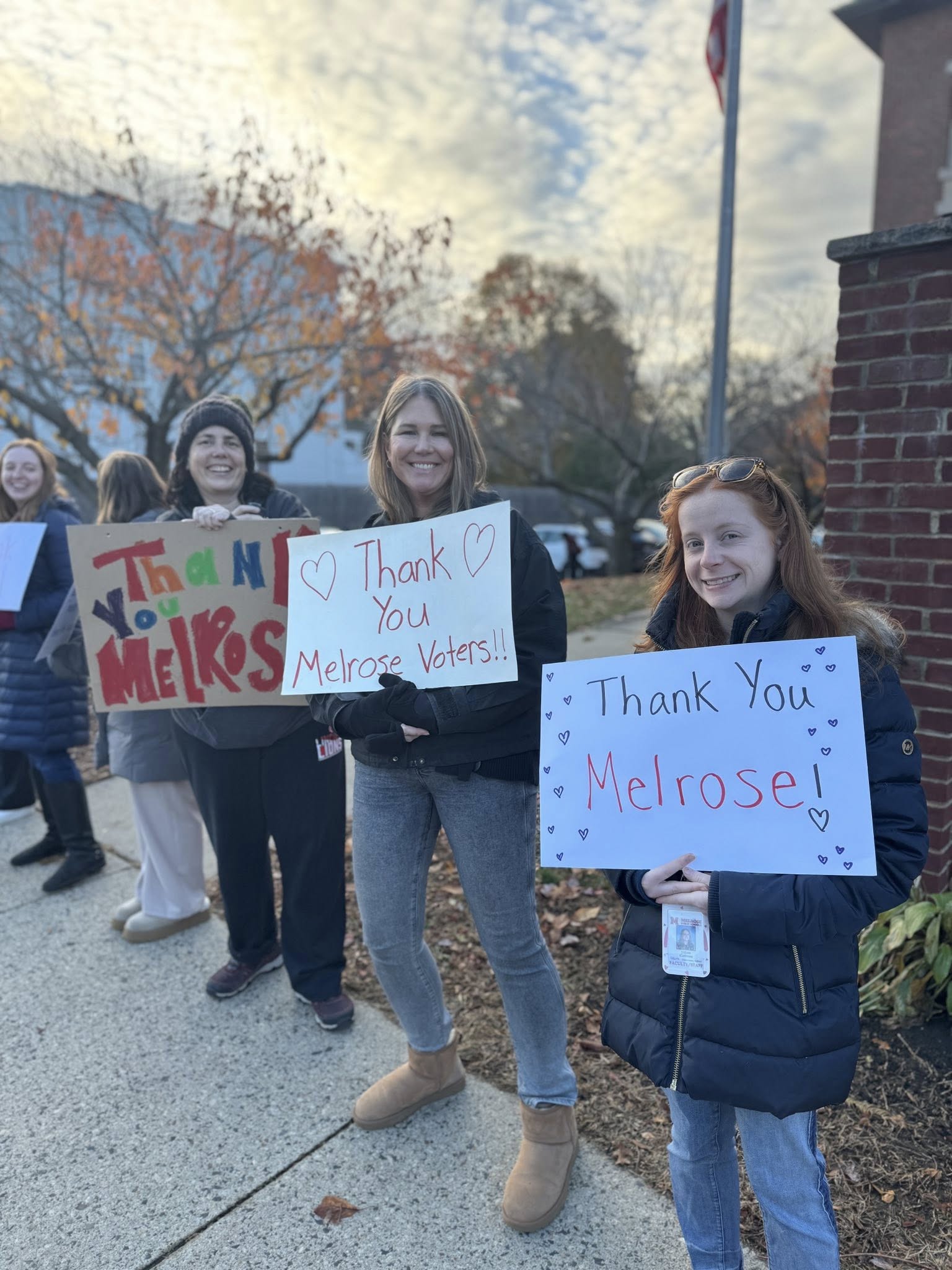
Teachers at the Lincoln School hold signs following the override's passage
Photo From MEU
$7.3 million, or nearly half of the override funds, will go to the Department of Public Works. This includes restoring five positions that were left vacant this year: City Engineer, Facilities Manager, Heavy Motor Equipment Operator, and Laborer. It also includes restoring the DPW Summer Work Program (which this year was funded out of free cash) and overtime costs.
“We’re very excited to be able to re-post the positions that we have lost,” said DPW Director Elena Proakis Ellis, “to get back to our full complement of staff, and not feel so stressed all the time within our department.”
The restored overtime costs will allow the city to fund programs that were cut this year, including the Main Street flower baskets; more frequent Saturday hours at the City Yard; Sunday trash removal; and event support.
What is not yet clear is whether the carry in-carry out program the DPW piloted this summer at the Melrose Common, Bowden Park (where the Farmers’ Market takes place), and two other parks will continue. A number of residents have raised concerns about increased litter in those locations after barrels were removed.
“The removal of trash barrels at the parks did not have a financial component aside from the Sunday pickups,” said Proakis Ellis, “so they’re not necessarily hand-in-hand. We haven’t decided if we’re putting all the barrels back. We might put them all back and then evaluate how our pilot program went, and then make decisions for next fiscal year.”
But while increased staffing at the DPW is expected to help that department run more smoothly, the largest chunk of the funds appropriated to the DPW - over 90% - will be used for capital projects.
Of that, $4.3 million will be spent on school building maintenance and improvements.
The bulk of those funds will go to the Melrose High School bathroom renovations project, which includes renovating every bathroom in the building and adding bathrooms by the cafeteria.
“That’s a $3.1 million project that we have actually ready to bid,” said Proakis Ellis. “It’s already been designed. It’s just been sitting on the shelf waiting for us to have funds to do it.”
Funds will also go to repairing the stairs in the courtyard between the middle and high school, the front stairs and sidewalk at the middle school, and the solar inverters at the middle school; upgrading HVAC controls at the middle school; making the doors at the Winthrop School more secure; and continuing the district’s asbestos remediation program.
Another $1.2 million will be spent on trees and park improvements. Some of these funds will go to the tree trimming and planting program which, Proakis Ellis noted, “will actually result in more planting than what we’re taking out.”
Other funds will be spent on maintenance, repairs, and improvements for playgrounds and playing fields.
Some of that will go to replacing the foam playing surface and one of the playground structures at the Common playground, and some will go to replacing the outdated play equipment at Dunton Park, which is tucked away off of Franklin Street.
And some of the funds will go to converting the Foss Park basketball court back to its original purpose, after neighbors complained about the noise from pickleball play there over the last few years. The city plans to paint more permanent pickleball markings on one of the tennis courts on Tremont Street, where pickleball play has not generated significant concerns in a pilot program this year.
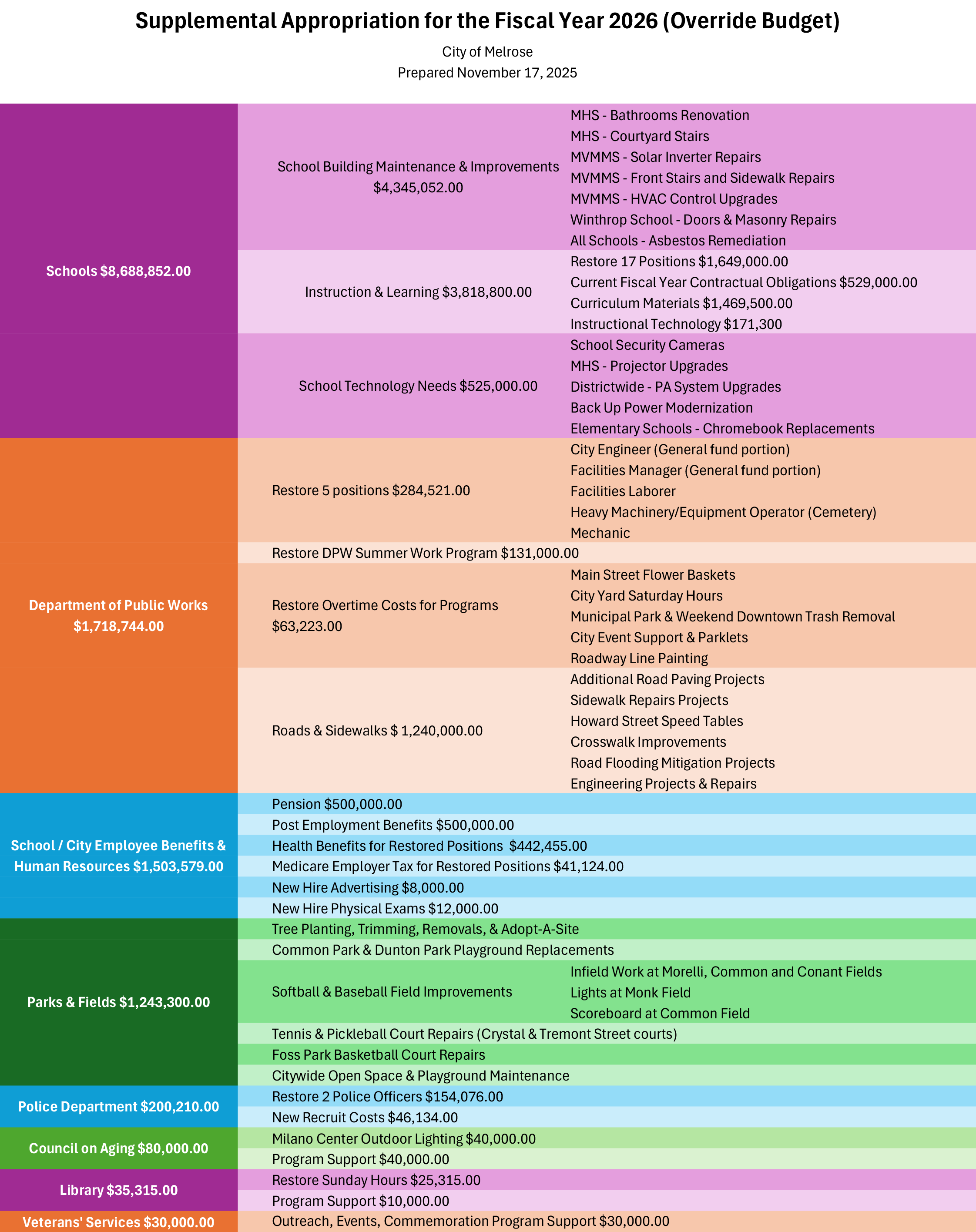
Chart from the City of Melrose
And another $1.2 million will go to roads and sidewalks. The Howard Street speed tables, which had a very successful pilot last year, will be made permanent, and other funds will be used for road and sidewalk repairs and flooding mitigation projects.
City officials estimate that it costs $1 million to redo a mile-long segment of road - including repaving and replacing sidewalks. The city is responsible for 80 miles of roads within the city, and generally receives around $500,000 in state Chapter 90 funds and another $500,000 from bonds each year - far short of the total needed to keep up with road work. While the override funds will not clear the city’s backlog of road projects, they will double the funds available for road work this year.
$40,000 will go to adding outdoor lighting along the driveway to the Milano Center, which can get very dark at night. This had been a state earmark last year, but was cut from that budget.
And another $40,000 will be spent on program support for the Council on Aging.
“There are daily users who come into the Milano Center for a cup of coffee,” said Chief of Staff Lauren Grymek. “They need to print some materials, they want to read a book, and some of those amenities were taken away with that programming support. So we’re going to add back those basic amenities that we probably take for granted, but we know that those folks are socializing.”
The funding will also support the Council on Aging’s dementia-friendly programming, and other initiatives around supporting older adults.
$200,210 will restore two police officer positions at the Police Department.
“You may not think that two officers is a lot,” said Police Chief Kevin Faller, “but for the size of our department, it is.” He thanked his officers for their dedication in what he described as a challenging time for the department. “There were a lot of denials of time off,” he said of the last few months. “There were a lot of forced overtimes, and they did their job.”
While it can take time for new police officers to come online - new recruits are sent to the police academy and then go through on-the-job training - Chief Faller noted that the timing of the supplemental budget will allow the Melrose Police Department to advertise for the new positions when the civil service lists come out on December 1st.
Another $35,315 will restore Sunday hours and provide program support at the library.
“Part of the benefit of this funding,” said Library Director Linda Gardener, “is that we will be able to use it to implement programs that we’re interested in and might not otherwise have been able to. And then we’ll know, is that successful? Is that something that we really want to move forward with continuing in the future?”
The library will now be open from 2-5pm on Sundays. “We would love it to be more,” said Gardener, “but that’s what we have.”
$30,000 will be spent on Veterans Services for outreach, events, and commemoration program support.
Veterans’ Service Officer Tammy Shovelton explained that her department will use these funds to increase their outreach to Melrose’s 680 veterans, including ensuring that they are aware of and can access property tax exemptions specifically for veterans; helping them navigate online benefits systems; and hosting coffee chats to hear from veterans about their needs and concerns. Some of the funds will also go toward refreshing the flags that are displayed around the city.
$20,000 will be spent on Human Resources to advertise for new positions and onboard new hires (a process that can be more expensive for public safety officers, who go through physical and psychological exams as well as ordinary interviews). And $483,579 will go to benefits for the restored positions.
Finally, the city will be investing $1 million - $500,000 each - in its Pension and Other Post Employment Benefits accounts.
“This is just a drop in the bucket,” said Chief Financial Officer Kerri Golden of these investments, “but the hope is to watch that money grow and keep it in line with next year’s appropriation.” Golden noted that the city recently learned that it has maintained its AA+ bond rating for this year, but that the bond rating agencies had identified these accounts as places where the city needs to invest further in order to ensure future financial solvency.
“Thank you for thinking of this, because it's something that has actually been giving me heartburn,” Williams quipped about the city’s pension and benefits obligations. “I’m really glad to see us putting some money into this. It can be tempting to ignore this problem because it seems like a future problem, but it’s very soon going to become a now problem.”