Uncertainty in Highlands As More Development Moves Forward
By Ellen Putnam
Construction at 521-529 Franklin Street
In the Melrose Highlands, where much of Melrose’s upcoming development is clustered, residents are concerned about the impact of this new development on the quality of their lives. And those concerns have intensified as the neighborhood anticipates two projects that will require rock blasting: an already-approved project on Greenwood Street and a proposed project on Summit Avenue.
Seven multi-unit projects, including the Greenwood Street project, have been approved in recent years within a half-mile of the Melrose Highlands train station:
- The four-story “Ella” building at 453-463 Franklin Street was completed earlier this year with 21 units and 13 parking spaces. Franklin Market recently reopened on the first floor. The building has generally been well-received by the public in terms of its design and how it fits in with the neighborhood (with the exception of the occasional negative comment about its animated clock or its large sign).
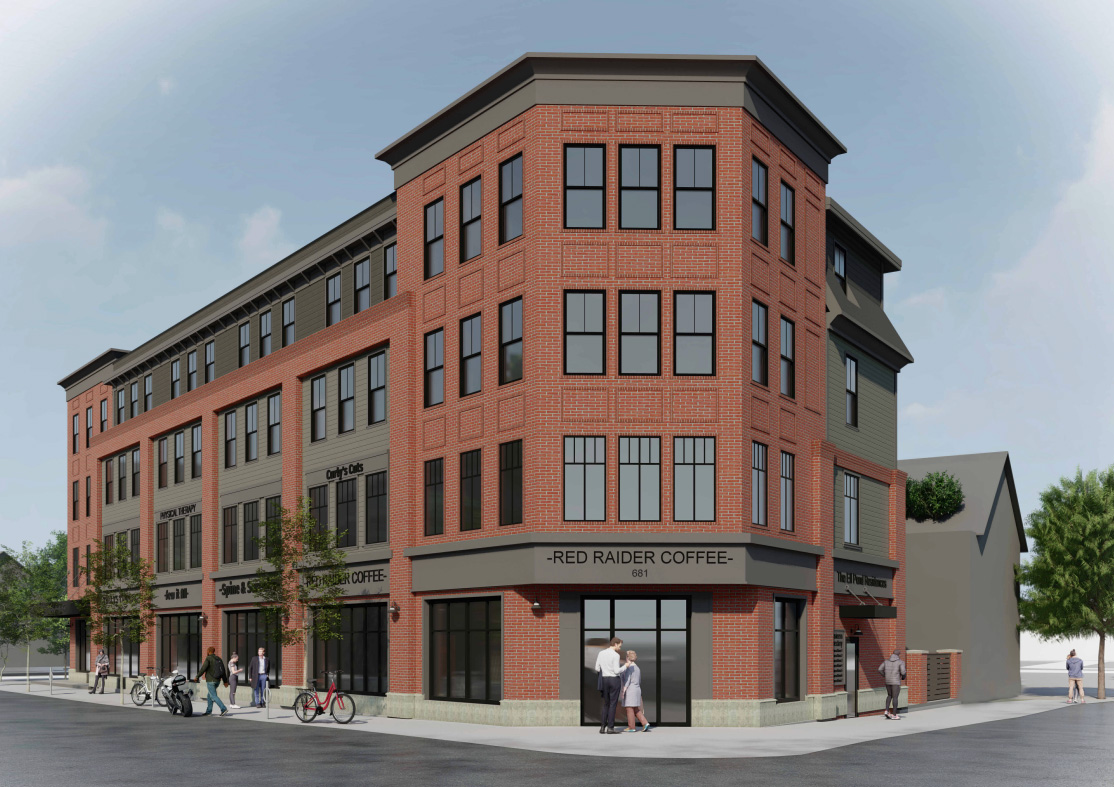
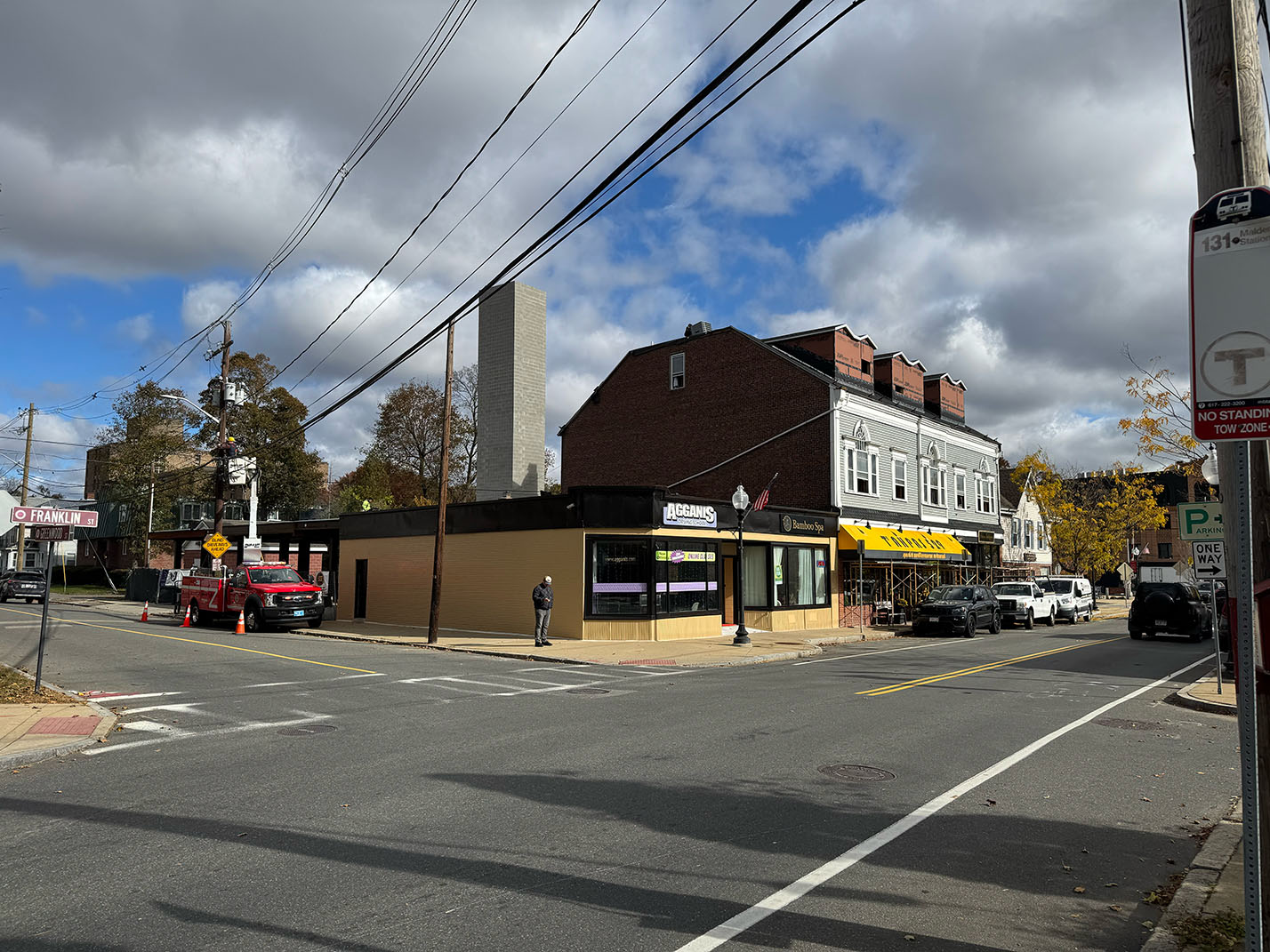
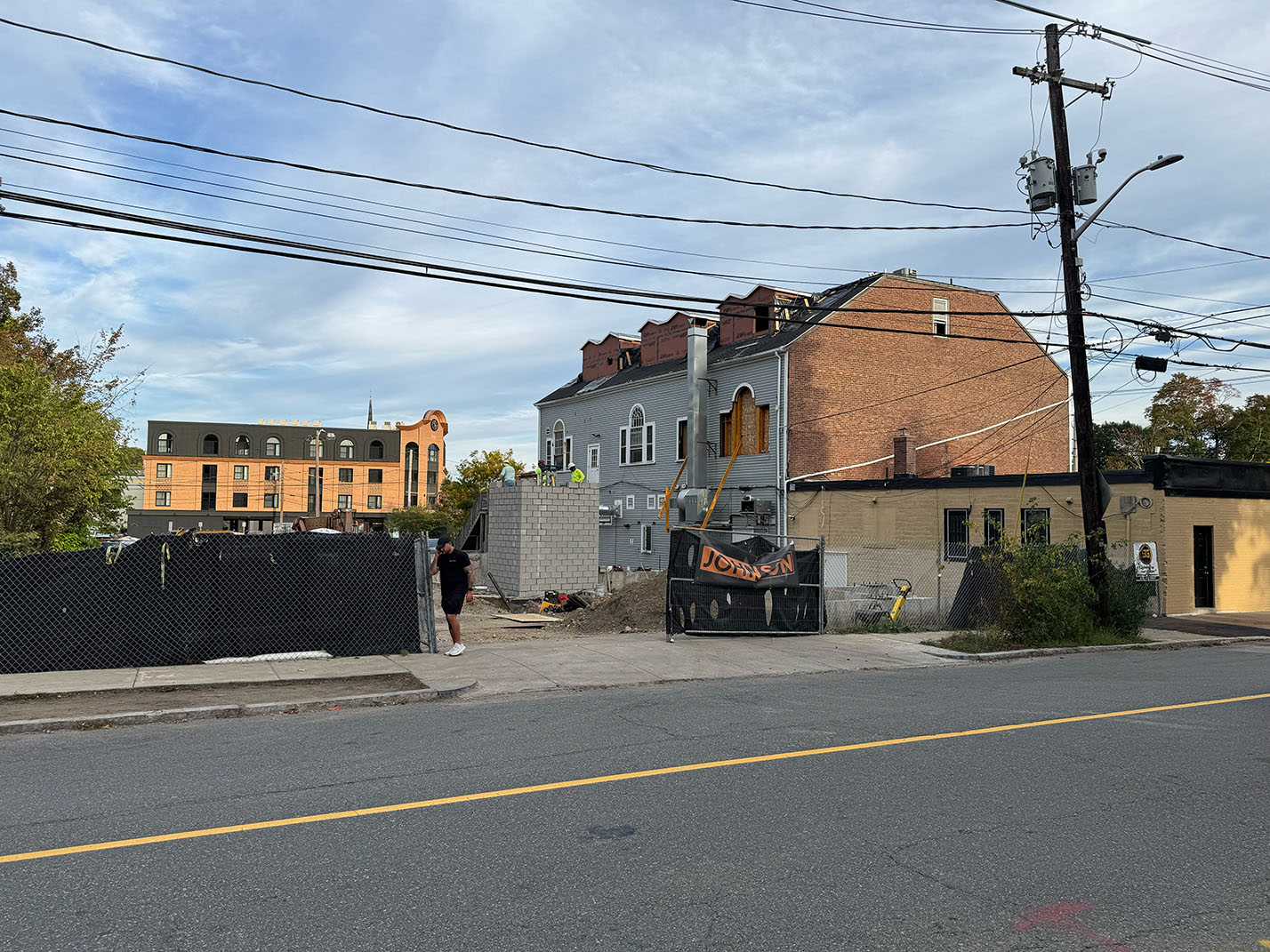
- 521-529 Franklin Street, where T’ahpas 529 is located, is currently under construction, with 34 units and 21 parking spaces planned. The historic Corinthian Hall will be converted into studio and one-bedroom apartments. T’ahpas will remain open during construction, and Salon Indulgence has temporarily moved and will reopen after its space is renovated.
- Projects have also recently been approved at 186 Tremont Street and 554-556 Franklin Street. Plans were approved for developments at 14 Chipman Ave and 272 Tremont Street as well, but those were approved long enough ago that they would likely be resubmitted before construction would begin on either project. Residents are also wondering about what might happen to the building that, until recently, housed Faulkner’s Dry Cleaning and Fitness Together, although no developer has yet announced plans to build there.
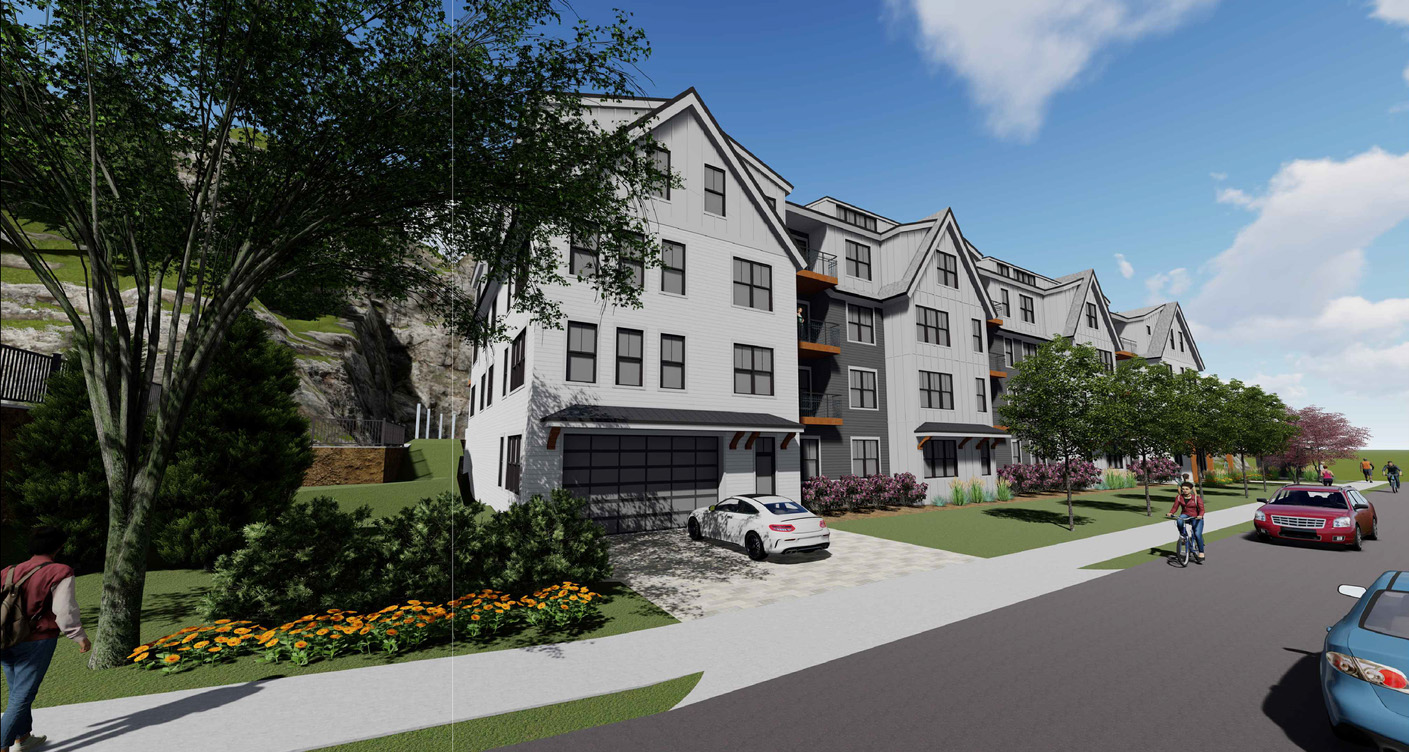
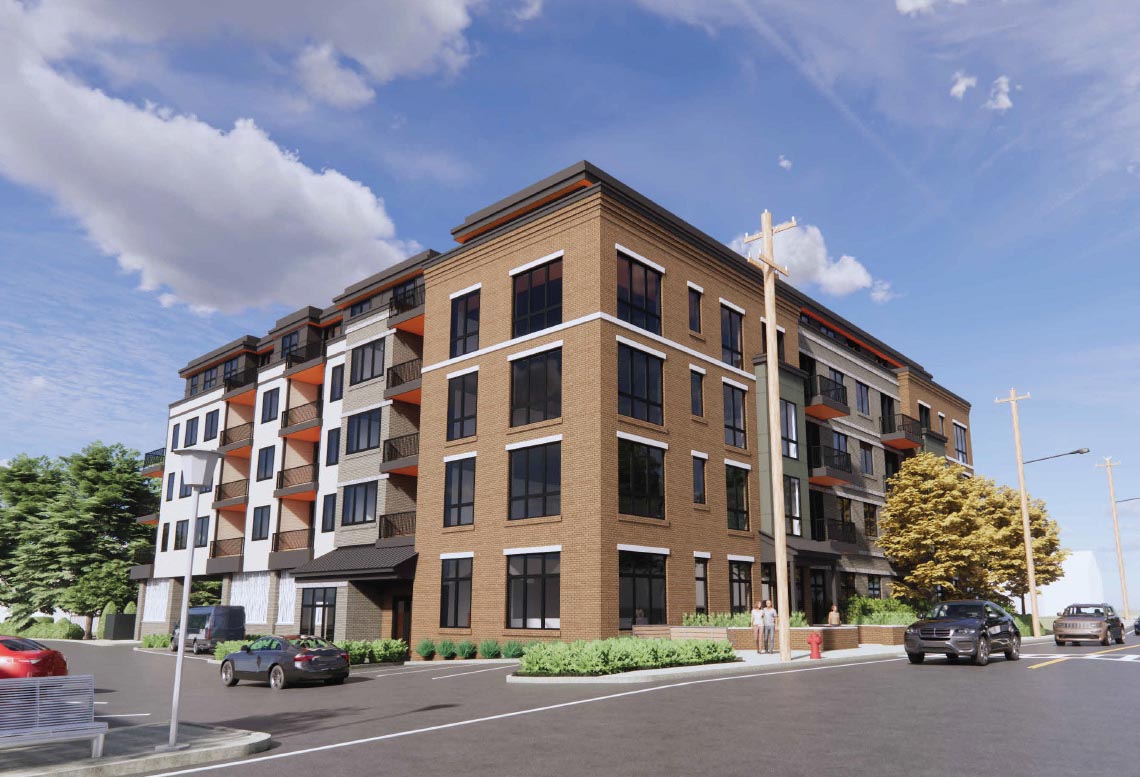
Rendering of the latest plans for Greenwood Street
The 554-556 Franklin Street and the 28-54 Greenwood Street projects were both approved under state law Chapter 40B, which effectively allows developers to bypass local zoning restrictions if they agree to include 20% or 25% affordable units in the project. (Melrose currently requires all new residential developments to designate at least 15% of units as affordable.)
Under Chapter 40B, if less than 10% of the housing units in the city are affordable (as defined by 40B) and the local zoning board denies a 40B project, the developers can appeal that decision to the state’s Housing Appeals Committee - which tends to side with developers unless the proposed development violates state law or creates some other very clear issue. By approving a project, the local zoning board can place some conditions on a development, although if the conditions are too onerous, the developer may decide to appeal them to the state.
Melrose was at 8.99% affordable units in August, although the number fluctuates as projects are approved, completed, or abandoned.
While some cities have successfully fought against development proposals they opposed, others have ended up like Stoneham, which expended significant resources to fight against the Devon at Weiss Farm development for a decade, only to have it go forward with just five fewer units than had originally been proposed. (And while not directly related to 40B, this recent Boston Globe article about the conflict between Winthrop’s Town Council and state officials over the MBTA Communities Act offers a glimpse into what can happen when state and town authorities are at odds.)
The Greenwood Street project was controversial when it first appeared before the city’s Zoning Board of Appeals (ZBA) two years ago. The original plans approved by the ZBA had 40 units and would have involved a significant amount of blasting to create enough level space below the hillside to build on. After the project was approved, neighbors sued the developer and the City over the project approval.
The suit was withdrawn earlier this year, and last month the developers returned to the ZBA with a reduced plan, for 24 units and 26 parking spaces in a four-story building, which will require less blasting than the original plans would have. Because, under Chapter 40B, this did not constitute a “substantive change” to the project, the ZBA approved the plans, and the developers are expected to begin construction on the project in the near-term.
While the Greenwood Street project will now require less blasting than originally projected, residents are still concerned about the potential impact on their homes and lives.
“It’s scary,” said one neighbor, “because, unless you’re an engineer, you just have to trust them when they say, ‘the blasting is fine, the plan is fine.’ Some neighbors have hired their own engineers and geotechnical experts, and we’ve seen completely contrasting studies. Which one is right?”
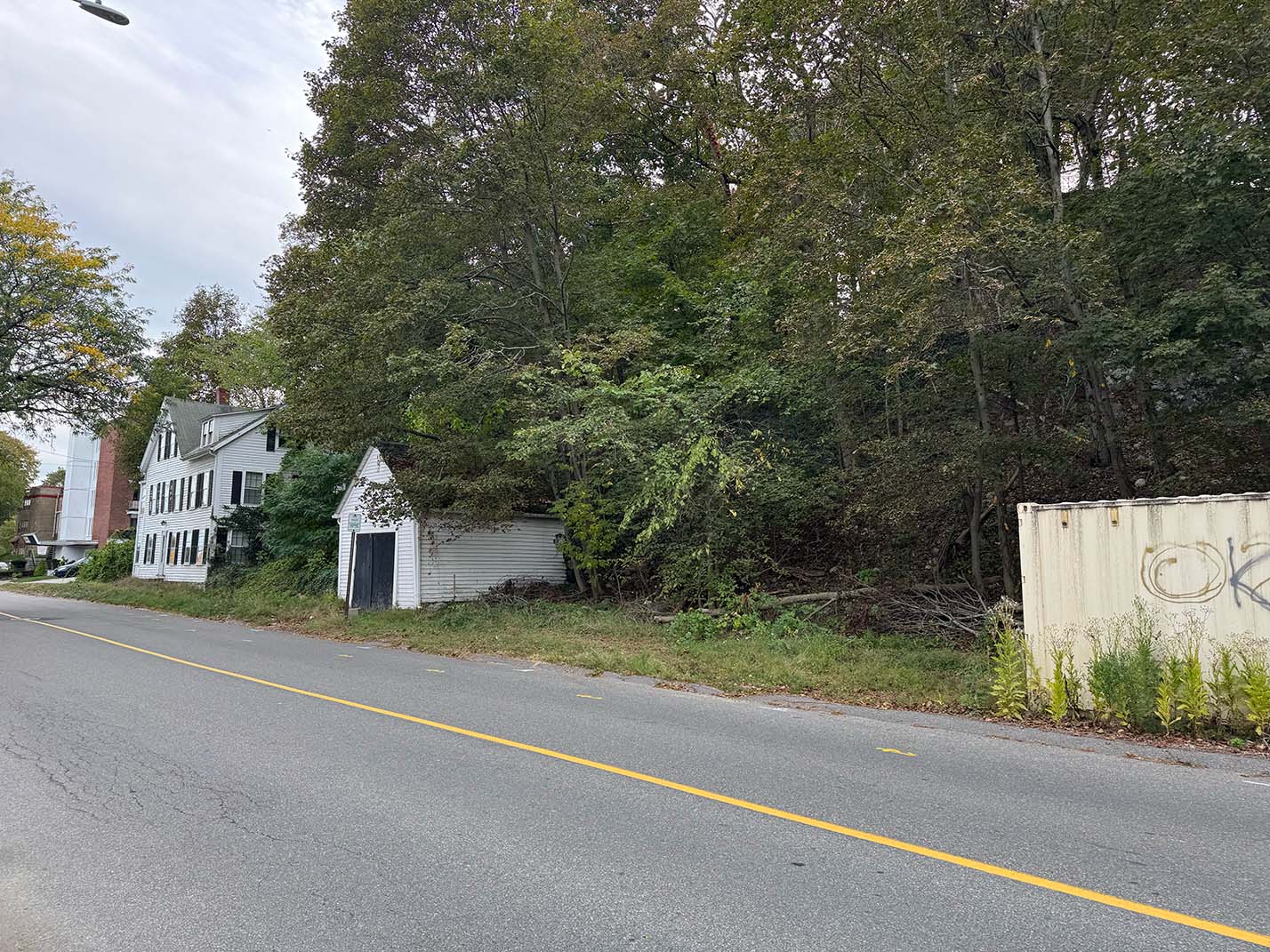
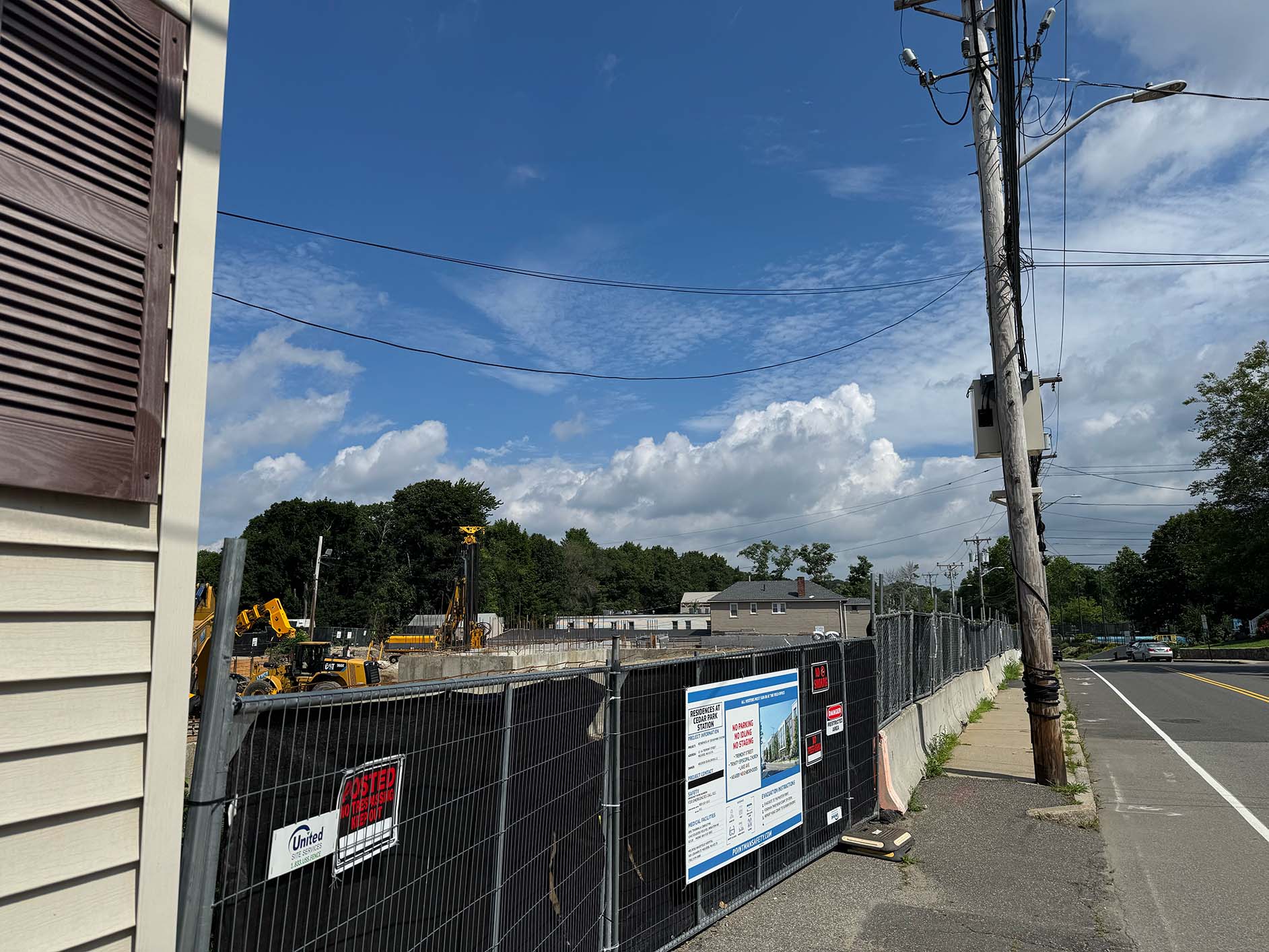
Part of the site for the Greenwood Street project
During the ZBA approval process, which is intended to uncover potential health and safety issues in a project, independent peer reviewers look at the reports that a developer submits on a range of topics: engineering, geotechnical, and traffic, among others.
On the Greenwood Street project, the independent reviewer suggested putting a long-term slope monitoring plan in place, which became one of the conditions of approval for the project. The slope monitoring plan will be overseen by city officials but, one of the neighbors asked, “Who’s really going to do that? Once a project gets approved, it just gets handed off.”
“Blasting is very controlled by the state,” responded Laura Szekely, one of the developers on the Greenwood Street project. “People are very afraid of blasting, but there are many things that happen in the natural environment that cause as much shock as blasting does.”
“Your house is not going to fall down,” she went on. “That would be really extreme. The range of things that are likely to happen is well known, and those would all be covered by the blaster’s insurance.”
Laura Szekely and her husband, Sean, who work as a team, have worked on previous projects in the Swains Pond neighborhood of Melrose that involved blasting. But Highlands residents are concerned about the possibility that things won’t go as planned - especially in an area of the city where many of the homes are over a century old.
The developers emphasized that they are putting extra precautions in place to avoid property damage, including taking multiple seismograph readings after each blast. “This is not mine shooting,” said Sean Szekely. “This isn’t a big box of TNT in an old Western. This is controlled, small blasts. The last thing we want to do is damage people’s property.”
Neighbors are also concerned about the impact on their quality of life that months of blasting is likely to have. While blasting isn’t constant - there might be two blasts in a day, every other or every third day - it is preceded by an air horn sound to warn passersby, and the contractor needs to drill prior to blasting, and haul the excavated material offsite in what the developers estimated might be 30 or 40 trucks’ worth of material for each blasting day - all of which could be noisy and disruptive.
And while the developers assured the ZBA that all construction vehicles will be parked on the site, neighbors are skeptical. “For the work behind T’ahpas,” one neighbor said, “they’ve been parking in the MBTA lot and on Greenwood Street all day.” (Greenwood Street is quite narrow along this stretch.) “Residents have notified the city about it, but no one’s done anything.”
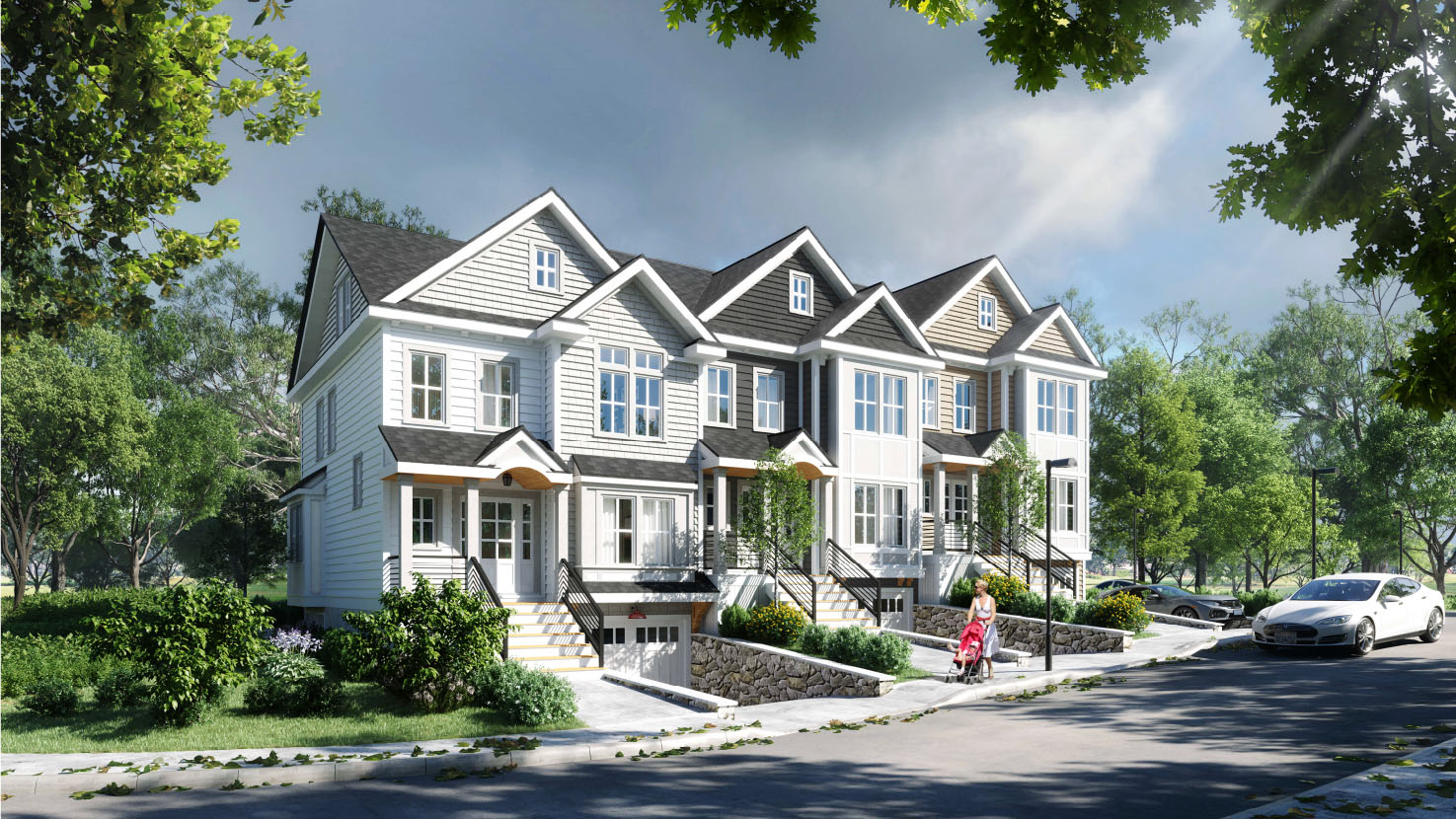
Rendering of plans for one of the townhouse buildings at Summit Ave
If neighbors have concerns about the Greenwood Street project, those concerns are magnified when it comes to the 35 & 55 Summit Avenue project that the ZBA is currently deliberating on.
The Summit Ave project is planned at the top of a very steep, narrow road in the hills above Franklin Street. Currently, the site is mostly undeveloped land with two single-family houses on it. It abuts conservation land in Melrose and wooded, city-owned land in Wakefield. While the site is not far from the Melrose Highlands train station, steep hills do not make the site very pedestrian-friendly.
The developers for the Summit Ave project first applied for a special permit in 2021 to build four two-family buildings on the site. They later amended the plans to six single-family homes, which they withdrew after the Planning Board raised concerns about stormwater management. Then, after the city’s temporary “safe harbor status” from Chapter 40B applications expired this summer, the developer refiled the application as a 40B project for a 28-unit townhome development with 56 parking spaces and 11 visitor spaces.
The City opposed the project, citing issues with blasting and drilling; stormwater management and drainage; the project’s density and its impact on the surrounding environment; increased traffic on Summit Ave; and access to the site for emergency and delivery vehicles. Despite these concerns, the Massachusetts Housing Finance Agency determined that the project was eligible for funding and could move ahead to review by the ZBA.
The ZBA now effectively has two choices: they can approve the project with conditions, and possibly minor modifications; or they can reject the project, and run the risk that the state’s Housing Appeals Committee will overrule them and allow the project to go forward without input from local authorities.
Under Chapter 40B, developers only need to submit preliminary plans to the zoning board - but there must be enough information in those plans for the board to make a determination as to whether the plans are in line with state law and whether they pose a risk to the health and safety of neighbors and their homes.
This was a point of contention in the two hearings the ZBA has held so far on the Summit Ave project. While the project’s attorney, Christopher Agostino, emphasized that the plans submitted for stormwater management, engineering, and construction management were all preliminary, ZBA members argued that they could not properly review the plans without a better understanding of how these systems would work.
Specifically, ZBA members raised questions about the stormwater infiltration system; the proximity of the development’s water boosting station to neighbors’ homes; whether additional traffic on the steep roads could become a safety concern; whether there will be room for emergency vehicles to maneuver around the planned circular drive; and whether the construction process would be unduly disruptive to neighbors.
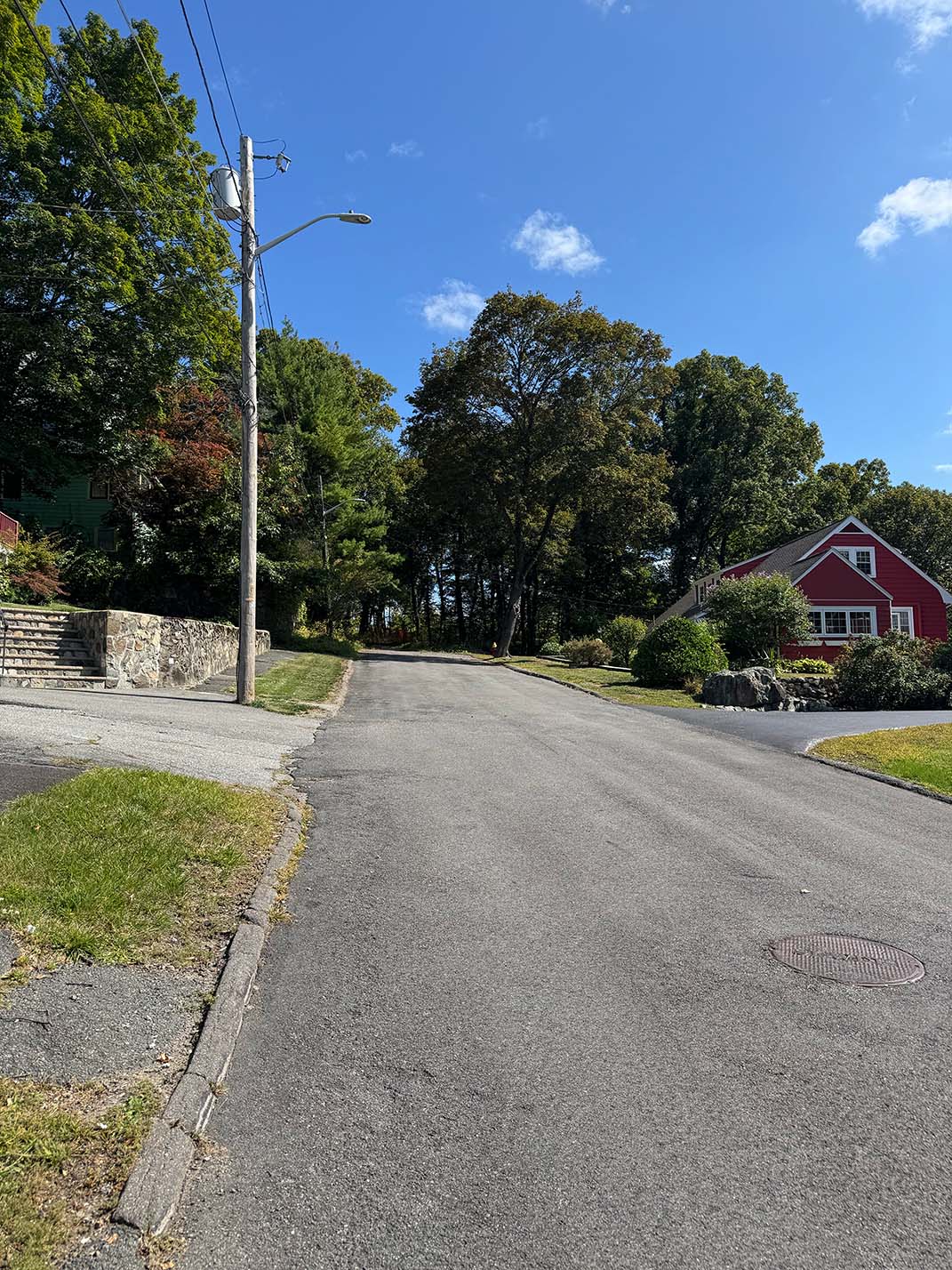
Summit Ave now - the planned building site is in the wooded area at the top of the street
“I have a big problem with this design, starting with the stormwater,” said ZBA member David Roache at the first meeting to discuss the project this fall. “This entire design is predicated on the assumption that the stormwater will find its way into the infiltration system and magically go through ledge - it just doesn’t work.”
“You can’t come to this process without even having thought any of this stuff through,” he went on. “These drawings and information are not even remotely close enough to send out for peer review right now. You show up with these borderline cartoon drawings - I don’t want to waste time on peer reviews if they’re peer reviewing nothing.”
“The construction management plan will directly impact the safety and welfare of the citizens of Melrose,” said ZBA chair Bryan Thorp. “We need to understand logistically how the site will be managed and how you will bring materials in and out of the site so we can assess those impacts. We certainly understand that during construction periods there are times of inconvenience for the abutting properties, but it needs to be reasonable and balanced.”
“If the construction management plan is to truck up and down Summit Ave for two years to build this development,” added ZBA member Dan Gelormini, “I will have an issue with that, because that impacts quality of life for the people who live on Summit Ave. If that’s going to be the solution, then that’s problematic.”
“It feels like a waste of time to review the materials you’ve sent us, based on how much you will have to resubmit,” Gelormini said at the second meeting in October. “I’m concerned about having enough time to be thoughtful about the documents we receive.” (Under Chapter 40B, local zoning boards only have six months to review and vote on 40B applications - and the clock for this project started in August.)
ZBA members also discussed the planned circular road through the development: while the developers state that fire apparatus would have sufficient room to maneuver, ZBA members worried that, in a situation where snow has not been properly cleared (since that is the responsibility of the homeowners’ association on a private road like this one), the development’s visitor spaces are full, and some visitors decide to park in the street, an emergency could potentially turn into a public safety catastrophe.
Ward 1 city councilor Manjula Karamcheti spoke during public comment at the most recent ZBA meeting for Summit Ave: “The plans that I have seen make me very concerned about what will happen to this area and this neighborhood. The Housing Production Plan looked at developing underutilized tracts of land along the rail corridor - there were no neighborhoods included in the plan. This is not Franklin Street, which is a more logical area for these developments. There are probably other things that could be built here that would have less of an impact, but this just doesn’t seem to make sense.”
Neighbors, especially those whose homes are between the two projects - downhill from the Summit Ave project and uphill from the Greenwood Street project - worry about the effects that drilling and blasting (which, in the case of the Summit Ave project, does not yet have a clear scope) will have on their homes. They worry about stormwater that is not properly managed or overwhelms the planned infiltration systems flooding their property. And they worry about more frequent traffic on the steep, narrow length of Summit Ave becoming a safety issue.
One neighbor noted that she is already seeing stormwater runoff and erosion on her property - problems she never experienced before - as a result of tree clearing on the Summit site. And she has commissioned geotechnical reports, one of which stated: “Uncontrolled levels of ground vibrations could cause instability of the slope and/or the bedrock and boulders. If the large bedrock masses or boulders were to be dislodged, they could roll down the slope, resulting in a significant life/safety issue and catastrophic damage.”
“There’s so much uncertainty and anxiety,” said another neighbor. “We don’t trust the process because we don’t feel like anybody’s watching, when things do get approved, that they do it the way they say they’re going to. We don’t want to be in a position where we’re finding out too late that they didn’t do the stormwater or the blasting quite right, and now we have to deal with some sort of damage or expense.”
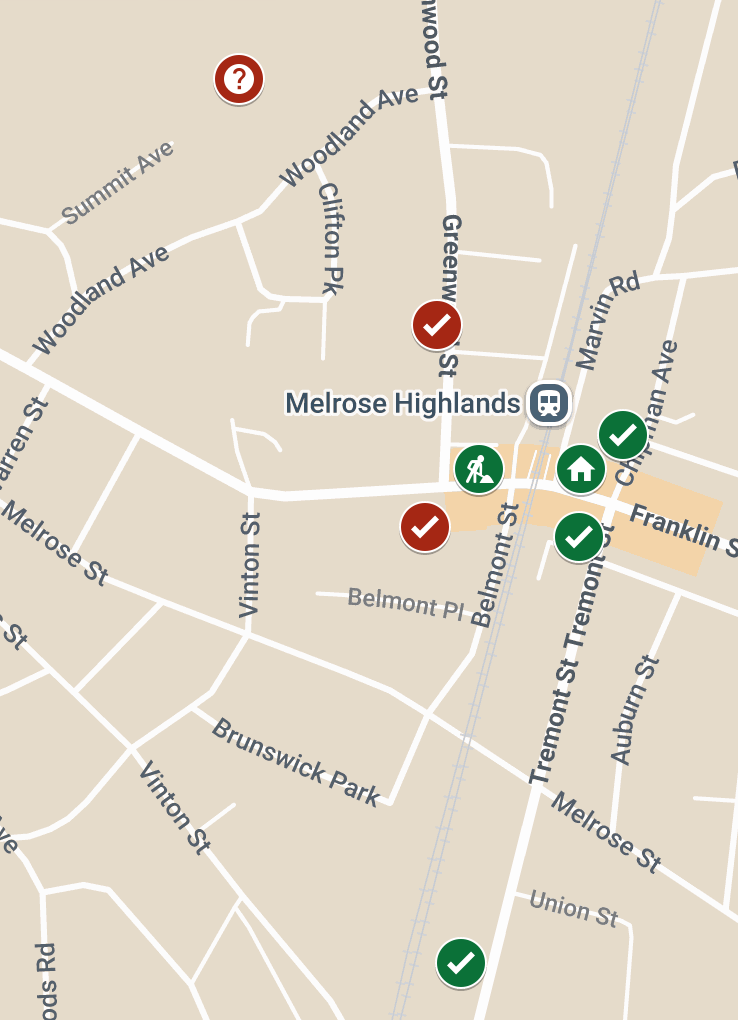
Red - 40B projects; ? - under consideration; ✔️ - approved
And neighbors worry about the overall effect of all of the planned development on the already congested - and sometimes dangerous - Franklin Street corridor.
All prospective developments are required to perform a traffic study as part of the application process. “When you look at these traffic studies,” said one neighbor, “they say that they consider all of the developments that have been built and approved, and none of them say they will have any noticeable effect on the traffic - I just don’t buy it.”
ZBA member David Roache explained that the traffic studies only measure the quantitative impact of traffic, not the qualitative impact. “What’s typically handled is: are there intersections that will become choke points, and does this one additional development create an unacceptable level of traffic delays?”
Neighbors are concerned that traffic studies don’t fully capture things like the impact of funneling cars from the 554 Franklin Street development - which is planned to have 60 units and 45 parking spaces - through a small municipal parking lot and onto one-way Belmont Street, where they will encounter Melrose Street’s one-lane tunnel under the railroad tracks and school traffic from the Roosevelt Elementary School. (The decision to have the driveway for 554 Franklin connect to the municipal parking lot was made in order to avoid creating more backups on Franklin Street.)
But on Franklin Street, said Laura Szekely, “it’s the through traffic that’s really the problem,” especially when the commuter rail passes through, noting that many commuters from Melrose and surrounding towns use the Franklin Street corridor as a way to get to I-93. “Adding cars that are originating or terminating their trips in the Highlands is statistically not that significant compared to all the cars that are passing through.”
On the flip side, neighbors are also concerned that, with some developments building fewer parking spaces than units, either the neighborhood will be flooded with cars or carless residents will need to rely on delivery services for groceries and other essentials, which can add to traffic problems when delivery drivers pull over in inconvenient places to make deliveries.
While the Highlands does have some transit - the commuter rail and the infrequent 131 bus - it is really only helpful for getting to downtown Boston. And while the reopening of the Franklin Market will provide residents with a local place to buy some food items, the closest full-service grocery store is Whole Foods, which is over a half-mile away - farther than many people want to lug their groceries on foot.
“It’s this collective anxiety of all of these things,” said another neighbor, “and the cumulative effects. The developers don’t live here, and most of the city officials don’t live here. We can’t just avoid the area at rush hour.”
Neighbors noted that it’s not the density they’re necessarily opposed to - it’s what they see as a lack of cohesive planning, including the appearance of new developments. “The development at Oak Grove - which was controversial when it went in - isn’t five stories,” noted one neighbor. “It’s planned, it looks nice, and it’s not in a congested part of town. It has commercial space. It has a clubhouse and a pool. There’s plenty of parking and it’s right by the Orange Line. Instead, we’re getting these five-story boxes with no cohesive design and no green space.”
Neighbors also expressed concern that approving the development at Summit Ave could open up a Pandora’s Box of new developments in neighborhoods, not just on the larger lots along the rail corridor.
“It’s becoming absurd,” said one neighbor. “Every successive development is becoming more and more permissive. When you look at flat pieces of land, developing those makes sense - parking lots and big, industrial lots along the train tracks - and those have all been picked up. It just doesn’t make sense to blast the side of a mountain.”
“The message we have sent to developers is: anything is fair game now for developing,” said another neighbor, “and we’re going to roll over and take it.”
Although developers and neighbors may appear to be in conflict with one another over the plans, everyone expresses similar hopes for the future of the Highlands as a vibrant, friendly neighborhood.
The developers of Summit Ave, in their application to the ZBA, described their plans as fitting into the “missing middle” housing that Melrose’s Housing Production Plan calls for: providing housing for people who want to live in Melrose but can’t afford a single-family home here. “Ultimately,” they said, “the mission is to build a community of homeowners excited to connect with their neighbors in a ‘pocket neighborhood.’”
The Szekelys are exploring converting the Greenwood Street project into condominiums, but they intend to stay involved in the neighborhood long-term as managers of the apartments at 554 Franklin Street. They see the mix of housing they are adding to the neighborhood - an assortment of one-, two-, and three-bedroom units at different price points, including some subsidized options for ownership - as a way to make housing in this area more accessible to a greater range of people.
And while large apartment buildings are sometimes seen as bringing in a transient population who will cycle in and out of the neighborhood without making real connections with neighbors, they can also provide a way for older residents who are downsizing to stay in the community, and they can bring in new people of all ages, with or without children, who are excited to get involved in the community.
“This neighborhood is great already,” said Laura Szekely, “and it’s going to be really great. I’m happy that we’ll be there to see it and hopefully participate in it and influence it. We know that change is hard, but the increased density will bring more demand for things like little restaurants, stores. Little amenities that fill in the cracks of a neighborhood, that make it the whole picture - so you can go buy a gift, get a cake at a bakery - and I think that’s what’s going to happen in the Highlands. The increased density - the extra people - is what’s going to bring in those businesses.”
“No one is against progress or new buildings,” responded one neighbor, “but how many can you have in one place? We get that things move on and change - we just didn’t expect this much in this small of an area. We have real concerns about whether anyone is paying attention to what the traffic will be like, and how well some of these ideas will work out. We’ll adapt, and life goes on, but it will be different - this is a big change.”
The Summit Ave development will be discussed at the ZBA meeting on December 3rd at 7:30pm. You can watch it online here.