Melrose Militiamen at the Battle of Lexington and Concord
From the Melrose Historical Commission
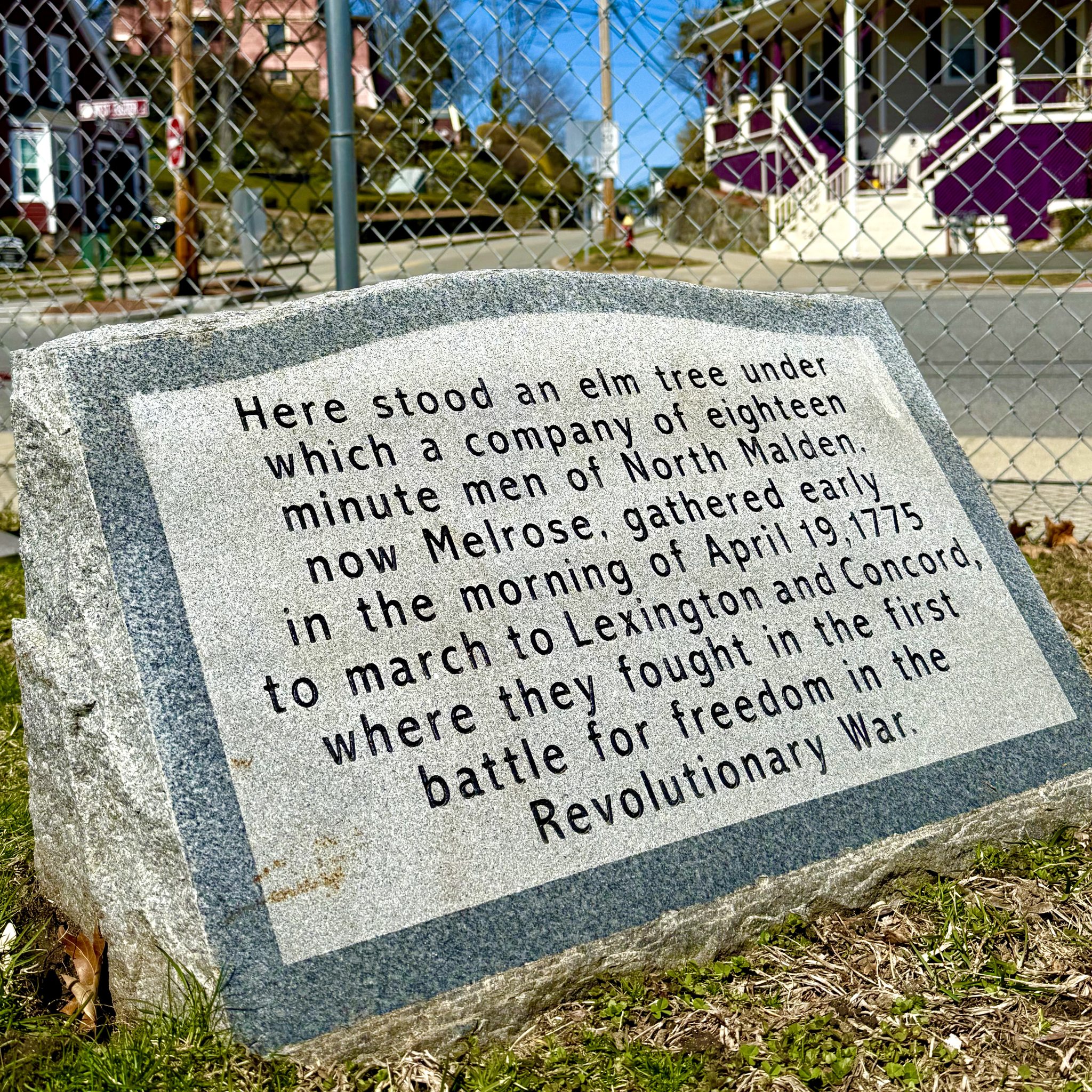
A marker at Gooch Park at the corner of West Foster and Vinton Streets stands where the men of North Malden gathered before joining the rest of the Malden militia. North Malden became the town of Melrose in 1850 and the city of Melrose in 1900
The 250th Anniversary commemorations of the leading events of the American Revolutionary War will be taking place nationwide over the coming months. In the early weeks of 1775 tensions were high between British forces in Boston led by General Thomas Gage and the supporters of the Sons of Liberty’s opposition to King George III’s rule. Years of Intolerable Acts, punishing taxation, oppressive troop and warship build-up, restrictions on colonial rule and trade, had spiked the patriotic fervor for self-government, especially in the towns surrounding Boston. With Massachusetts’ patriots firing the first salvos at Lexington and Concord, let’s remember the role of Melrose’s own citizens in the events of April 19th, 1775.
Paul Revere’s midnight ride from Boston towards Concord, sounding the alarm that British regulars were coming out, took place 75 years before the establishment of the town of Melrose. Along with the stores of arms and ammunition in Concord, members of the Sons of Liberty feared that the rebel leaders John Hancock and Samuel Adams would be captured in Lexington. Since 1630 it had been decreed that all able-bodied men be enrolled in trained bands of local militia. Under a recent decree, one-quarter of those enlisted in each town’s company were to hold themselves ready to march at the shortest notice—the Minute Men.
As the alarm was spread from farm to farm, the patriots of North Malden and Stoneham gathered their arms and joined with their neighbors to muster with their companies. Tradition has it that the men of the sparsely populated North Malden, comprising the majority of today’s city of Melrose, gathered under an elm tree where Gooch Park lies today. They then made their way to the tavern known as The Rising Eagle that once stood at the site of Malden’s city hall, joining the rest of the Malden men of Captain Benjamin Blaney’s company as they prepared to march to the village of Menotomy (now part of Arlington) where they arrived in time to capture a British supply train.
Some of the North Malden militiamen went towards Beacham’s Point to fortify the important Penny Ferry crossing between what is now Everett and Charlestown, near the present drawbridge of Rt. 99 at Alford St. Among them was the elder Phineas Sprague who lived in a home once located at 309 West Foster St. Being quite deaf in his advance years his exploits were described as follows: “Mr. Sprague’s heart was as impervious to fear, as his ears were to sound and when the rest of his comrades were flying from the view of the enemy, he was seen upon a piece of rising ground swinging his hat and shouting victory.”
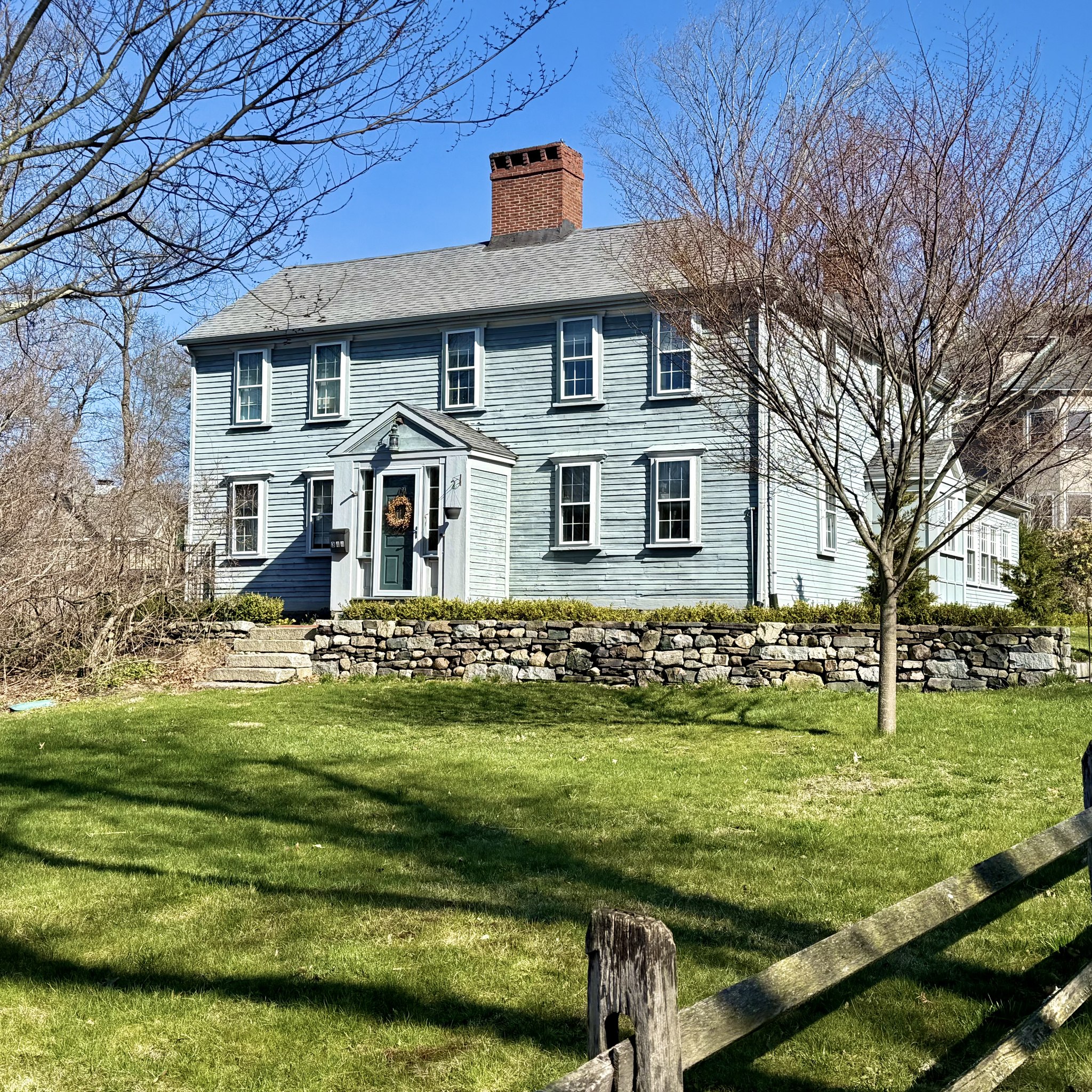
344 Vinton St. was built in 1790 at the site of the earlier Vinton farmhouse, part of Stoneham until 1853. The barn on this property dates to the earlier colonial era
The North Malden militiamen included Sergeant Jabez Lynde, Joseph Lynde, Joseph Lynde, Jr., Joseph Barrett Jr., John Gould, Ezra Howard, Corporal Nathan Eaton, John Grover Jr., John Grover 3rd, Unite Cox, Benjamin Lynde, John Pratt, Phineas Sprague, Phineas Sprague Jr., Ezra Upham, John Vinton, William Upham, and Benoni Vinton.
From the northwest corner of today’s Melrose, then part of Stoneham, three brothers, Thomas, Timothy and Ezra Vinton, two of whom had married sisters of the Green family, left their farm near the corner of Vinton and Franklin Streets to muster under Captain Samuel Sprague’s company in front of Stoneham’s church. They marched for Lexington arriving in time to fire on retreating British regulars.
After British regulars encountered fierce resistance in Lexington and Concord, they were forced to fight every foot of the way back to Boston as militias from the surrounding towns arrived in time to cover the retreat. Some of the fiercest fighting of the day, hand to hand and house to house combat, took place in Menotomy, Arlington Heights, where the company of North Malden men joined the fighting.
Living in the far northeast corner of today’s Melrose near Long Pond, an area of Malden then known as Scadan (swamps, hills and thick woodlands that included present day Mt. Hood), John Edmunds had just turned 18 and wasn’t yet a member of the Malden militia. Hearing the Lexington alarm, he headed to the fight with a young friend even though they had but one gun between them. Reaching the British lines, he borrowed his neighbor’s weapon, killing a British soldier and taking his arms and rations. Edmunds served throughout the American Revolution for the Continental Army and his descendants still treasure a Hessian sword he captured in battle at Trenton serving with General Washington. Upon his return he worked his lumber mill on Long Pond and was in the ice business. Dying in the 1840s and buried in the old burial ground where the Coolidge Apartments now stand, his was the last of the early settler graves to be relocated to the new Wyoming Cemetery in 1896.
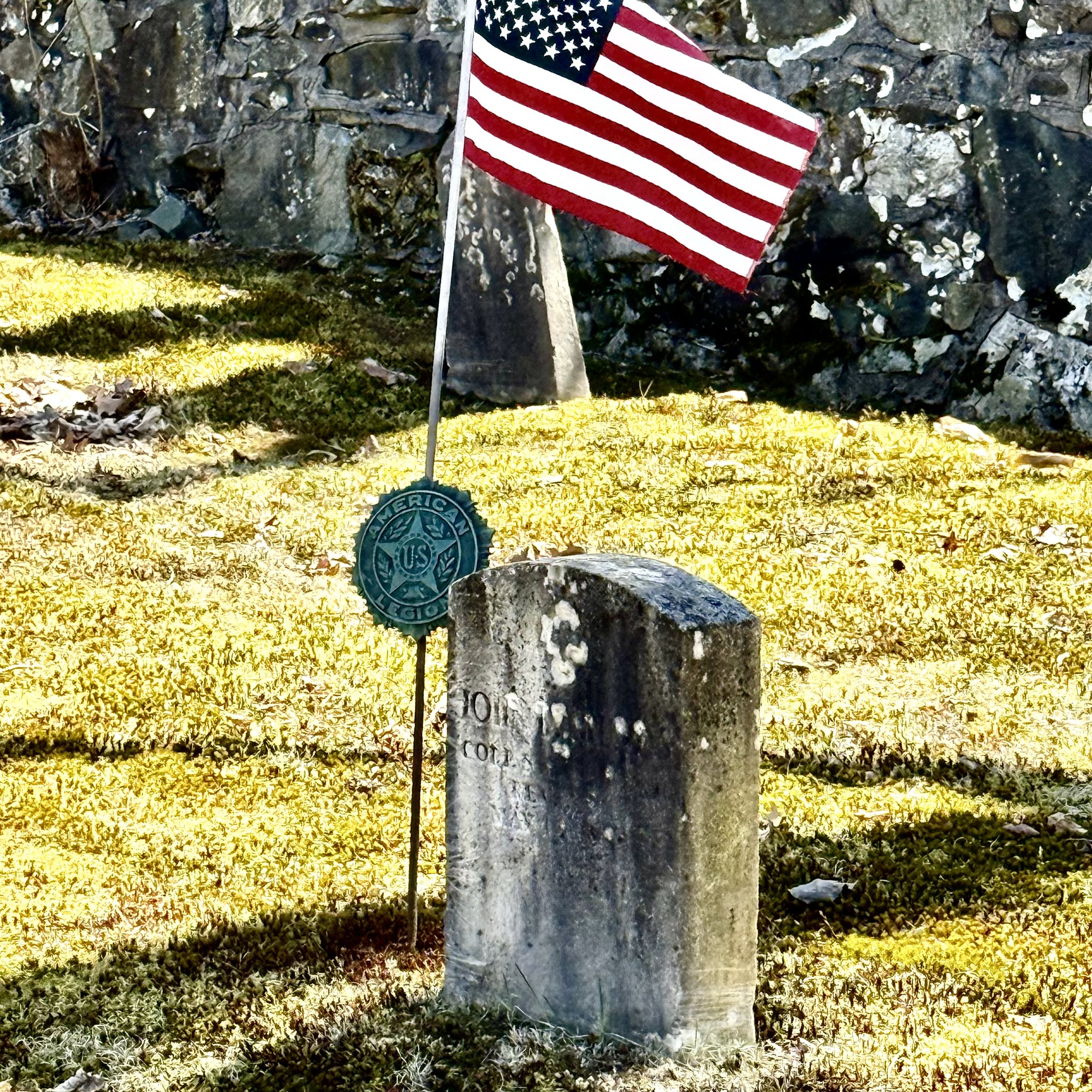
The Wyoming Cemetery headstone of John Edmunds “Corp. 8 Mass Regt, Rev War, May 14, 1846”: Corporal, 8th Massachusetts Regiment, Revolutionary War, Died 5/14/1846
Some militia men were filled with more than patriotic fervor on that day. Two Lynn militia men stopped by a tavern owned by Israel Cook, located in the first store that operated in what we know as Melrose, at the easterly corner of Green and Howard Streets. Tradition has it that, after their fill of rum, they continued to the battle where both lost their lives. After the men of North Malden departed for battle, the women gathered supplies and food in saddlebags and entrusted them to the tavern keeper and a borrowed horse. Running into British soldiers, he was shot but survived, however his horse was not as lucky. Undeterred, Israel Cook carried the bags himself until he came upon his friends who were much in need and grateful.
Patriots chased the British troops back as far as the Charlestown Common, breaking off the fight before the British reinforcements could overpower them. Most of the Melrose men returned home that night or the next day after marching distances exceeding 34 miles. For many it was just a temporary homecoming as they went on to participate in the siege of Boston and the Battle of Bunker Hill. Some enlisted in the Continental Army, serving through brutal battles and bitter winters until hostilities ceased after the Battle of Yorktown in 1781. Of the 1700 British regulars and over 4000 colonial militia that fought on April 19th, 1775, British suffered 73 killed, 174 wounded and 26 missing; colonial militia suffered 49 killed, 41 wounded and 5 missing.
It’s important to acknowledge the contradiction of the American Revolution that many of those who fought for the principles of liberty and equality were simultaneously slave holders, including some of the Melrose men listed who answered the Lexington alarm. Slavery was outlawed in Massachusetts in 1783.
A full calendar of events taking place across the Commonwealth of Massachusetts commemorating the 250th anniversary of the start of the American Revolution can be found at https://massachusetts250.org/.
Follow the Melrose Historical Commission on Facebook and on Instagram to see their latest content.