The History of Melrose's Elementary Schools
From the Melrose Historical Commission
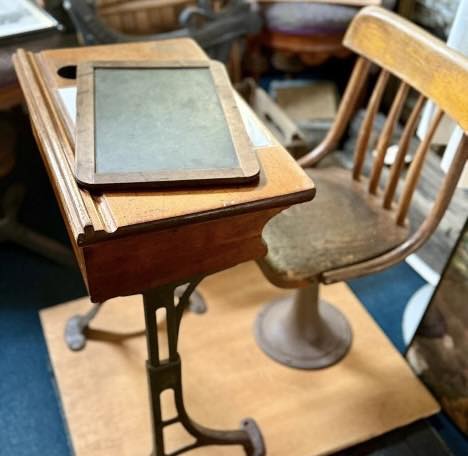
Gooch School desk and Ripley School slate
Courtesy of the Scott Macaulay collection
Many buildings have served generations of Melrose’s youth since 1850. The footprints of some of these schools can be found in parks and playgrounds scattered through Melrose today, including Volunteer Park (Warren School), Gooch Park (Gooch School), Mary Livermore Park (Sewall School) and Dunton Park (Whittier School). Some buildings are serving different uses today, including the Washington (Lebanon St.) and Coolidge (Main St.) apartment buildings, the Ripley School housing the SEEM Collaborative, the original wooden Ripley School which is a private home on Swains Pond Ave. and the Beebe School (built 1956, closed 2004, site of the future Public Safety building). Some are lost to time, like the earliest school structure once located near the corner of Lebanon and Upham.
As Melrose students once again head back to school next week, we will look at the history of Melrose’s six current public elementary schools.
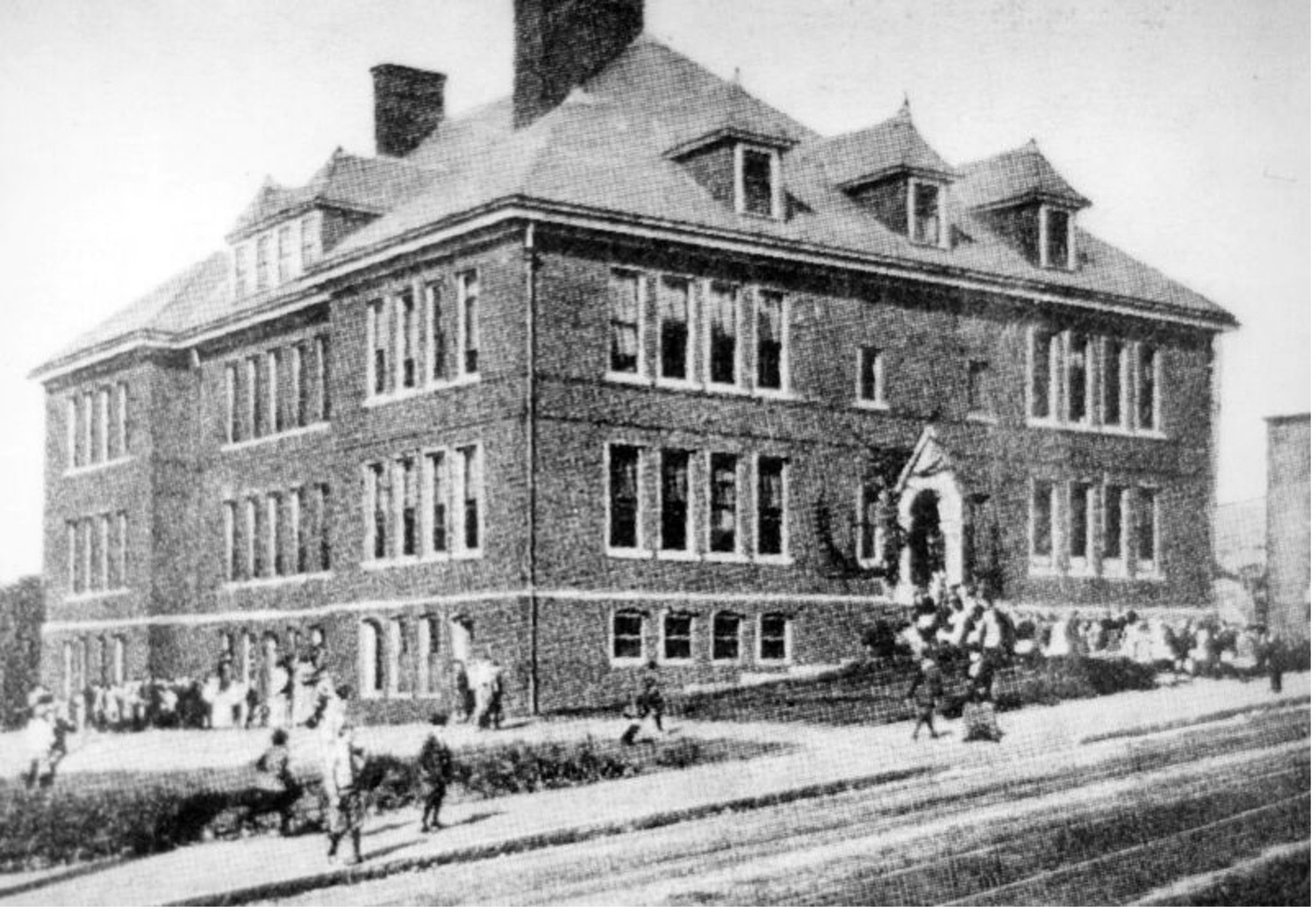
1896 Franklin School
Courtesy of the Melrose Public Library
The Franklin School
The first Franklin School, subsequently known as the Whittier School, was built on the corner of Franklin and Sargent Streets in 1884 at a cost of $8200. The second Franklin School was built on its present location at the corner of Main and Franklin Streets as part of a school building boom in 1896 that included three elementary schools (Franklin, Lincoln, and Washington schools) and the new high school on Main Street. Franklin School had 8 classrooms, one for each grade, accommodating 48 students, with a construction cost of $40,000. At the end of the 19th c. the elementary school day in Melrose started at 9am, with a lunch break from 1145am until 2pm. Classes resumed at 2 until 4pm.
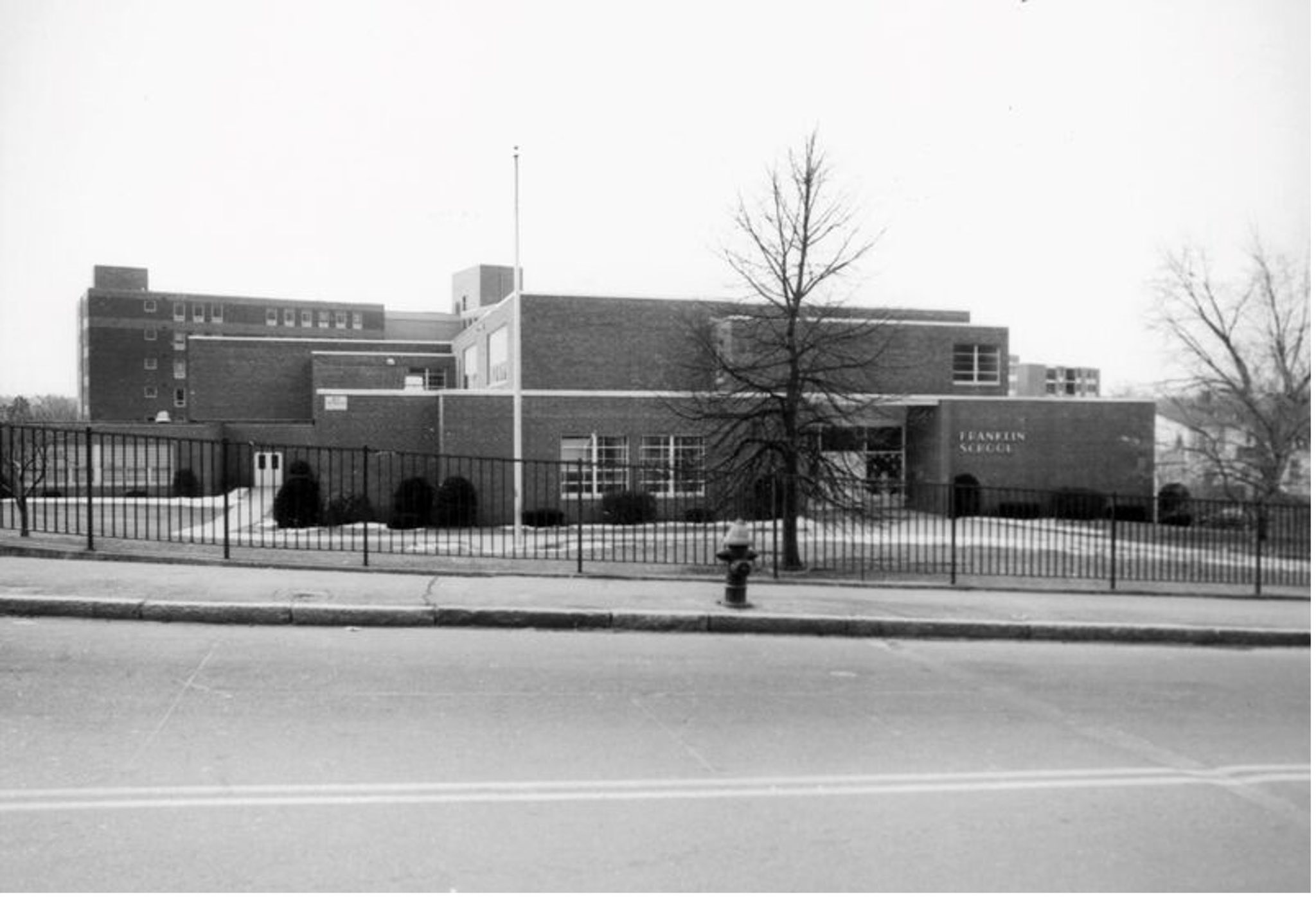
1966 Franklin School
Courtesy of the Melrose Public Library
By the start of the new school year in 1963, approaching 70 years old, the state’s Department of Public Safety could no longer assure the city that the building was safe for public occupancy. The school board voted to close the school, and students were accommodated with a combination of relocation to other, in some cases older buildings, and double sessions (some students attending class 8am-noon, a second shift attending 1230-430pm). An estimated expenditure of $100,000 would only have extended the life of the building 1-2 more years. City officials needed to quickly pivot plans from building one new East Side School (Hoover) to the immediate construction of two schools instead. Construction began in 1964, and the new building opened for the school year in 1965, built to similar plans as the Beebe School on Foster Street. Construction cost $900,000. The new building was praised for having purpose-built classrooms for the support of special education students.
Closed for a period, the Franklin School reopened as an Early Childhood Center in 2008.
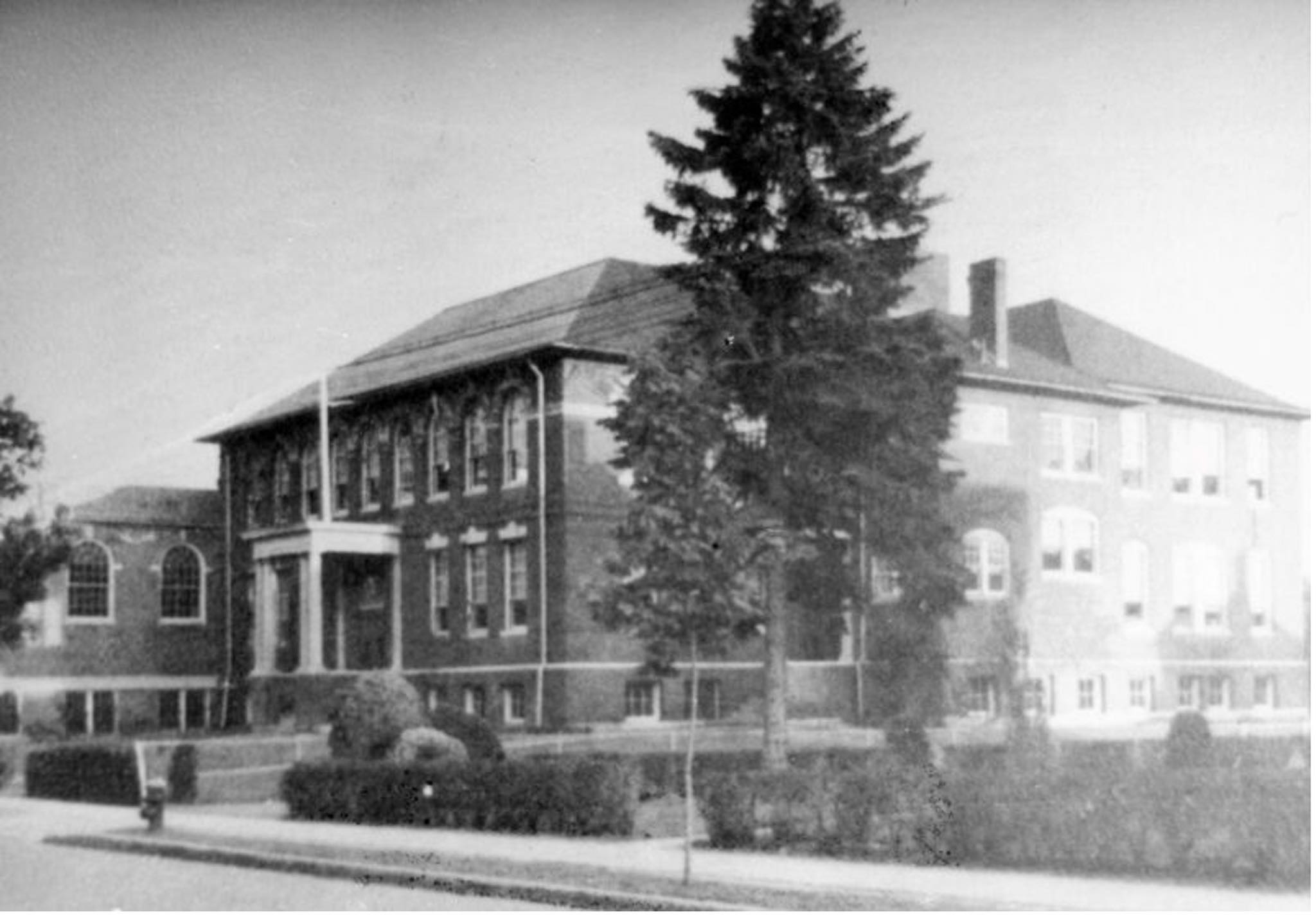
Lincoln School circa 1930
Courtesy of the Melrose Public Library
The Lincoln School
The four new schools built in 1896 (Lincoln, Franklin, Washington, and the high school) were unlike anything built in Melrose before. They were all brick, three stories, and had electricity. At the Lincoln School, each classroom had a clock, electric bells and speaking tubes to the principal’s room. All 4 new schools constructed in this period were connected to the town's new sewer system, providing a vast improvement over the conditions at some of the older schools in town.
Known as the Wyoming School for its first year, the Lincoln School opened for its first students in September 1897 with 8 classrooms with 40 desks each. Its construction cost was approx. $40,000. When it first opened, one of its classrooms was used by Melrose’s high school scholars awaiting the completion of the new high school on Main Street. (The original high school built in 1863 located at the site of the Melrose Public Library had burned down before the new location was completed.)
A large addition was added to the left side of the building in 1930. Changes included the new building material of composite blackboards for the first time in Melrose, instead of the traditional natural slate. It included a new gymnasium and boys and girls locker rooms with showers. Lincoln was again renovated and expanded in 2000.
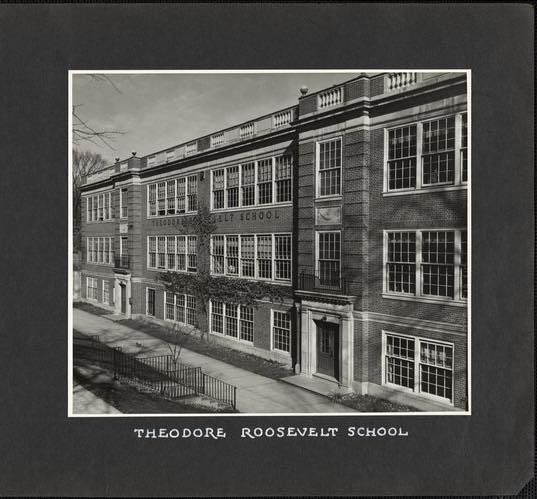
Photo taken in 1947 of the 1924 Roosevelt School
Courtesy of the Melrose Public Library
The Roosevelt School
Between Melrose becoming a city in 1900 until 1924, no new schools were built in Melrose. But in 1924, the city constructed two new schools, the Roosevelt and the new Ripley School (replacing the wooden schoolhouse on Swains Pond Ave, now a private residence). Construction took place on an area known as Messenger’s Meadow. Messenger’s Meadow was gifted to Melrose in 1889 by local businessman Charles Cox as a playground. He also donated playgrounds at Franklin, Warren (site of Volunteer Park today) and Lincoln.
Although the school opened in September 1924 with 392 students enrolled, arguments ensued throughout 1925 about the necessity for expending more funds to cover the brook that impeded access to the front door and grading the wetlands around the site. Of note, during the 2006 Mother’s Day Flood, the Roosevelt playground was under 6 feet of water, part of a drainage problem that was addressed in the following years with a large-scale pumping project.
Initially known as the Highland School, the Theodore Roosevelt School was named for the 26th president who served 1901-1909. This new school was praised for providing Home Economics classes to girls. Even with the addition of these two schools in 1924, many classrooms across the city still averaged 50 students and city officials urged the replacement and closing of other dilapidated school facilities and looked ahead to the need for a new high school. The new high school was constructed in 1933 on the present site of the MVMMS. This new high school allowed the former building to be used for lower grades as the Coolidge School until 1981.
In 2002 the original Roosevelt building was torn down and rebuilt.
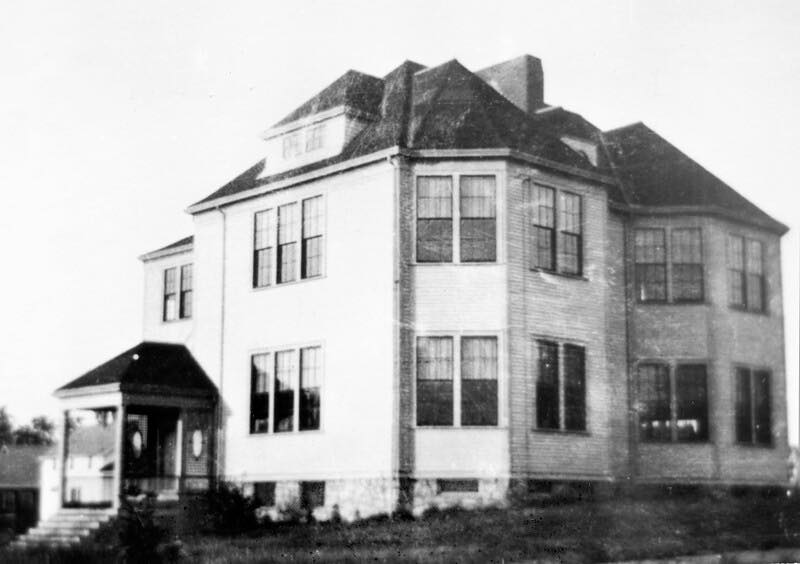
The 1891 Winthrop School
Courtesy of the Melrose Public Library
The Winthrop School
In 1924 the $188,000 necessary to construct the oldest wing of today’s Winthrop School was appropriated. At that time, the town’s student population was growing quickly, the town was seeking to retire its dilapidated wooden school buildings like the Livermore School, Sewall School, and the original 4-classroom Winthrop School, built in 1891. A portable classroom was in use at the Washington School. Two other new school projects were reaching completion with additions of the Ripley and Roosevelt schools to help ease overcrowding. The projected class size for the coming school year was reaching 50 students. Several grades would be running platoon-style, meaning shortened school days as students took turns using classroom facilities.
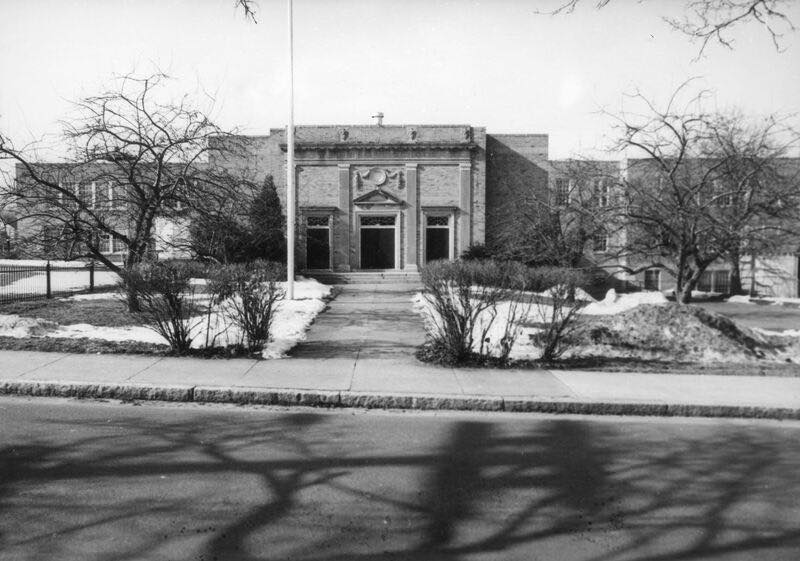
The 1928 wing is to the left. The 1956 wing is to the right.
The new Winthrop School consisted of 12 classrooms and a gymnasium. It opened in 1926, barely a year after funding was secured. In 1928 the school board voted to tear down the old wooden Winthrop School that abutted the new building as it was an eyesore and fire hazard.
A further addition was completed in 1956. The projected cost of the three-story addition was $170,000. The addition would add 6 classrooms. 9000 square feet of land was taken from abutters by eminent domain at an additional cost. Construction started in April 1955. It was part of a three-school improvement plan that included replacing the Gooch School (with the Beebe School) and adding two classrooms and an all-purpose room to the Horace Mann School. The total cost of the three school improvement plan was projected to cost $800,00, with 27% being paid for by the state assistance program.
Two modular classrooms were added in 2017.
Winthrop School is named after John Winthrop, the first governor of the Massachusetts Bay Colony.
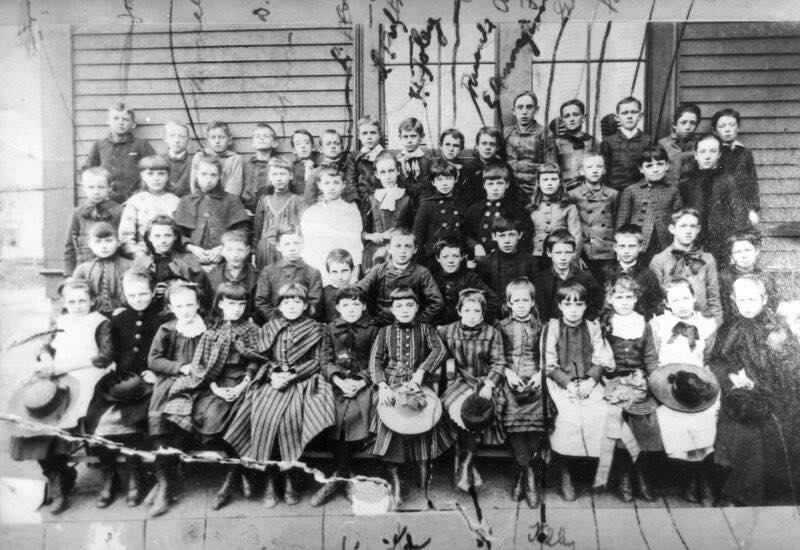
A class at the 1883 Horace Mann school on the corner of Grove and Myrtle.
Courtesy of the Melrose Public Library
The Horace Mann School
The population of Melrose grew by 3000 in the 4 years leading up to 1928. The city purchased 4 acres on Hesseltine Ave for a future school that year. Although a new high school would be built in 1933 (currently the Melrose Veterans Memorial Middle School), and the old high school became the Coolidge Elementary, the city did not build another new elementary school after the completion of the new Winthrop School until the Horace Mann School was completed in 1949. An earlier school named Horace Mann was built in 1883 on the corner of Grove and Myrtle Streets, currently the park across from St Mary School.
The first classes started at Horace Mann in September 1950. The opening of the Horace Mann was the culmination of the first three years of the implementation of a city-wide school improvement plan. This was also the first school year that kindergarten became a part of the Melrose Public School system. That first year, 380 kindergarteners were spread between 9 school buildings.
As part of the plan, this year the high school auditorium was redecorated including a new stage curtain. The high school also received a new public address system and the girls’ field hockey field was regraded. At the Lincoln and Washington schools (now more than half a century old) the heating systems were converted from coal to oil burners.
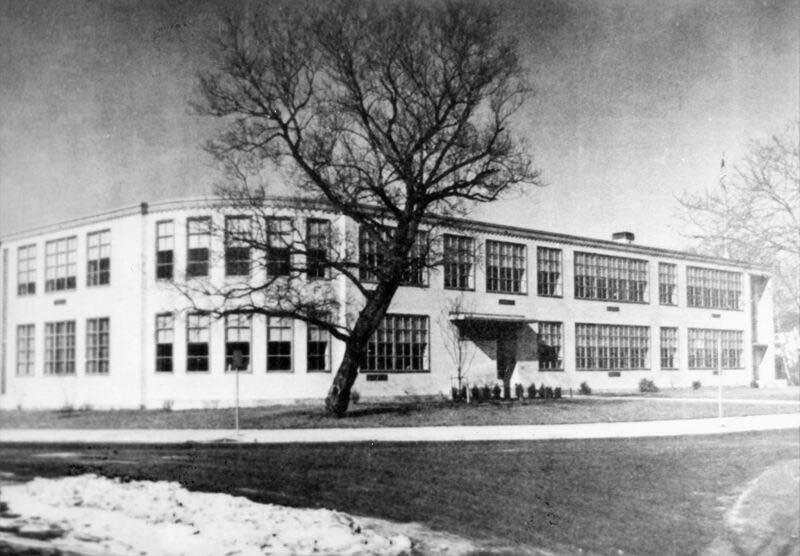
Horace Mann on Damon Ave. 1950.
The school committee deliberations included debate on the future of the upper elementary grades, 7-9th, the possibility of opening a junior high school facility. A nurse and a health teacher were hired for the high school along with a supervisor of physical education for the elementary schools. The health of the students was the goal of a new dental clinic and the provision of fluoride to students in partnership with the Health Department.
There was an addition added in 1956 to the Horace Mann. In 1957 a teacher delegation went before the city to advocate for a principal to be hired at the Horace Mann and other elementary schools. At this time only the Coolidge, Roosevelt, Lincoln and Winthrop schools had principals. Most of the elementary schools that did not extend to 8th grade appointed a teacher-supervisor to handle administrative tasks, but this was becoming too burdensome while also maintaining classroom duties.
There was a further renovation in 2017.
The school is named after Massachusetts-born Horace Mann (1796-1859) known as the Father of American Education for his advocacy for modern public-supported public education and formal teacher training. There are more than 50 public schools named after Horace Mann in the United States.
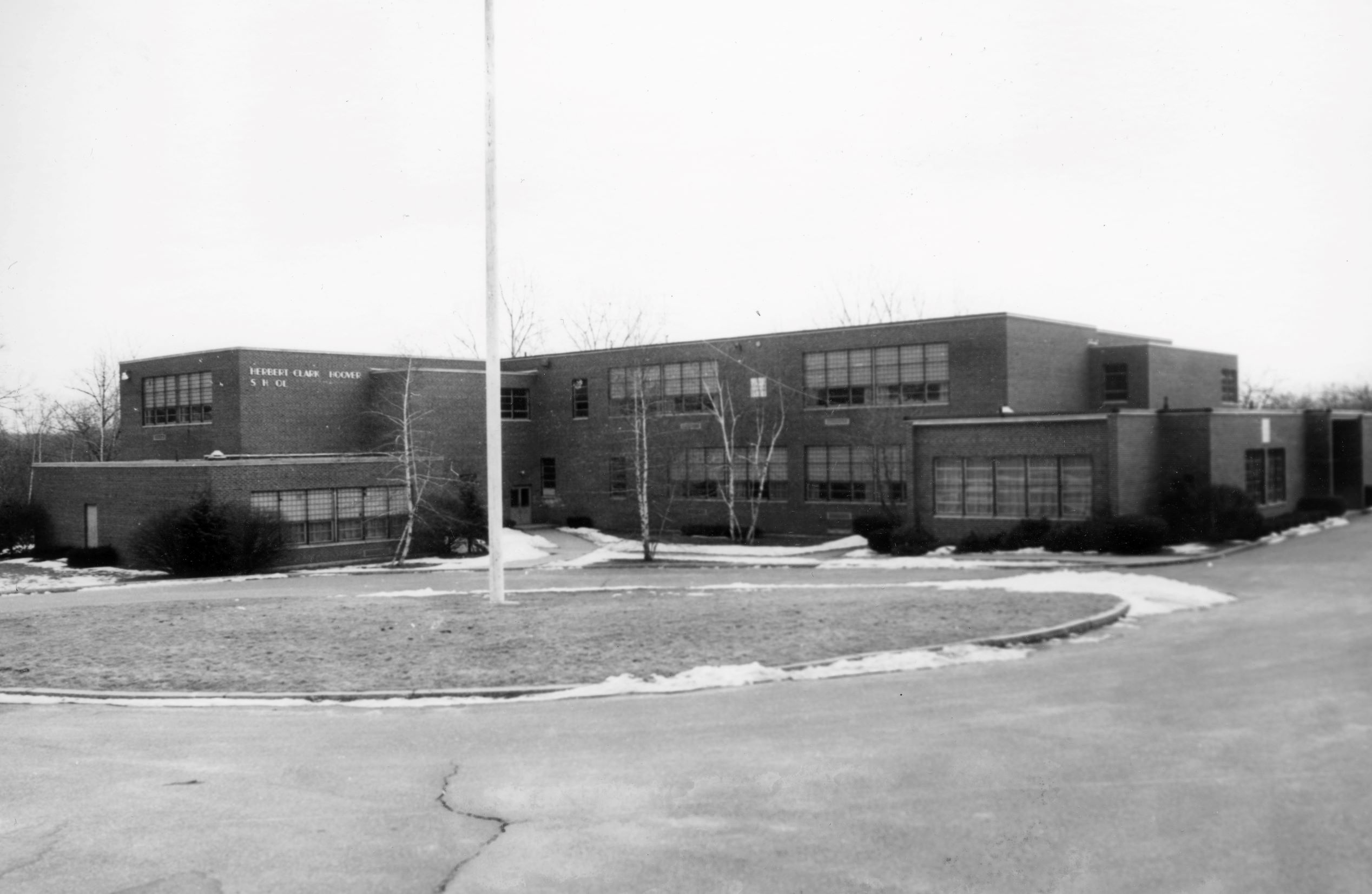
Hoover School
Courtesy of the Melrose Public Library
The Hoover School
In 1949, Melrose was educating 3600 public school students. By 1966 the school age population had doubled to 7200. The new East Side school was built with 12 classrooms and was intended to have a maximum capacity of 390 students at a cost of $845,000. At the time it opened, it relieved the overcrowding of other elementary schools, bringing average class size down to 30 students. The opening of Hoover in 1966 allowed several kindergarten classes that had been forced to relocate to nearby churches to return to their respective elementary buildings.
In the fall of 1966, the first classes were held, filling 12 classrooms from the overflowing classrooms at Washington, Coolidge, Winthrop, and Ripley. Coolidge was reduced to one classroom per elementary grade in order to accommodate more junior high students. At Washington School a single classroom of 47 kindergarteners was able to expand to two classrooms. Even so, classroom size averaging 30 was already considered too high and a further 1000 students were projected by 1973. The school committee had recently rejected the Boston University recommendation to build a new junior high on the site of the site of the Bellevue golf course. Expanding the high school was the only other alternative if the city were to reject the advice of the independent consultants.
Hoover School was named after the 31st President of the United States, Herbert C. Hoover, who served for one term during the Great Depression. The son of President Hoover was invited to the October 1966 dedication ceremony but a missed flight kept him from attending. The school name was first suggested by then Mayor Vaitses in 1964. There was some hesitation among the school board to take this suggestion initially. When the naming of the Franklin and the East Side schools was brought before the committee in 1965 it voted to make the Franklin School name official but deferred choosing a name for the East Side school at that meeting while it weighed other suggestions. Alternate suggestions offered included honoring Admiral Forrest Sherman (Melrose High School grad and Chief of Naval Operations), former Melrose Mayor Lloyd (who had secured funding forcrecent school construction), Lt. James G Dunton (Melrosian killed in action in Vietnam), General Douglas Macarthur, recently assassinated President John F Kennedy, and James B. Conant. (Harvard President, diplomat, and education reformer). The name Herbert C Hoover School was officially adopted by 1966.
Modular classrooms were added in 2017.
Follow the Melrose Historical Commission on Facebook and on Instagram to see their latest content.