Trolley Explosion in 1904
From the Melrose Historical Commission
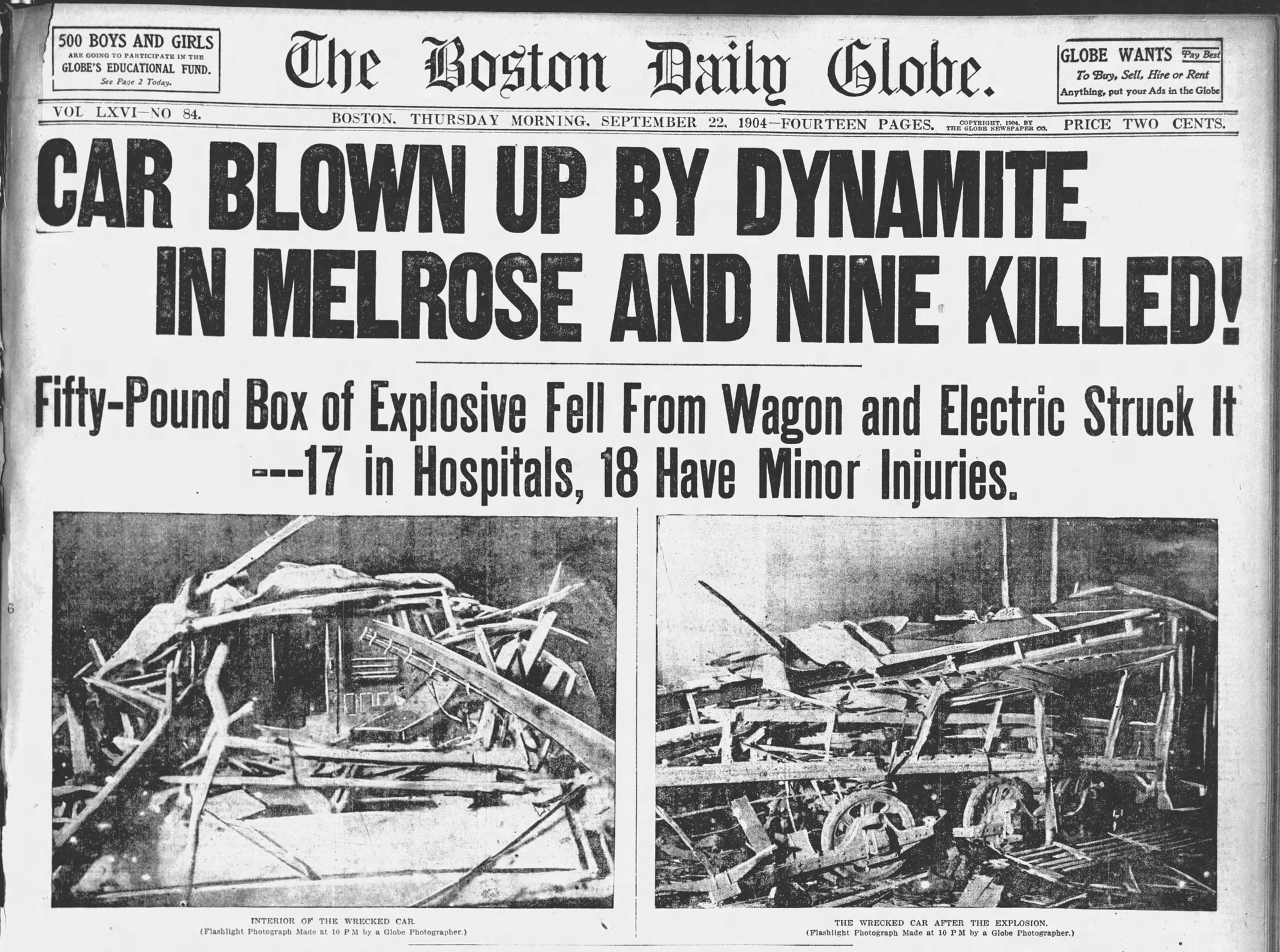
Front page of the Boston Globe on September 22nd, 1904
At about 8:00 p.m. on the evening before the first day of Fall in September 1904, the streets of Melrose, Massachusetts were cloaked in darkness. As was customary at the time, streetlights remained unlit when the moon was visible. Trolley Car No. 14 was making its evening run, carrying between 30 and 40 passengers—most of them returning home after a long day’s work.
As the trolley turned onto West Wyoming Avenue from Main Street, moving slowly in preparation for a scheduled stop, it struck a 50-pound box of dynamite that had minutes earlier fallen from a wagon owned by the Eastman Express Company. The explosives were part of a larger shipment — 200 pounds in total — being delivered to the Melrose Public Works Department.
The resulting explosion was catastrophic. The blast, felt up to 10 miles away, obliterated all but 10 feet of the trolley. Nearby buildings, including the Masonic Temple, sustained damage, and windows in surrounding homes were shattered by the shockwave. Contemporary news accounts describe the aftermath in harrowing detail. Local residents rushed to assist, opening their homes to tend to the injured. Despite the scale of destruction, it is remarkable that the death toll was limited to nine, with an additional 47 people injured.
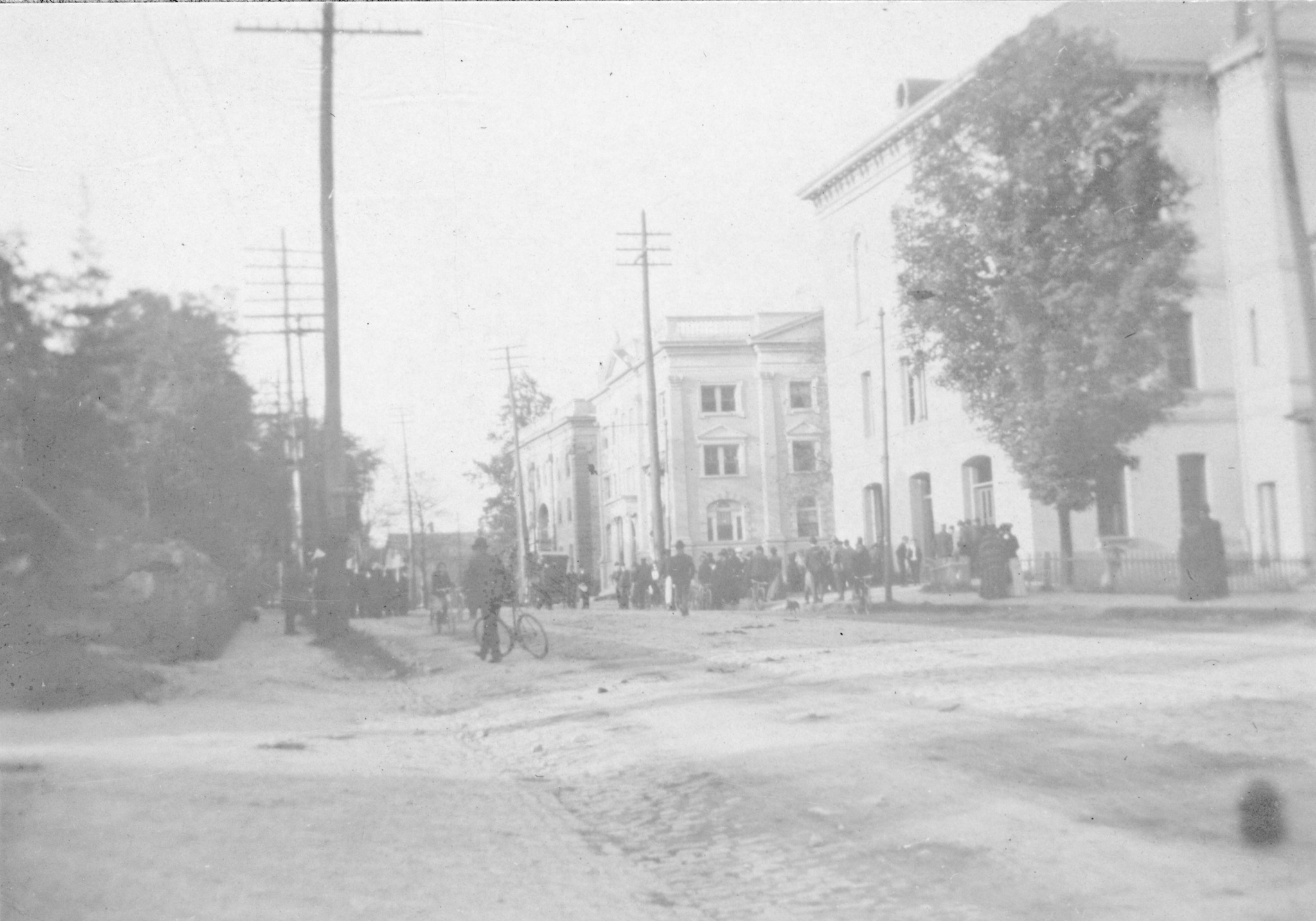
September 22, 1904 view of the scene from Lynde St
Cooper Family Photo
On the 50th anniversary of the tragedy, the Melrose Free Press reflected on the event, stating:
“The wonder through it all has been that with such a strong explosion doing its deadly work the number of killed and wounded was so small, for it is stated there were between 30 and 40 persons on the car.”
The incident was ultimately attributed to negligence in how the dynamite was transported. The boxes — four in total — were placed unsecured on top of the wagon’s load and packed without any cushioning or stabilizing material. Notably, the wagon driver, concerned about the stability of the load, had stopped en route to Melrose to borrow an additional rope to reinforce the binding. An official inquest conducted the following month found both the driver and the foreman who packed the wagon legally responsible.
Although lawsuits were later filed against both the City of Melrose (for not illuminating the street) and the Boston and Northern Railroad Company (for failing to clear the tracks), both parties were ultimately exonerated.
In addition to the front page of the Globe, there are several photos here from the Cooper family photo album that was recently discovered. The family lived at 250 Grove Street and had come down the hill the next day to check out the terrible scene.
Follow the Melrose Historical Commission on Facebook and on Instagram to see their latest content.