Senior Circuit Breaker Property Tax Exemption Renewed
By Ellen Putnam
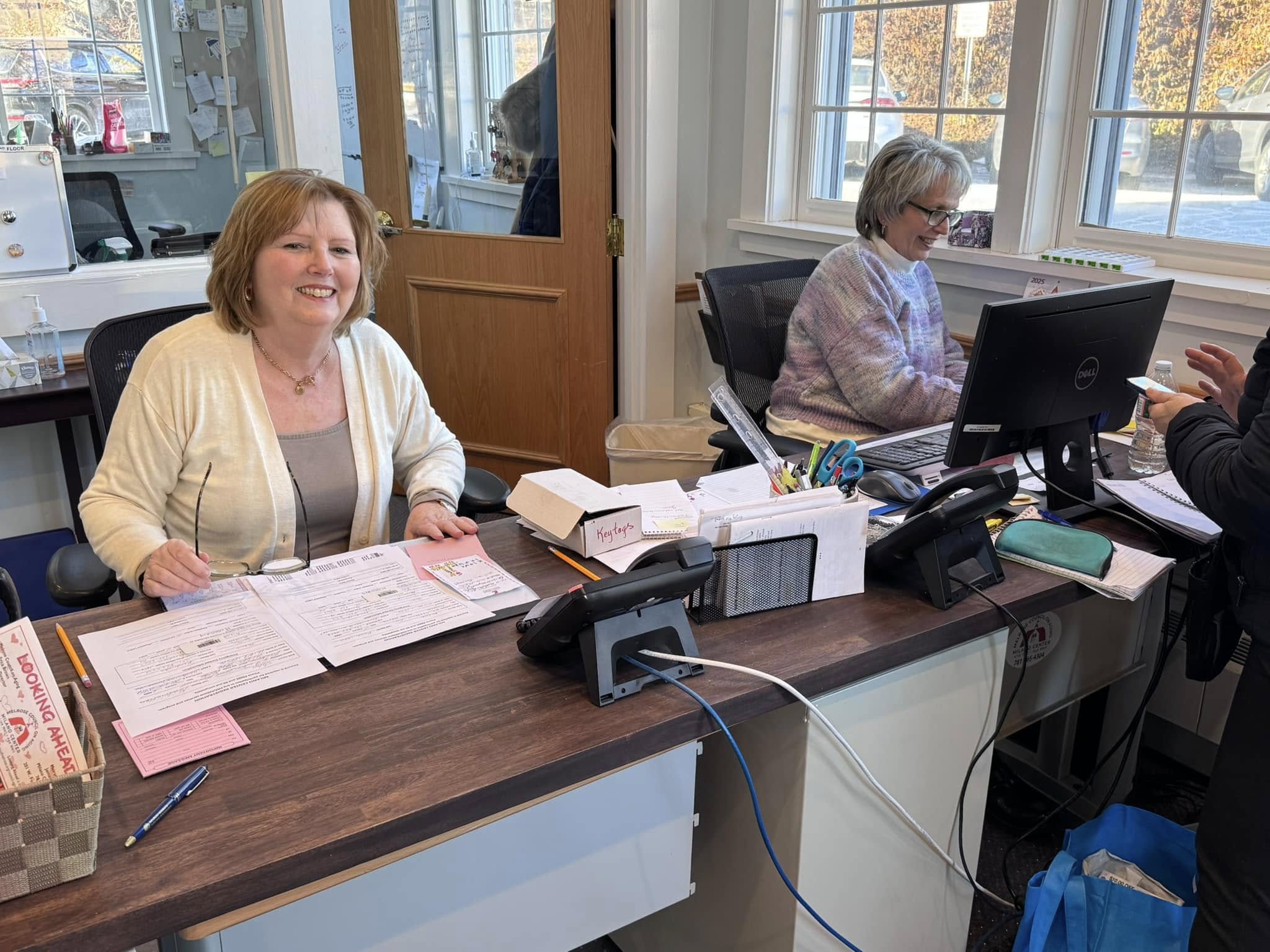
The Milano Center offers services for seniors
Photo Credit: Nancy Clover
This week, Governor Maura Healey signed into law a reauthorization of Melrose’s senior circuit breaker tax exemption for an additional three years.
This reauthorization was done as home rule legislation, in which Melrose’s City Council officially petitions the legislature for a law that relates specifically to Melrose. This particular tax exemption was originally adopted in Melrose in 2021, so this is its first renewal. A few other cities and towns in Massachusetts have similar home rule legislation.
The state offers a Senior Circuit Breaker Tax Credit on state income taxes for seniors (ages 65 and older) who make less than $70,000 to 100,000 per year (depending on size of household) and whose property tax payments or rent exceeds a certain percentage of their income per year. The state circuit breaker income tax credit can provide up to $2,730 in income tax relief. The Melrose senior circuit breaker tax exemption extends additional property tax relief to this same group of seniors.
Melrose has a smaller program that offers additional property tax relief for low-income seniors, but those income thresholds are much lower - less than $25,000 to 37,000, depending on household size.
This year, the City Council also voted to expand property tax relief for disabled veterans under the state’s recent HERO Act. And the city recently began accepting applications for the Elderly and Disabled Taxation Fund, which provides one-time grants of up to $500 for tax relief purposes for residents 60 and older or who have documented disabilities.
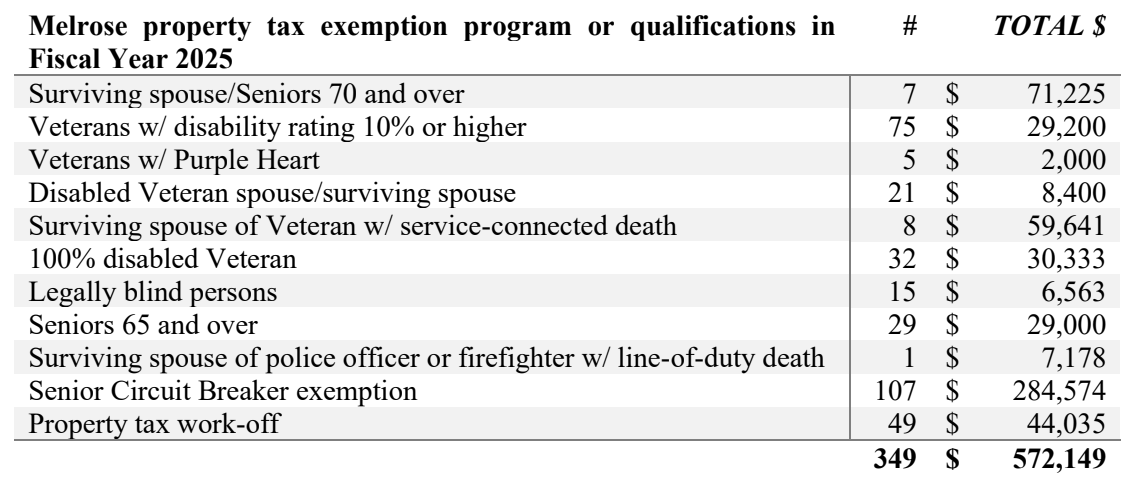
Property tax exemptions, with the number of households using each one and the total amount exempted
From City of Melrose
The city offers a few other property tax relief programs that are aimed at homeowners who struggle to afford their property taxes. (Renters may be eligible for other forms of rental assistance from the state.)
Residents who are 65 and older and are low-income can apply for a property tax deferral, where they do not pay property taxes until they either sell their home or it passes to their estate, at which point the property taxes are paid from the proceeds of the house.
Any resident who is 60 or older, regardless of income, can participate in the property tax workoff program, where they can work for the city and receive up to $2,000 in property tax abatement. Although city staff aim to find a position that will work for each applicant, not all applicants are placed each year - sometimes due to a mismatch of an applicant’s skills and available positions; hours or responsibilities that don’t work for an applicant; or a lack of city staff who are available to supervise a program participant.
All of the property tax exemptions that Melrose offers must be authorized by state law and approved by the City Council.
When a household is granted a property tax exemption, the amount of the exemption is rebalanced among the remaining households in the city, so the total amount of taxes collected remains the same.
The median income for a household in Melrose is a little over $125,000. 3.7% of Melrose residents fall below the poverty line, although that number rises to 6.8% of residents 65 years and older. (A household with a single person 65+ is considered below the poverty threshold if they make less than $15,045 per year.) Over 20% of Melrose’s population is 65+.
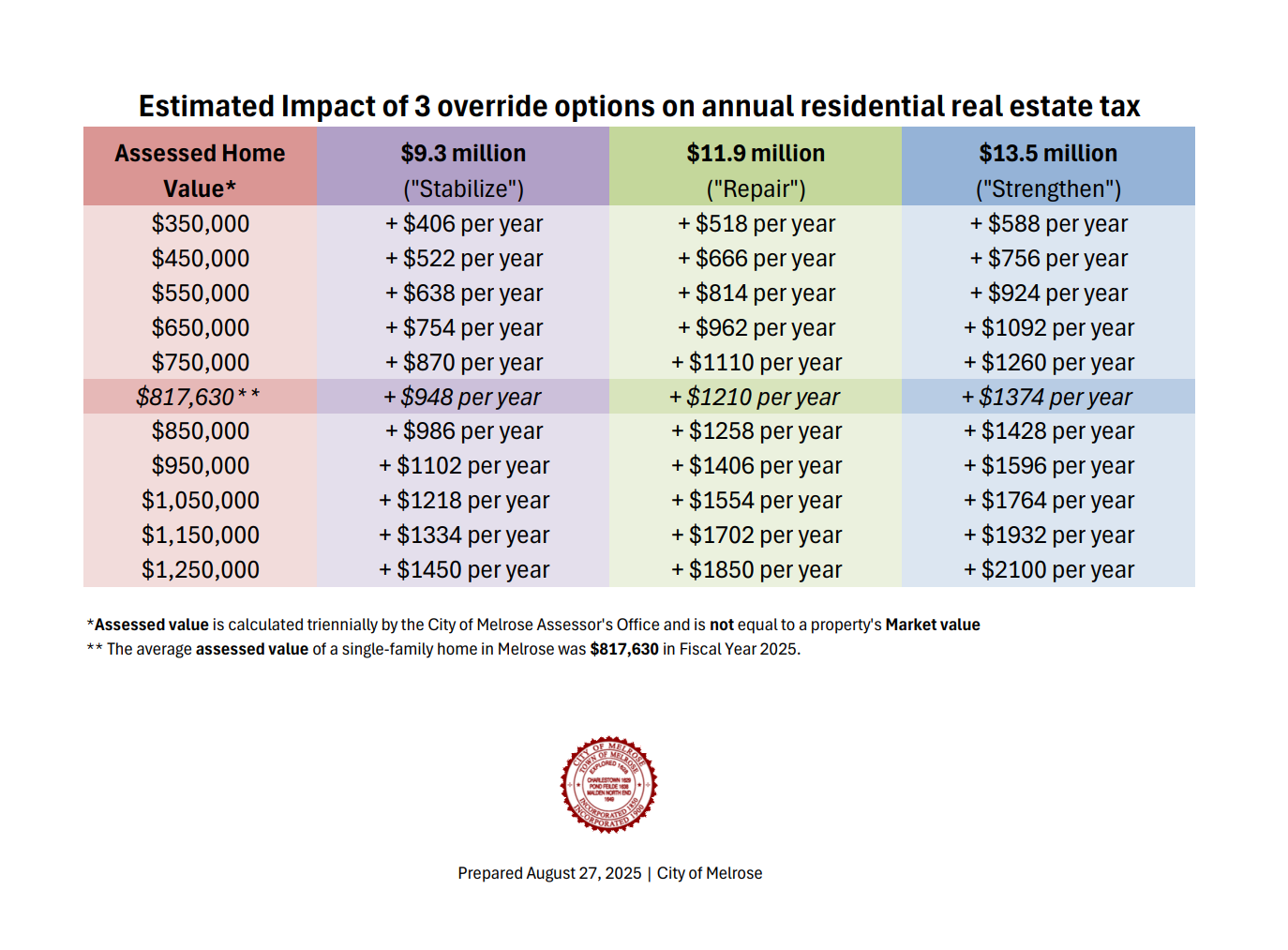
Tax impacts of potential override amounts
From the City of Melrose
Many Melrose residents who fall below the poverty line live in subsidized housing and would not be affected by a property tax increase. But plenty of residents may be above the poverty line and still struggle to afford their property tax payments.
Property tax exemptions are a subject of discussion currently due to the three override questions that will be on the ballot on November 4th. Each of the override amounts would increase property taxes for all property owners, although homes with a higher assessed value would see a proportionally higher increase.
The reauthorization of the senior circuit breaker tax exemption offers a potential avenue for exploring additional property tax exempttions for low-income residents.
Home rule petitions can be difficult to pass: they must by approved by both chambers of the state legislature and be signed by the governor, which means that many state representatives and state senators who are not connected to the city or town must vote to approve them.
While in recent years, city officials in Melrose have sought to extend property tax relief to additional groups of residents who may struggle to afford their tax bills and increase the amount of tax relief they are eligible for, there may be additional forms of tax relief that have been authorized by the state but are not currently offered in Melrose.
And the passage of this particular home rule legislation suggests that, if there are forms of tax relief that aren’t currently allowed by the state, it might be possible to use home rule legislation to enact additional forms of property tax relief, offer a larger amount of relief to those who already qualify, or expand existing programs to qualify more residents for tax relief.