Recap: League of Women Voters Candidate Forum
Written By Ellen Putnam
Photographed By Nancy Clover
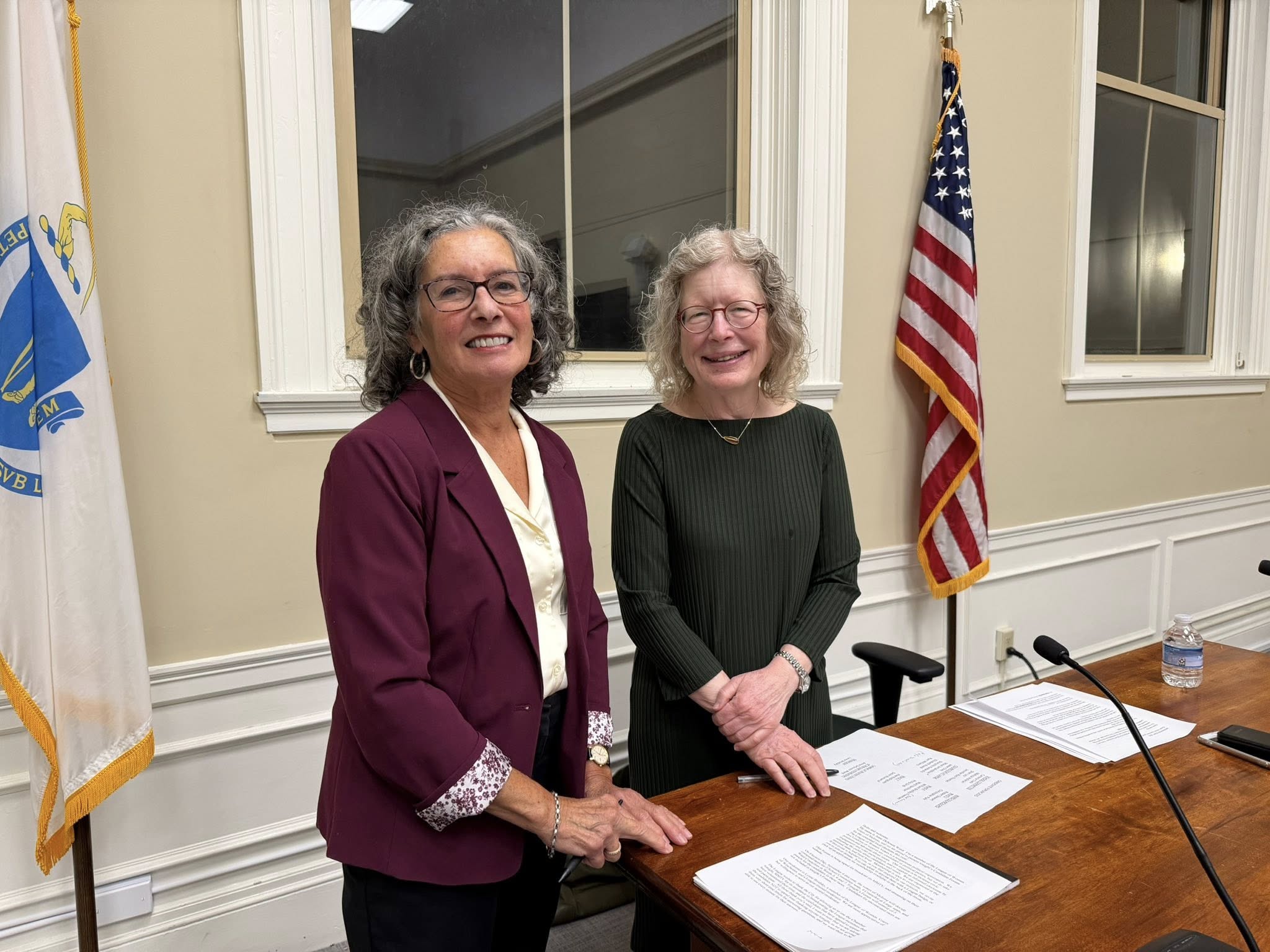
Anne DeSouza-Ward, left, and Lynne Brodsky
This is our recap of the candidate forum. We highly recommend watching the recording of the forum in its entirety here.
Last Wednesday evening, the League of Women Voters hosted a candidate forum that featured all candidates who are running in contested races for City Council and School Committee in the upcoming municipal election.
The forum featured three panels: the first with all seven candidates in the three contested ward races for City Council; the second with all four candidates for the three School Committee seats; and the final panel with all five candidates for the four City Council At Large seats.
Candidates were asked a set of questions that had been submitted by the public and reviewed by the League of Women Voters, which they had not seen ahead of time, and each candidate was given a limited time frame in which to respond. The forum was moderated by Lynne Brodsky, a member of the Winchester League of Women Voters.
The Melrose League of Women Voters, a longstanding civic organization in Melrose, is a nonpartisan group whose mission is, according to chapter president Anne DeSouza-Ward, “to increase civic participation and to support an informed electorate by educating the public about candidates and issues.”
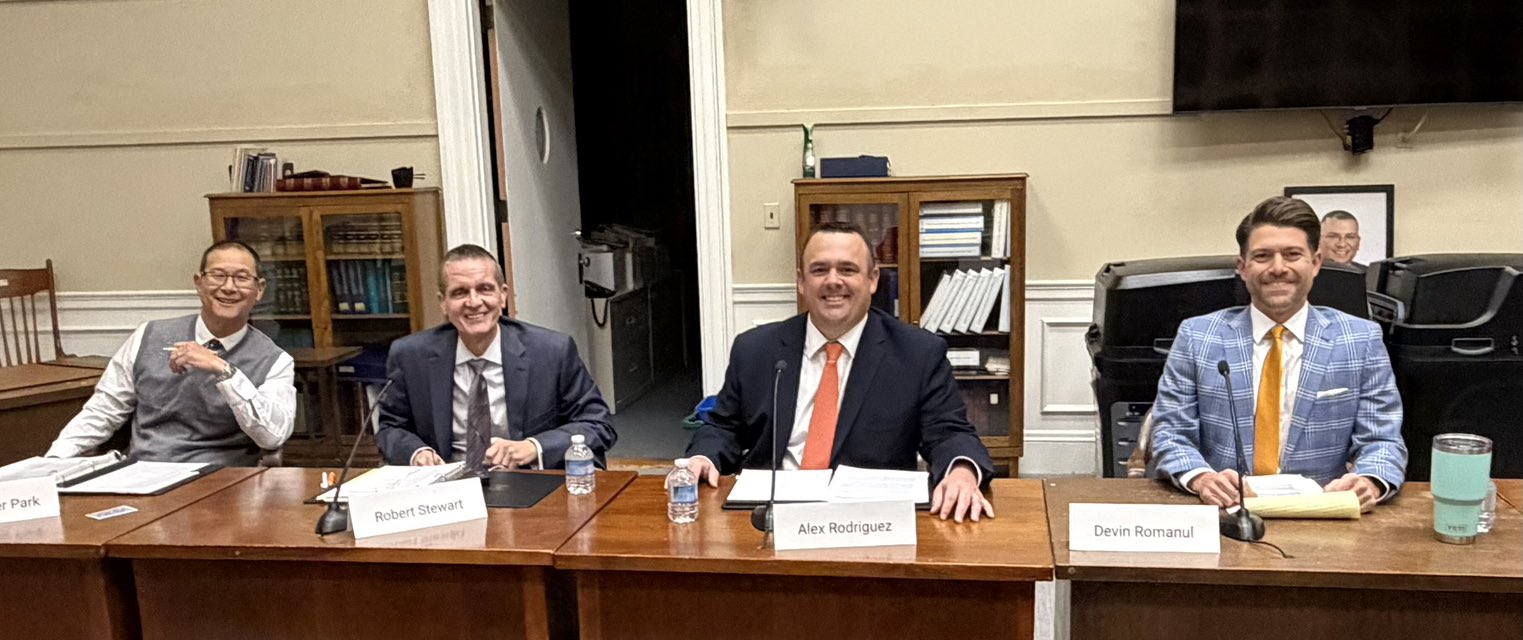
Left to right: Ward 3 candidates Christopher Park and Robb Stewart, and Ward 7 candidates Alex Rodriguez and Devin Romanul
During the first panel, the candidates for the Ward 3 City Council race - incumbent Robb Stewart and newcomer Christopher Park - were perhaps the two opponents who had the most in common in their responses.
Stewart and Park both expressed strong support for the override questions. Stewart described the city as being “at a near crisis moment,” and Park said, “the city needs the override money in order to continue being the establishment we want it to be.”
Asked how they would work on inspiring public trust in the budget process, Stewart said that he would support Mayor Jen Grigoraitis: “She has a very strong agenda and she’s transparent,” he said. “As councilors, we need to be in support but critical, and bring feedback from our constituents back to the administration.”
Park identified a lack of communication as the main source of misunderstanding. “Social media is a large part of the problem,” he said, “and we need to wean ourselves off of it and go to more trusted sources of information.” He talked about ensuring that the city website and councilors’ individual websites are up-to-date and accurate, as well as having a strong network of people across the city who can be informed and communicate with their neighbors and friends.
Stewart and Park both talked about the construction of the new police station at the Beebe School site, which has been a point of controversy in the neighborhood since it was announced last year. “A lot of our citizens are not happy with the way this was presented to the abutting neighbors there,” Park said, “and we need to do better in terms of transparency and communication.” Reflecting on his own role in the process, Stewart said, “As a councilor, you need to balance the needs of the neighborhood with the overall needs of the ward and then the greater objectives of the city.”
Stewart and Park each talked about their ideas for increasing commercial revenue for the city. Park discussed adding back the economic development director at City Hall, a position that was cut during the budget cycle for Fiscal Year 2025, and ensuring that all new developments have commercial space. Stewart talked about preserving “the spirit of downtown,” including by regulating food trucks through an ordinance that is currently under consideration by the City Council.
Then, Stewart and Park shared their visions for what Melrose will look like in the future. Park discussed passing the Community Preservation Act, which allows municipalities to levy additional tax revenue and provides state matching funds for affordable housing, parks, and historical preservation. He also talked about looking at traffic mitigation strategies used in cities like Cambridge and Somerville to bring to Melrose and make streets safer. Stewart talked about “securing the base” through a strong budget and ensuring that schools, public safety, infrastructure, and senior services are all well funded.
“What do you expect from your city councilor?” Park concluded. “In my mind, a good councilor listens, shows up, solves problems, and responds in a prompt manner. They meet with their constituents on a regular basis. They're not afraid to make tough decisions and will stand up for what they believe is the right thing to do, however unpopular it may be.”
“Experience matters,” Stewart offered. “I’ve been on the council for six years and I’ll be the senior member if I am reelected. We're going to have some big changes coming in the next session, and I think it's going to be important to have some of that experience sitting around this horseshoe to help the ones who are going to be joining as new councilors.”
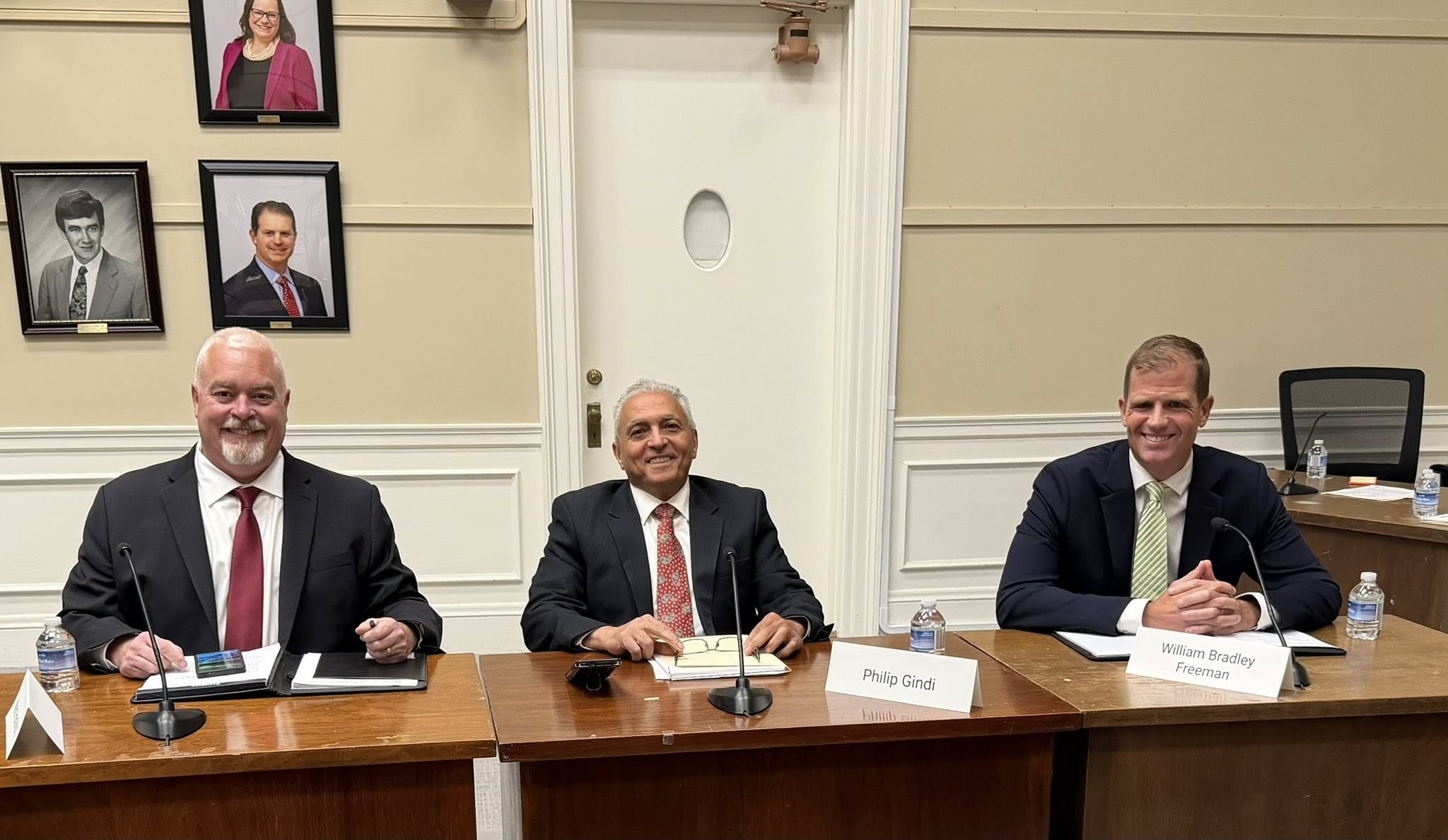
Ward 4 candidates, left to right: Ward Hamilton, Philip Gindi, and Brad Freeman
Policy differences were more apparent in the three-way Ward 4 race, which includes current city councilor Ward Hamilton, park commissioner Brad Freeman, and longtime resident Philip Gindi.
On the override questions, Hamilton said, “I was the first city councilor to speak to endorse the override in June. The override is a referendum on how we’re doing as a city government. If the people think we’re doing a good job, they’ll give us more money. If they don’t, they won’t. I think it’s a democratic way to do things.”
Gindi said, “I find it difficult to support the override. I think we need to look at how we manage the money in the town, and I also see other solutions that have not been considered.” He discussed the possibility of passing another debt exclusion to fund capital projects like infrastructure repairs.
Freeman said, “I fully support the override because it’s important that we collectively invest in our community. We’re at a critical point here in Melrose, and we need to repair our roads and infrastructure, restore community programming, reinvest in our schools, and ensure public safety.” He talked about the need to restore voters’ trust in local government, and said, “this override is a great opportunity to restore that trust,” noting that, if an override passes, he intends to check in with voters a year from now to see how the override has benefited them.
To inspire public trust in the budget process, Hamilton discussed the questions he has asked of the administration, both in public and behind-the-scenes, during his tenure as city councilor. “I’ve irritated and upset some people with some of my questions and I’m okay with that,” he said. “It’s what I signed up for.”
Gindi talked about having an additional outside source investigate the school budget shortfall from Fiscal Year 2022 and having a rotating cycle of different auditors looking at the city budget each year. He also promised to set up monthly office hours for constituents to meet with him.
“I think the biggest job of a city councilor is to first listen, then learn, and then lead,” Freeman said. “Communication is the most important job, and being present in our wards, our neighborhoods, is key. I’m a constant presence in Ward 4,” he went on. “People always say they see me jogging or walking my dog and I encourage them to come talk to me and let’s discuss how this budget is being allocated and where that money is going.”
Each candidate offered a different issue they see as most important to Ward 4: Hamilton discussed speeding and dangerous driving; Gindi discussed speeding as well as road and sidewalk conditions; and Freeman discussed ensuring that developers are required to talk with the neighbors throughout the approval process for new buildings.
The candidates also discussed how they might increase commercial tax revenue: Hamilton discussed requiring new developments to be mixed-use, with commercial on the first floor; Gindi discussed examining the city’s tax structure to look at how buildings with apartments and condominiums are taxed differently; and Freeman said he would “support innovative approaches” as well as working on supporting the city’s existing small businesses, including by keeping Memorial Hall operational in order to reap the economic benefits that it offers.
In terms of each candidate’s vision for the city’s future, Hamilton said, “In my last two years on the City Council, I’ve focused on the finances and the day-to-day governance of the city. I don’t see anything glamorous or flashy about it, and I tend to take a very low-key, conservative approach to things.”
Gindi talked about how “everybody likes Melrose, young and old,” and discussed the possibility of “a mechanism where we allow people who are willing to pay more, to pay more, and other folks that can’t afford it pay just the 2.5%.” (This is not currently allowed under state law, so it would need to be passed by the state legislature, although there are currently some tax exemptions available, including for seniors.)
Freeman said, “My vision for Melrose is a community with a thriving downtown, strong schools - a safe community that’s welcoming to all. We’ve simply become too divided as a community. Neighbors aren’t talking to neighbors anymore. And I think Melrose is ready to be a united community where neighbors are talking to neighbors, and we’re all working together for a better Melrose.”
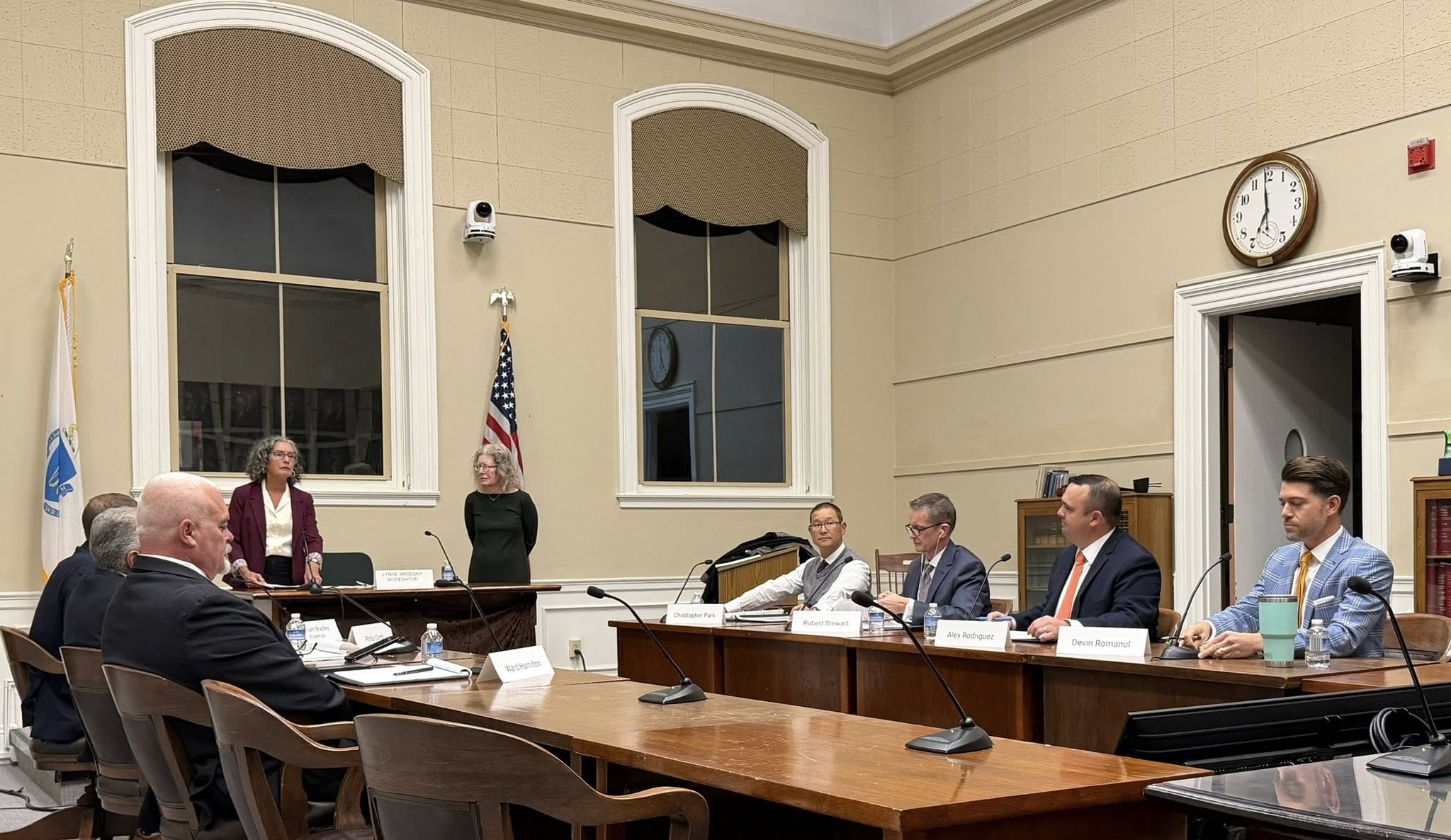
Perhaps the most contentious matchup of the evening was between current Ward 7 city councilor Devin Romanul and challenger Alex Rodriguez, who more than once during the panel made direct reference to his opponent - the only candidate to explicitly do so.
On the override questions, Romanul said, “We have to be honest about what it costs to run a vibrant, well-run city. And we have to be honest with voters that healthcare premium increases, special education costs, transportation costs, and inflation have driven our budget far beyond the 2.5% that it can withstand in any given year. And so I am strongly in favor of the override. I try to talk to folks about the things that they ask for that are going to have to be cut if we don’t pass an override.”
Rodriguez also expressed his support for the override at all three levels. “The math is the math,” he said, “and we have to come to that reality sooner rather than later. And I also think that the consequences of the override’s failure would far outweigh the consequences of its passage. That being said, I support an override with oversight. We cannot keep moving from override to override to override for the next twenty, thirty, forty years. That is not sustainable.”
Talking about how he would inspire public confidence in the budget process, Romanul said, “We need a budget that reflects our values, and we need to actually engage in more robust long-term planning, build more innovative sources of funding, including public private partnerships and other grant opportunities,” and create a dashboard on the city’s website so residents can easily see what the city is spending money on. Romanul also talked about the budget survey he did in Ward 7 to gather feedback from residents on their priorities.
Rodriguez countered by stating that, while he believes that a universal budget survey is “a really great step,” he believes that the results should be made public. “If we’re going to have real transparency,” he said, “these conversations need to happen in public and we all need to be a party to them because we have a right to be.”
In terms of issues that each candidate believes are specific to Ward 7, Rodriguez talked about his child’s second-grade class at the Hoover Elementary School, which has 29 students in it. “Our ward paid a really heavy price because of this budget,” he said. “Elected officials tell us how our budgets are a reflection of our values, and those values apparently included no full-time high school principal and no full-time middle school principal and a class size at the Hoover of 29 second graders. Ward 7 needs a councilor who’s willing to fight for our kids and is willing to oppose the mayor’s budget when it is not in any way reflective of the values that we hold so dear.”
Romanul responded, “I think education and infrastructure are the two things that our neighbors have really prioritized,” and noted that, while the city’s operating budget made significant cuts to the schools, the City Council did prioritize one-time spending for the schools in free cash expenditures this year. Romanul also talked about documenting potholes for repair and shepherding state and federal grants to mitigate flooding and rebuild a significant stretch of Lebanon Street.
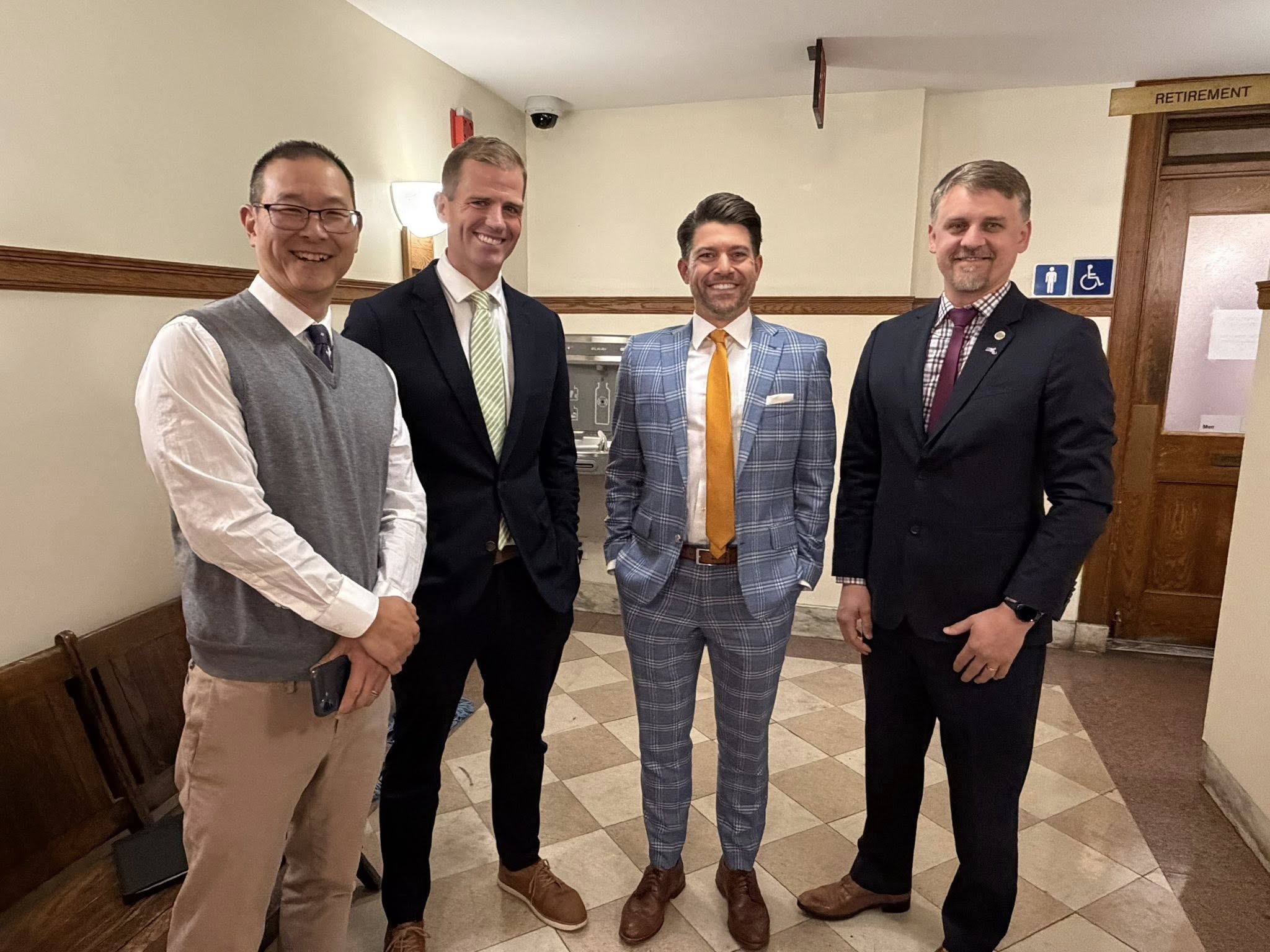
Left to right: Christopher Park, Brad Freeman, Devin Romanul, and Ryan Williams
Talking about how they might develop the city’s commercial tax base, Romanul said he would look at the zoning code to try to encourage more mixed-use development and would “explore some more innovative options,” although he noted, “it takes relationships and it takes collaboration” to establish public-private partnerships and put new ideas into action.
Rodriguez noted that he would also want to “put pressure on the state to move towards a world where we will inevitably not have Proposition 2½ and for greater home rule as it relates to local taxation, because the truth is we can’t survive unless we have a more stable and sustainable revenue stream.”
Asked about his vision for the future of Melrose, Rodriguez said, “I think we need a much healthier body politic in Melrose. The online noise that has gone on here is degrading our community. It is pitting us against one another. I think the injection of partisan politics that we have seen in Melrose is fundamentally disgraceful. The Melrose I envision is one where we start getting away from this model of governance. And we need to have a City Council that will actually conduct real oversight and that is willing to ask the most uncomfortable questions when it's most politically unpleasant. The results from that will lead to a healthier city that can sustainably function for generations to come.”
“One of the biggest reasons I got into this race,” Rodriguez went on, “is because I saw a fundamental misalignment between what our mayor said, the budgets she proposed, and a councilor in Ward 7 who frankly went along with all of it. At this critical moment in our city, we can no longer give them a free pass. We need someone who will fight for Ward 7 and listen to your needs even when we disagree, and who understands that they work for you and not the mayor’s activist allies who seek to nationalize our politics and divide our city along partisan lines. We need someone who will fight for fully funded schools, demand accountability in public, and push for answers to the questions that are never asked in council chambers.”
“My vision is to make Melrose the best city in America to raise a family,” Romanul said of his own goals, “And so I’ve got a long list of policy priorities. First and foremost is education. It is the most important thing that our community does, and our role is to provide a world-class education for all of our students.” Romanul talked about his priorities for education, for road and infrastructure repair, and for better communication with constituents.
“What does it take to be an effective city councilor?” Romanul continued. “I think it takes results. I’ve delivered $2.2 million worth of investment in Ward 7. And that’s sidewalk and street rebuilding, flood prevention, sewer pump stations, playgrounds, potholes, and plows. And it takes innovative activities, things like manically running every street to uncover every pothole in the ward, doing a universal budget survey so your voices are heard in the budgeting process, and engaging in radical transparency to document every single penny that we spend as a city online. I hope it will create a virtuous cycle. So then that way people will ask for things, we can deliver them, and then we can engender trust by showing how it’s done.”
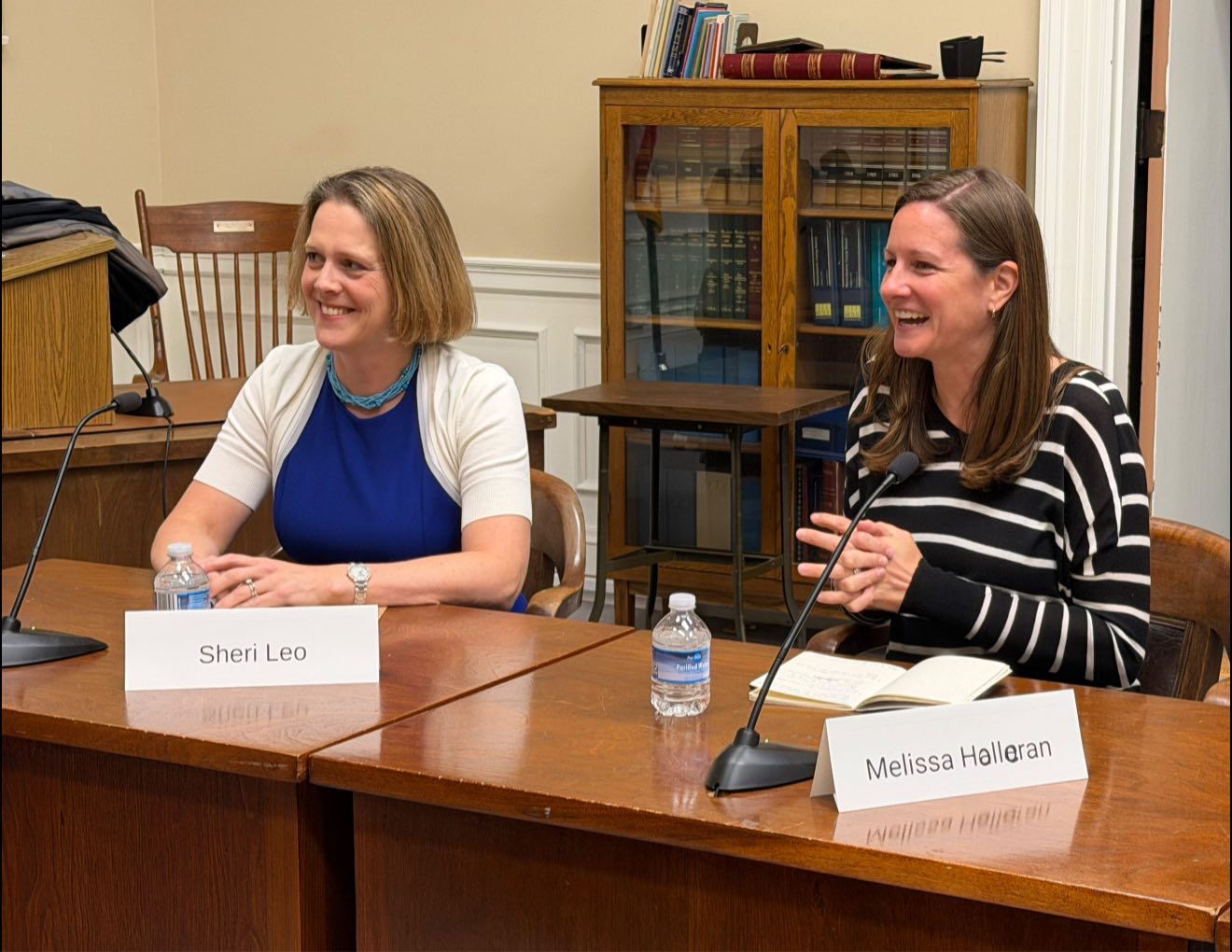
Sheri Leo, left, and Melissa Holleran
The evening’s second panel featured the four candidates for the three seats on the School Committee: current member Jennifer Razi-Thomas and newcomers Camarie Clark, Melissa Holleran, and Sheri Leo.
Candidates were asked first about their thoughts on hiring and retaining a qualified superintendent.
“As a talent professional,” Leo said, “I have decades of experience in hiring teachers, principals, and senior leaders. And so I’m really excited to engage in the process. My focus would be on hearing from the perspectives of all stakeholders, and ensuring that it is a two-way conversation and process with the candidates so they get to know Melrose, and we focus on finding the superintendent who shares our values, is committed to Melrose, and is interested in building for the long term.”
Holleran said: “I think we need a leadership team that really understands the reality of our classrooms and the realities of what Melrose is facing with our budgetary constraints. And I see this next step as an opportunity to find a superintendent who is going to fit within our culture, who’s going to listen to our teachers, and who’s going to see the needs of all our students. I think that this is going to be an opportunity where we can really build a long-lasting, stable administration that will trickle down through the whole system.”
“I think this is priority number one,” said Clark. “We’ve had four different superintendents in the last four years, and we have been without true direction. Everybody’s been doing the best that they can, but we must get somebody who can move us forward and get us on the right path.”
Razi-Thomas commented, “I would ask, first of all: what is a quality superintendent? I’ve seen quality superintendents - here in Melrose because I’ve been on the School Committee now for eight years, and I’ve worked in the public schools in Salem, Massachusetts for 15 years. A superintendent needs to have really outstanding communication skills, and be an incredible role model for quality - someone who’s an educator, who’s committed to the kids, and who holds all the educators in the system to a very high standard. So I think we have to look at what we have currently, and see if there's a need.”
Candidates were then asked about their thoughts on the override questions.
“I am for the override,” said Holleran. “I believe that we’re at a critical point in Melrose - not just for the school system, but for the city as a whole. And I think that it is important that the override has established three different tiers so that Melrose has the opportunity to choose what tier is best for us.”
Clark said, “There is a lot of conversation happening in our community and there are multiple opinions - and it is a tough decision. I think a lot of people are really weighing what is right for their belief system. Ultimately it is a community decision, and whatever happens, the situation will be chosen before we are in office. When it comes to talking about this with the community, a lot of what I'm hearing is there’s a lack of trust. So, the role of the School Committee will really be to be open and honest about where this money is going and to really try to develop trust within the community about how we’re spending and allocating the funds.”
“The money that is within the override asks,” said Razi-Thomas, “is, in my view, long overdue. The schools have been doing a lot with very little, and you can only stretch a rubber band for so long before it just splits up. I understand there's people struggling to pay their bills. And who wants to ever have their taxes increased? But we also want really excellent schools. So we, as a community, have to face the fact that there’s going to be conflict around this. There’s going to be disagreement. But excellent schools are well worth fighting for. I’m very proud of the work that we’ve done over the last two or three years in showing how transparent we are with all the money that we spend in the schools, and it’s been a process of getting more and more transparent. You can look back through our budget books, you can see line items of what is spent in each school.”
Leo said: “I am absolutely in favor of the override. I plan to vote Yes, Yes, Yes on the three options. If we want Melrose to be a community where everyone thrives, then we have to invest in that community. And I think it is critically important that we have the conversation and we talk about where the money is going and what those priorities are. But we do know that we have stretched those dollars as far as they can go, and we are in the eighth percentile of school district spending. We are getting good results with those dollars, but think about how much more we could do with more.”
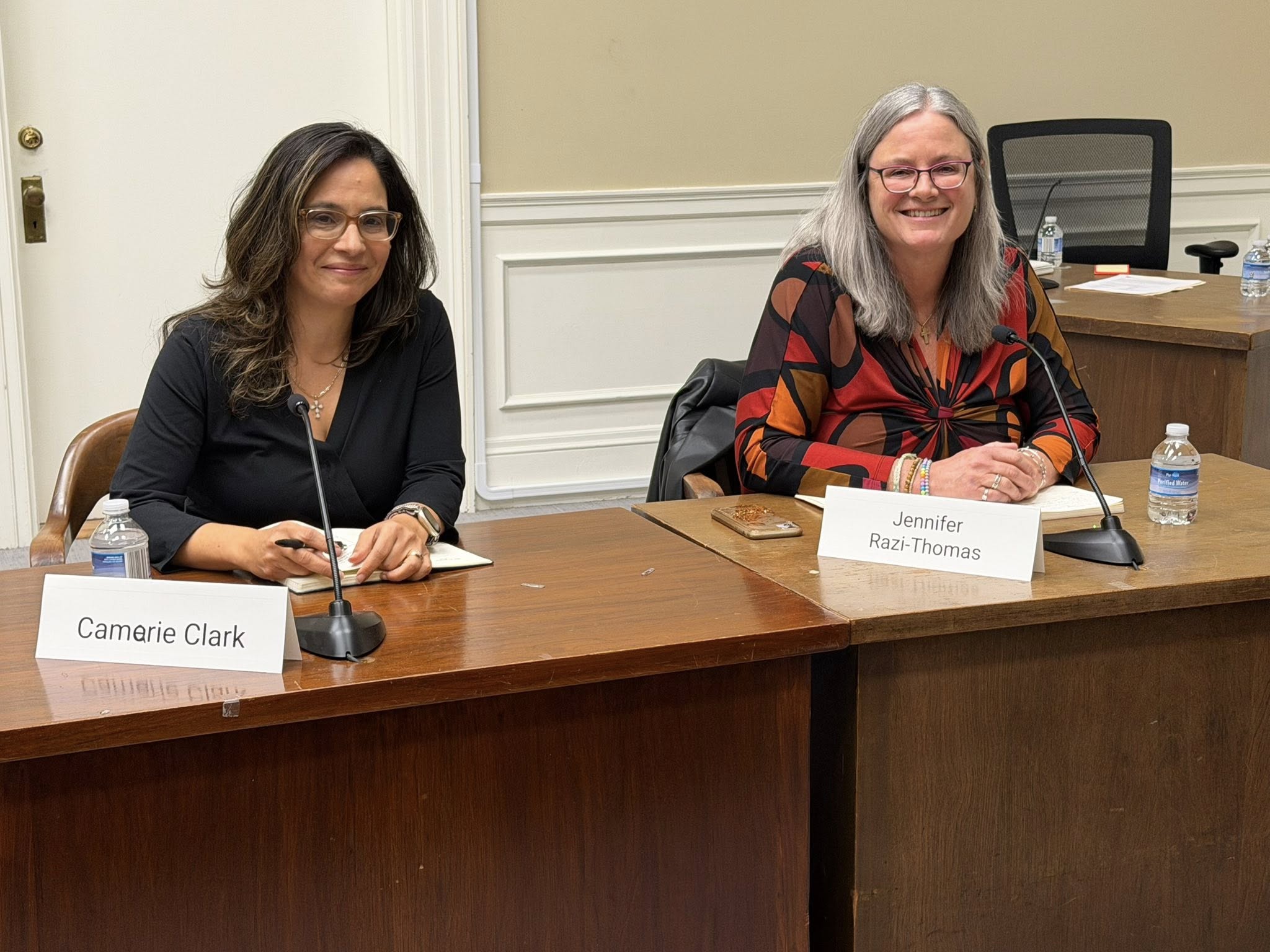
Camarie Clark, left, and Jennifer Razi-Thomas
Next, the candidates were asked about the school budget process and how they would go about inspiring public trust in the budget process.
“When it comes to trust,” said Clark, “we have to understand: where is the trust lacking within the community? Is it in how the dollars are being spent? Is it in how we're communicating? There are lots of different avenues that we would have to address. I think one of the bigger things when it comes to communication is really being out there - we need to reach out more and really explain what we’re doing, why we’re doing it, and being very clear and honest about everything that’s going on.”
“I think the most important thing is to continue to have conversations,” said Razi-Thomas. “I also think it’s incredibly important to hire excellent and highly competent people who are handling the money - and right now we have tremendous people who are managing the money on the city side as well as on the school side.”
“As for the budget,” Razi-Thomas went on, “what I would propose is for the 1A override to pass, and then we would be able to fund our schools more fully. We would be able to potentially restore the team model at the middle school. We’d be able to bring class sizes, which are currently in the 30s at the high school and the middle school, down to a more reasonable 24, 25, or 26. And we’d be able to hire the curriculum directors back.”
“I think in terms of the budget,” Leo agreed, “we do need to fund our schools in order to have the dollars to talk about trade-offs. Where we are right now, and I know the School Committee has struggled through this over the last couple years, is that we have spent the budget conversations cutting - making decisions about which things we had to give up.”
“It’s really important to build trust within the community, among all stakeholders, and the budget process is an obvious way to get started,” Leo continued. “But there’s another piece of building trust, which is celebrating what’s going well and celebrating where the funds have been well spent and celebrating the achievement and outcomes of our students to date, because trust builds more trust. It’s not simply about the budget, it is also about building pride in our students and in our community.”
Holleran said, “I think that we are going to be making tough decisions on the School Committee, regardless of if the override passes or not. What do we need to do in order to make sure our students are receiving the best education possible? Even if the override passes, people are going to want to see that money go to certain things and the School Committee is going to be responsible for making those tough decisions.”
“Trust is really important: with our community, with our administration, with our educators, and with our students,” Holleran went on. “And part of building trust is being honest. We need to provide the information and we need to make sure that the information is communicated in a way that everybody understands, and that means sometimes changing our communication.”
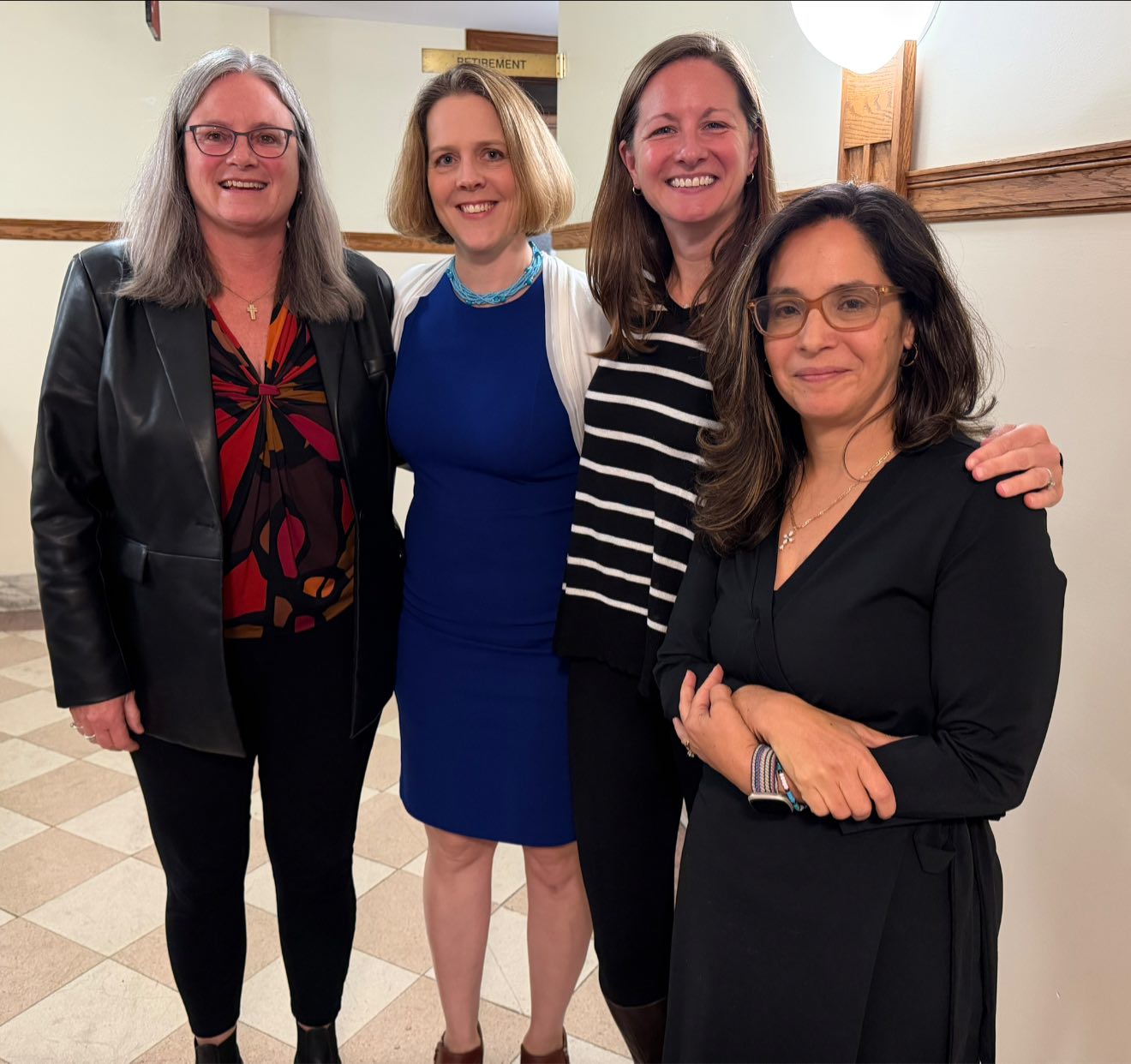
Left to right: Jennifer Razi-Thomas, Sheri Leo, Melissa Holleran, and Camarie Clark
Candidates were then asked what they have observed that is different in the schools this year and what they think about those changes. All four of the candidates spoke about larger class sizes, particularly at the middle and high schools.
“My ninth grader came home and said that they observed a roster of 39 students on their first day,” said Leo. “That is different and that is a decision that we have made in underfunding our schools. There are other policy decisions and things that are different year-to-year, but I think we really need to wrestle with the changes that have taken place as a result of underfunding our schools. Those other changes include increasing fees and adding fees for certain extracurricular activities. It includes removing paraprofessionals from our early childhood classrooms and a host of other changes at the middle school, especially with a unified secondary principal.”
“A lot of families are feeling concerned about eliminating the teams model at the middle school,” added Holleran, “and not having that in the system anymore. However, I also have heard some families who are supportive of the change because it has worked better for their own child. So I think what we need to do moving forward, based off of what happens with the override, is we need to look at what these changes are, how they are impacting our students and their learning, and what is working and what is not working so that we can use the funds we have next year in order to make sure that what is working continues.”
“I have a daughter who is at the Winthrop in one of the classes that has 28 students,” said Clark. “I have regular conversations with her to directly hear from her about how it’s going and what she’s feeling, and I hear from other parents about their experiences. It’s mixed. Some people are fine with it. For some, it isn’t working as well as it should be.” Clark also talked about the changes to the cell phone policy at the high school. “At the open house, there were lots of teachers who were very appreciative that the policy went into place. And it’s probably helpful in classes that are a little bit bigger, with students being less distracted. So, there’s some good and bad with a lot of different things that are going on.”
“There is absolutely a huge difference in class sizes,” Razi-Thomas agreed. “Double AP Computer Science classes are taught together because they just had to figure out how to make these schedules work and not take away more classes. So that’s probably more like 60 kids in a class.”
“But,” Razi-Thomas went on, “I think that the overarching issue is that there’s uncertainty about what will happen next year. And that’s been going on now for three cycles because we knew that this was coming two years ago, and we started making cuts last year, and then we made more cuts this year. So I think that it’s hard to continue to ask educators to live with this uncertainty. They’re hoping that this is just one year, and then the override passes in November. We have people holding on and hoping. I think parents feel like that, kids feel like that, the educators feel like that.”
Candidates then talked about their experience dealing with budgets, and concluded with a final statement.
“When it comes to my approach and looking at what is important on the School Committee,” Clark said, “priority number one is we need strong leadership. We need to work much harder at getting our students’ proficiency up and looking at their long-term goals. When we think about where our students are going to be after they graduate, what are the skills that they need to have in order to be successful in this world right now? It’s changing. College is not the answer for every single student. We have a lot of different needs that we need to address and really think about.”
“It’s been an honor and a privilege to serve on the School Committee for eight years,” said Razi-Thomas, “and also a challenge through some very difficult times, but also I’m very, very proud of our schools. I think our schools have done so much with so little for so long. We owe it to the children, the families, and the educators to pass this override to see what we can do with that. We have really good schools, but we could have great schools. And money is not everything, but it is part of the equation. And we will show our values as a community if we pass the override in November and we fully fund our schools.”
Leo concluded, “I believe deeply that every student can succeed when well supported and that every family wants what’s best for their student. I think we need to lead from that belief and that set of values, that we are all here for the success of every single student. I want to make sure that every student feels welcome, valued, and safe, especially those who are most vulnerable. And that starts with funding our schools, because when we squeeze the schools, those who are on the edges and have those needs, who do not fit the typical mold are those who are sacrificed first. And we have a caring community that has an opportunity to pull together and continue to build on the incredible work that the School Committee, the schools, the district, the educators and the families have done over the last several decades. And I am really looking forward to being part of forging the path forward for what is next for Melrose Public Schools.”
“The students will be the center of all of the decisions that I make,” said Holleran. “I will advocate for resources within the district, and this includes resources for the students, resources for the teachers and educators, and resources for the administration. I will also focus on our leadership and that we’re making sure that our leadership is managing our resources well and that they’re also managing our talent within the schools. We want to continue to have strong schools and we want to make sure that this school system is benefiting all of our students.”
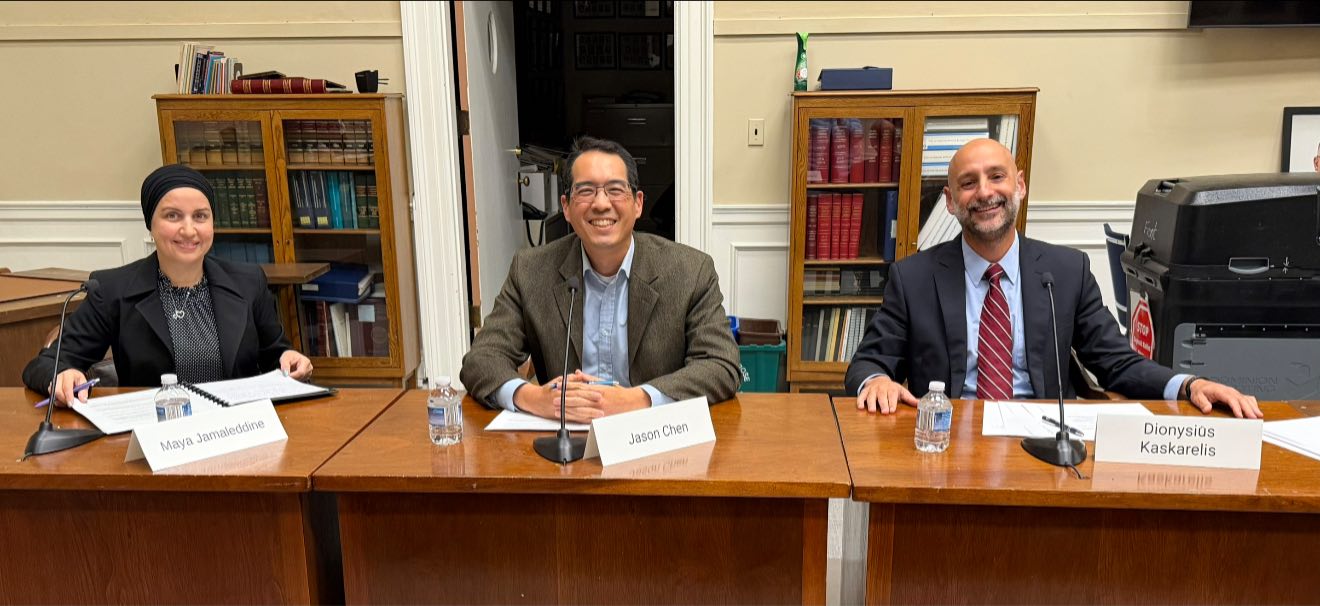
Left to right: Maya Jamaleddine, Jason Chen, and Dionysios Kaskarelis
The final panel of the evening featured the five candidates for the four At Large City Council seats: incumbents Maya Jamaleddine and Ryan Williams, and newcomers Jason Chen, Dionysios Kaskarelis, and Elizabeth Kowal. Candidates were first asked about their views on the override questions.
“Without an override, we risk losing vital city services,” replied Jamaleddine. “Prop 2.5 limits cities to raising property tax revenue by just 2.5% annually. But our costs, especially in our contracts, utilities, and health insurance, rise much faster. I believe in fiscal responsibility with compassion, transparent budgeting, measurable results, and community input at every stage. An override isn’t about growth for growth’s sake. It’s about preserving what makes Melrose strong, safe, and vibrant for everyone.”
“I support all three lines of the override,” said Chen, “And one reason is it may actually be more expensive if we don’t. Every organization that I’ve run or budgeted for, when we’re at the knife-edge of the budget, it’s really unstable. If you have too many snowstorms or if you have equipment that breaks or if you have an accident or something that’s unplanned, you’re reacting to it and then you end up not having many choices. And so if we’re at the knife-edge of the budget, then we’re forced to spend on things that we’re legally mandated to do and we don’t actually have much discretion on the rest of it. We’ll have to pay for it eventually, and I prefer to do it more efficiently.”
“This override marks a critical moment, I believe, for the future of Melrose,” said Kaskarelis. “Personally, I support the override. Like many others, I came to Melrose to raise my family and a big factor in our decision was the schools, essential services, and the infrastructure. So the failed override that occurred a few months after we arrived challenged that reality and brought important budget cuts that led to people losing their jobs and children losing educational opportunities. And so for those who believe that cutting more will solve the problem, I feel that the community will suffer more and may also lead eventually to a housing crisis. So downsizing is not a sustainable way forward. We must ensure continued investment and growth in the city. But of course, the override comes with significant financial burdens, and it’s very important for us to be well informed of the negative impacts of the override in order to be able to collaborate on relevant supportive measures to reduce the pressure on those in need.”
“I am a Yes, Yes, Yes, on the override,” said Kowal. “I didn’t get to it easily, which I know is not necessarily a popular opinion. I am a firm believer in public schools and I think public schools are the backbone of what a vibrant community needs. So, there’s no question in my mind that the override is seeking to do the right thing for our students, for our school administrators, for our teachers, and for our city personnel. My reluctance came because like many, I’ve had frustrations about how some of the budget has been used in the past. I don’t think it’s been as transparent as it could have been. And I don’t think there’s been a level of accountability. Not passing the override does not solve our problem - it puts us in a deeper hole. But what we do need to do is hold our city leaders more accountable for that money so we can fix the problems going forward.”
Williams said, “I am voting yes on all three questions for the override, and like many people here, it’s not something that I do because I have a lot of extra money to throw around. It’s something that I do because I see the city as being at the leading edge of a tsunami of budget issues. A tsunami happens very slowly and subtly, and then all at once. You start with the tide going out unexpectedly, and then it’s not for several minutes or even hours that the waves come crashing down, and by then it’s too late. We’re looking at millions of dollars in cuts each year to this budget. We’re looking at $180 million of federal funding cut today by the Trump administration from this congressional district. We are looking at a pension obligation in this city that is going to cost millions of dollars - twice as much as we cut from the budget this cycle in the next 10 years. So it’s not something that we can afford to wait on. It’s something that we’re going to pay for dearly if we decide to wait on it.”
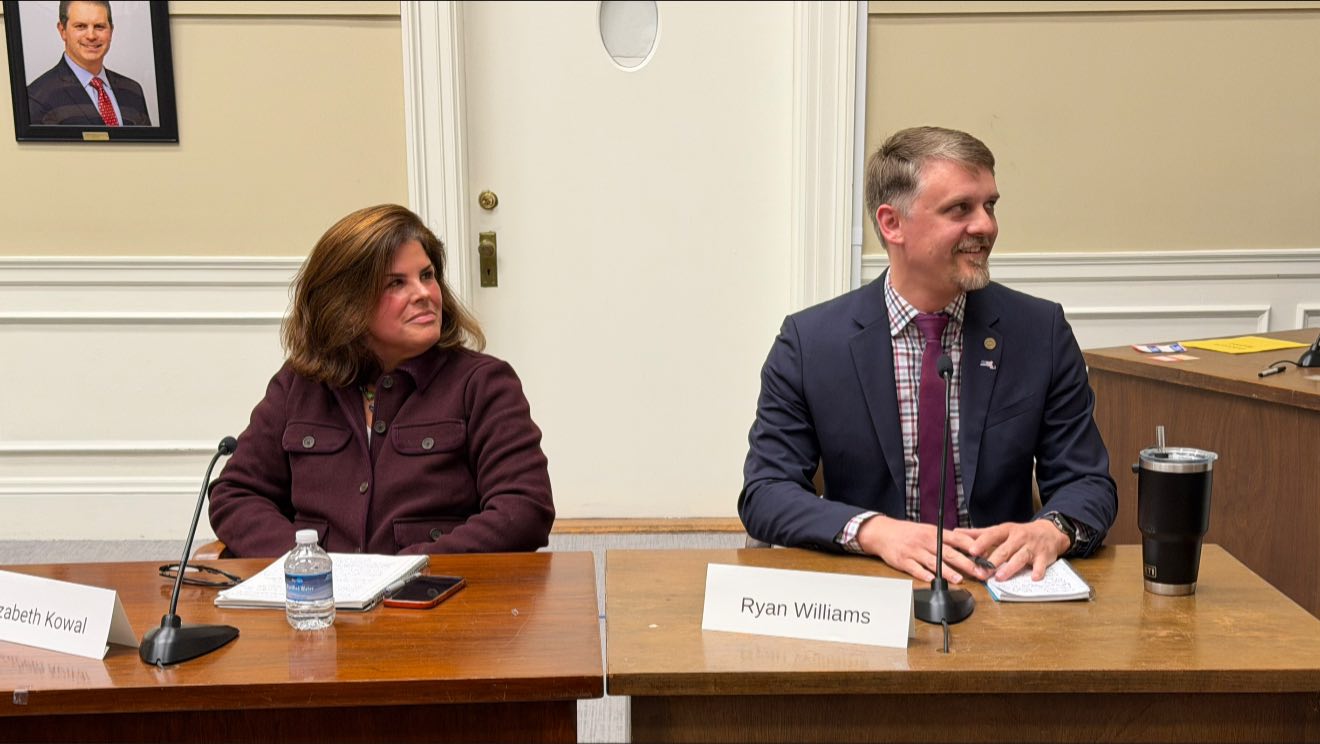
Elizabeth Kowal, left, and Ryan Williams
Candidates were then asked how they would work to inspire public trust in the budget process.
“I’ve made some pretty dopey videos on social media about our budget and where our money comes from and how we spend it,” said Chen. He also talked about The Melrose Messenger’s budget tool, and said, “I think we need to be able to have a discussion not just about headcount or spending per per pupil, but about what we’re getting for our headcount and how those positions impact real residents.”
Kaskarelis said, “I would point to the Financial Task Force that has been used to explain the override process, and I feel that that was a great success because it brought together residents and experts and city officials, and it did build that trust and deepen understanding and made financial discussions far more open and inclusive.” Kaskarelis suggested that the city could create a more permanent version of the task force that could advise the administration and help keep residents informed.
“I’m a communicator,” said Kowal, “and anybody who knows me will tell you that I am someone who shows up. I will keep showing up. I will keep asking questions. I will keep talking. Because I think part of what has been missing, and this is from my personal experience, is that people feel like they’re not a part of what is going on - that things are happening to them and that they’re not considered as part of the solution. Even if we don’t agree, I think the only way to establish trust is to keep talking and to keep explaining and to keep listening and to keep being accountable to the people who have elected us to these positions.”
Williams said, “If the override passes, we have to do something I like to call ‘win the win.’ That means that if we achieve something great because of the override, we have to make sure that people know it’s a win and that it’s because of the override. If things fall apart after the override, if we make mistakes, we have to admit them. A budget is a living document. It’s a best guess. It changes over time.” Williams also talked about several documents that the city made public this spring on his request to help make the budget process easier for residents to understand.
“Effective leadership is about listening first and leading with integrity,” said Jamaleddine. “I take pride in being a bridge-builder, bringing people together even when we disagree. Whether working with fellow councilors, residents, or city staff, I focus on shared goals and constructive dialogue. Leadership isn’t about who speaks the loudest. It’s about who listens best and act with purpose. My priorities are centered around fiscal responsibility, community well-being, and equity. I want to ensure that every tax dollar is used wisely, that we invest in public safety, schools, and infrastructure, and that we continue to strengthen community connections from our seniors to our youth. I also want to expand initiatives that make Melrose more inclusive, transparent, and responsive to residents’ needs.”
Candidates then offered ideas for developing the city’s commercial tax base. Kaskarelis talked about making more new developments mixed-use, although he said, “new development has to be thoughtful new development. We have to ensure that we’re not just plowing through neighborhoods to get it done. It has to have a community sense to it and we have to take into account traffic and pollution and noise.”
Kowal agreed on supporting more mixed-use development. “And we need to rehire the Economic Development Director, who at one point worked with the Chamber of Commerce to make sure that stores were able to move in downtown,” she said. “I believe that we need to rehire that person in order to help keep our downtown vibrant and to keep that tax base open to take the pressure off the residents.”
While Williams said that he would support increasing the city’s commercial tax base, he added, “we have to be candid about the realities of the City Council’s ability to make that change.” He noted that, while developers could add commercial space, they often don’t choose to, because the commercial real estate market is currently struggling. “We could do more to try and vocally incentivize projects,” he went on, “and I have gone to public meetings, I have supported small businesses that wanted to reclassify or get waivers to do things like build luxury bicycles on Pleasant Street. But I also want to be very careful about how we frame the work of the City Council on whether or not we’re going to add a lot of commercial property, because there’s trade-offs there. If you want to build a Square One Mall, you have to find a place to put it. You have to find roads to bring people to it. You have to find a place to bulldoze and put a parking lot in. And I don’t think that’s what we want for this city.”
Jamaleddine talked about housing in the city, and said, “As a city councilor, I’ve supported responsible development that preserves our neighborhood character while expanding affordability. I believe in middle housing, duplexes, accessory dwelling units, and updating our Housing Production Plan to identify mixed-income opportunities. I will continue advocating for inclusionary zoning so that every new project includes affordable units and ensure that city-owned land is prioritized for housing solutions that serve working families and seniors.”
“I think, tactically,” said Chen, “we have to maintain good relationships with developers and we also need to create a customer base for them. But we also have to be realistic. We don’t have the large plots of land, and we like to go to Route One in Saugus to do our shopping because we don’t want to live next to a Target, right? As someone who has scouted out commercial or manufacturing real estate, Melrose doesn’t have the logistics. There are just better places to build a factory or warehouse. I think we have to ask ourselves what we want and what we’re willing to pay for. And while we can offer some tax incentives, that goes against what we’re trying to do if we’re trying to raise revenue.”
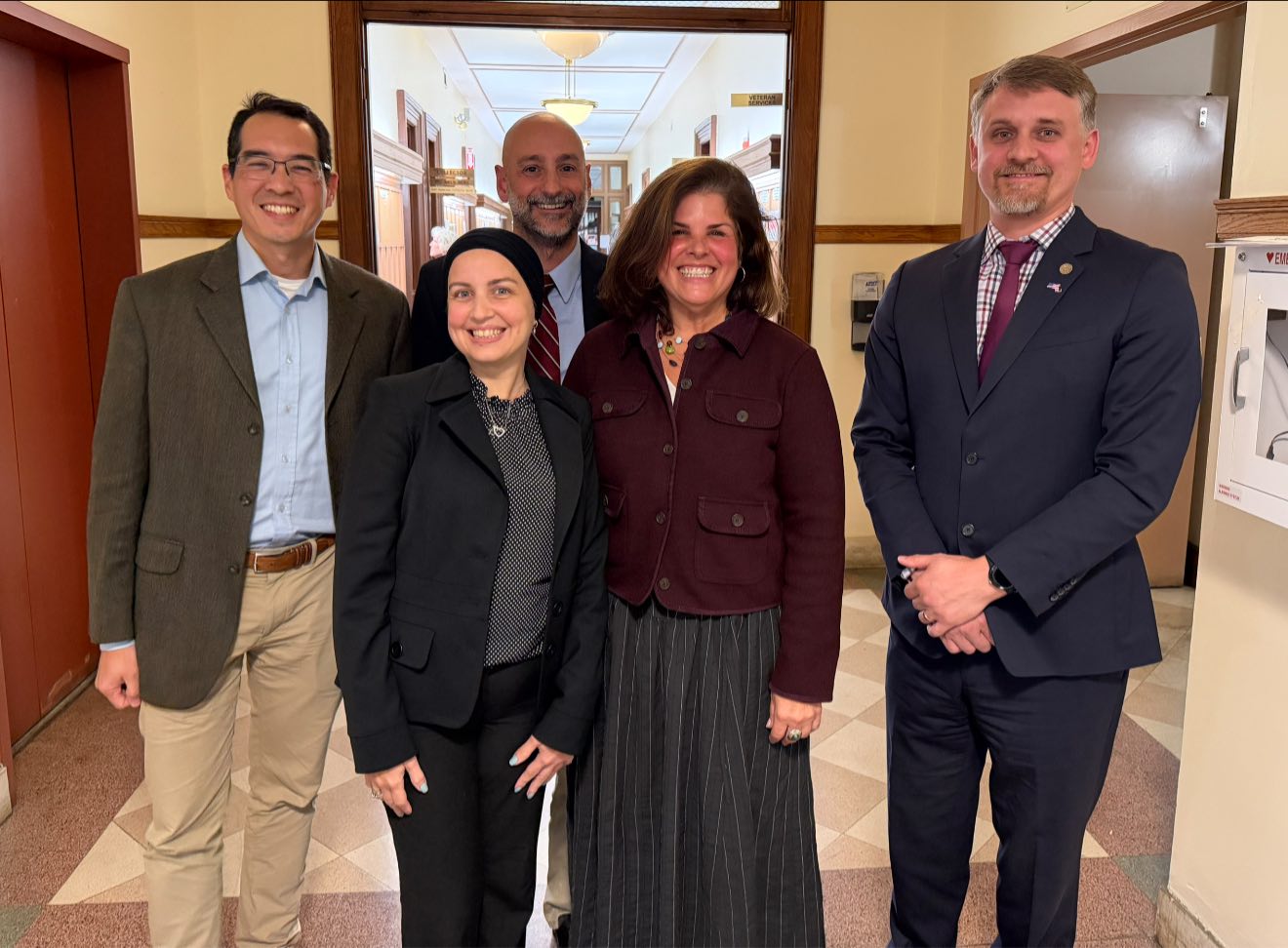
Left to right: Jason Chen, Maya Jamaleddine, Dionysios Kaskarelis, Elizabeth Kowal, and Ryan Williams
Candidates were then asked to share their vision for the future of Melrose.
Kowal said, “I would love a community that is similar to the one that I experience: a community that is welcoming, that’s engaging, that is safe, and that feels connected. To keep that, we need to obviously keep focusing on the schools, and we need to keep putting money towards the schools and the school administration as well as our city personnel. But we also can’t lose sight of our aging population - we need to keep providing services for them. Roads and infrastructure obviously are another big issue. And I want a City Council that will provide oversight, that will ask the tough questions, that will follow through, and that remembers that it’s accountable to the people who elected it.”
Williams said, “I’ve been pretty consistent over the years on my platform of sustainability and a focus on neighborhood issues. Sustainability is something that has immediate impacts in our lives - whether we’re talking about energy efficiency, renewable energy, traffic calming, street safety, beautifying our streets with trees, with gardens, with parklets - all of the things that I’ve worked on over the past couple of years. I would try to bring a focus on managing our population growth, because we are going to continue witnessing population growth. We are still not as high as Melrose was just 30 years ago in terms of population.”
“I love that we have a safe small-town feel,” said Chen, “and that my 10- and 12-year-olds can bike around town and I get texts from other parents saying they’re okay and and everyone’s having fun. But I also want Melrose to welcome all generations and keep them here. Young families moving out of Boston, but also our aging parents and grandparents, that they can live full lives here. I also want our staff, teachers, first responders to be here and have good retention so they can build deep relationships with our community and feel like we treat them well. I want us to do long-term planning and keep up with our buildings so we don’t kick the can down the road and make people work in terrible conditions.”
“Our neighbors welcomed us with kindness and warmth,” said Kaskarelis, “and our children play together on the street, and this is what’s absolutely wonderful about the city and what I would like to preserve. I am genuinely concerned about the financial situation of the city and I see this override as a very important milestone in the city’s history. I would like to look specifically at how we can maximize our revenue streams to continue to have investment and growth in the city.”
Candidates then talked about their experience with budgets and finance, and concluded with a final statement.
Chen concluded, “I believe that government can be good and decent, and we can be civil and we can challenge each other and still trust each other.”
“I'm running,” concluded Kowal, “because Melrose deserves an advocate who will do the hard work, ask the tough questions, not shy away from disagreements. I will show up. I will listen. I won't forget about you.”
“I think that in this next term, we are going to have a really great set of people on the City Council, no matter who wins,” concluded Williams, “and I really hope to be present and to help guide it to the future.”